Autopapyrus · Chery Tiggo 8 2.0 Turbo (2023)
https://autopapyrus.com/guides/chery/tiggo-8/coolant-replacement/
https://autopapyrus.com/guides/chery/tiggo-8/coolant-replacement/
Compiled automatically from service literature and owner experience. Specs are for the typical configuration — check them against your exact car before you start.
Chery Tiggo 8 2.0 Turbo (2023): Coolant Replacement
The cooling system on the 2.0 TCI (197 hp) requires a coolant change every 60,000 km or 4 years. The procedure includes completely draining the old coolant, flushing the system (if needed), and refilling with mandatory removal of air pockets.
Part
- 🔩 G12+ coolant (organic ethylene glycol base), antifreeze/distilled water ratio 53:47 (freezing point -40°C). Cooling system capacity 7.0 ± 0.5 L (7.4 ± 0.5 qt). Alternatives: Liqui Moly KFS 2001 Plus, Castrol Radicool SF, Felix Carbox G12+
Step by step
17 steps- Let the engine cool down completely (at least 2 hours after the last drive). Opening a pressurized system can cause steam burns.
- Park the vehicle on a level, horizontal surface and engage the parking brake.
- Open the hood and find the expansion tank (to the right of the engine, a black plastic reservoir). Wrap the cap in a thick rag and slowly turn it one full turn counterclockwise to release residual pressure (you may hear hissing). Wait 10-15 seconds, then remove the cap completely.
- Remove the radiator cap (located on the upper hose to the left of the engine). Be careful, as some pressure may remain.
- Place a drain container of at least 10 L (10.6 qt) under the lower left part of the radiator. Find the drain valve (a plastic petcock with a rotating lock) at the bottom of the radiator's left tank.
- Unscrew the drain valve 2-3 turns counterclockwise. Do not remove it completely, or you may lose the sealing ring. Let the coolant drain by gravity (7-10 minutes).
- Periodically squeeze the upper and lower radiator hoses by hand to push out any remaining coolant from the system.
- When draining stops, screw the drain valve back in until it stops (tightening torque 5-8 N·m (3.7-5.9 lb-ft). Do not overtighten, as it is plastic).
- If the old coolant contains rust or scale, or is heavily contaminated, flush the system with distilled water: pour water through the radiator filler neck up to the level of the steam hose, run the engine for 5-7 minutes (do not let it warm up above 60-70°C on the temperature gauge), shut it off, let it cool, and drain again. Repeat until the water runs clear.
- Using a funnel, slowly pour fresh coolant into the radiator filler neck up to the level of the steam hose (the thin tube running to the expansion tank). Don't rush. Pour in a thin stream and periodically squeeze the hoses to push out air.
- Reinstall the radiator cap and tighten it until it clicks.
- Top up the expansion tank to between the MIN and MAX marks (about 2/3 of the way up between the marks).
- Close the expansion tank cap and start the engine. Let it warm up to operating temperature (85-95°C) at idle. Watch the temperature gauge: the radiator electric fan should turn on when the threshold is reached (usually 95-100°C).
- After the fan turns on for the first time, shut off the engine and let it cool for 10-15 minutes. Carefully open the expansion tank cap (wrapped in a rag). The coolant level will drop as air escapes.
- Top up the coolant to the MAX mark, restart the engine, and warm it up until the fan turns on. The "warm up, cool down, top up" cycle may need to be repeated 3-5 times to fully remove air pockets.
- When the level in the expansion tank stabilizes (it no longer drops after warming up), check for leaks around the drain valve, hose clamps, and thermostat gasket.
- After 2-3 days of driving (100-150 km), recheck the level in the expansion tank with the engine cold and top up if necessary.
Common mistakes and warnings
- Ethylene glycol-based coolant is toxic. Avoid contact with skin and mucous membranes, and keep it out of the environment. Dispose of used coolant at a designated collection facility. Do not mix different types of antifreeze (G11, G12, G13), as this may cause sediment to form and clog the cooling system passages. Incomplete removal of air from the system will cause localized engine overheating and risk damaging the cylinder head gasket.
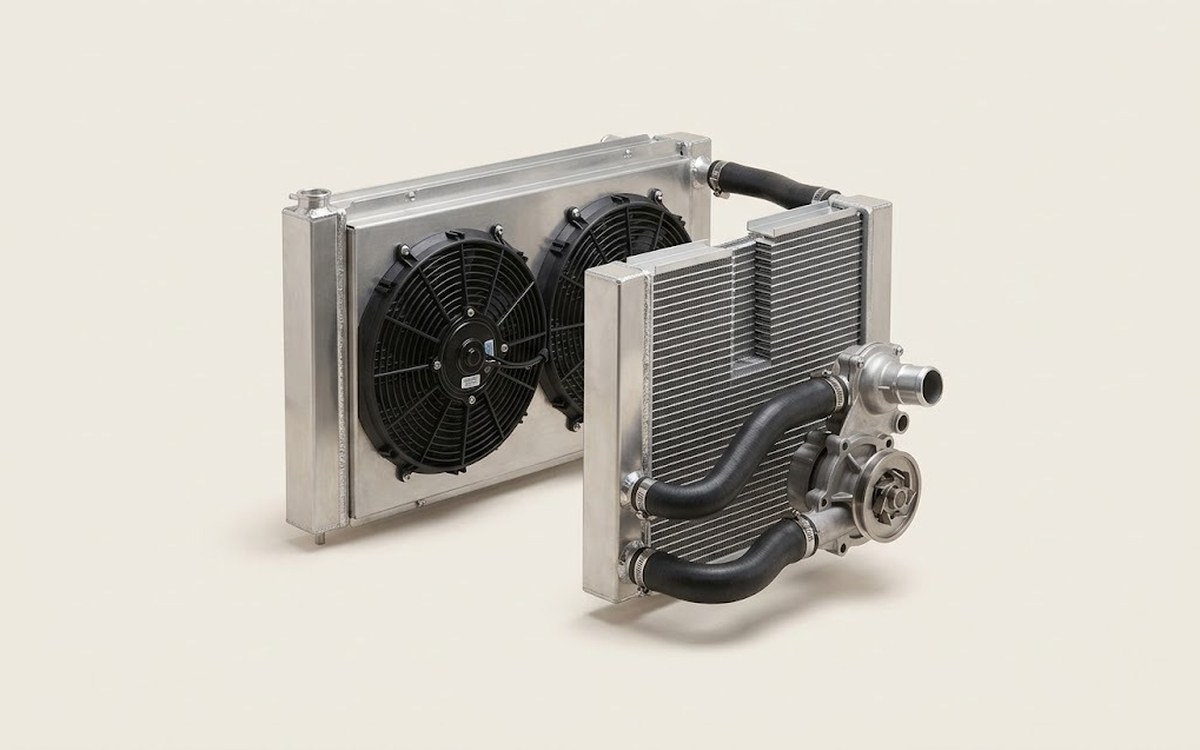 How it works · 3D
How the Engine Cooling System Works
How the part you're working on actually works — in plain English, on a 3D model.
Open in 3D →