Autopapyrus · Renault Talisman 1.6 dCi (2019)
https://autopapyrus.com/guides/renault/talisman/coolant-pump-water-pump-replacement/
https://autopapyrus.com/guides/renault/talisman/coolant-pump-water-pump-replacement/
Compiled automatically from service literature and owner experience. Specs are for the typical configuration — check them against your exact car before you start.
Renault Talisman 1.6 dCi (2019): Coolant Pump (Water Pump) Replacement
On the R9M 1.6 dCi engine, the coolant pump is driven by the accessory drive belt (not by the timing chain; the R9M uses a timing chain). Replacing the pump requires draining the coolant, removing the accessory drive belt, and removing the pump from the engine block. The replacement interval is every 120,000-160,000 km or whenever you notice a leak, bearing play, or unusual noise. It is recommended to combine this job with a coolant change and a new accessory drive belt.
Part
- 🔩 coolant pump 925164GA0A (equivalents: GRAF PA1185, AISIN), pump gasket, Renault Type D coolant (or equivalent meeting the same specification), accessory drive belt (replacement at the same time is recommended)
 There's a full repair manual for this car
Every system, wiring diagrams and torque specs — not just this job. Haynes AutoFix (online).
See manuals →
Step by step
16 steps- Let the engine cool down completely (at least 2 hours after driving). Disconnect the negative battery terminal.
- Raise the front of the vehicle with a jack and support it on jack stands. Remove the engine undertray (if fitted).
- Place a drain pan under the radiator. Carefully open the expansion tank cap (to release pressure), then open the radiator drain plug or disconnect the lower hose and drain the coolant completely.
- Remove the accessory drive belt: rotate the tensioner counterclockwise (using a special tool or a 15-17 mm socket, depending on the design) and slip the belt off the pulleys. Inspect the belt. If it has cracks, delamination, or worn ribs, replace it with a new one.
- Disconnect the hoses from the pump (upper and lower). Be prepared for a small amount of residual coolant to run out.
- Remove the bolts securing the pump to the engine block (usually 4-6 bolts around the perimeter). The bolts may have sealant or thread locker on them, so take your time.
- Carefully pull the old pump out of its seat. If it is stuck, use a plastic pry tool (not a metal one, so you don't damage the block's mating surface).
- Thoroughly clean the mating surface on the engine block of any remnants of the old gasket and sealant. Use a plastic scraper or a clean lint-free rag.
- Fit the new gasket onto the new pump (some pumps come with an O-ring instead, so check what is in the kit). If needed, apply a thin layer of cooling-system sealant to the mating surface (only if the pump manufacturer specifies it).
- Install the new pump on the block and thread in all the mounting bolts by hand. Tighten the bolts in a crisscross pattern with a torque wrench to 10-15 N·m (7-11 lb-ft) (the exact value is in the manufacturer's specification; if you don't have this data, do not exceed 20 N·m (15 lb-ft), to avoid stripping the threads or distorting the pump housing).
- Reconnect the hoses to the pump and tighten the hose clamps (torque 3-5 N·m (2-4 lb-ft), or hand-tight without excessive force).
- Install the new belt (or the old one, if it is in good condition) onto all the pulleys and tension it using the tensioner. Check the tension: the belt should deflect 5-10 mm when pressed with a finger at the longest span.
- Close the radiator drain plug (or reconnect the lower hose). Pour fresh coolant into the expansion tank up to the MAX mark.
- Reconnect the negative battery terminal. Start the engine and let it idle for 5-10 minutes. Watch the coolant level in the tank. It will drop as the system bleeds, so top it off.
- Warm the engine up to operating temperature (the cooling fan will switch on). Check for leaks at the pump connections and hoses.
- Shut off the engine and let it cool for 15-20 minutes, then check the coolant level again and top off to MAX if necessary. Install the engine undertray.
Common mistakes and warnings
- The R9M engine has a timing chain drive. Do not confuse it with the coolant pump, which is driven by the separate accessory drive belt. Do not use an incompatible type of coolant (only Type D or equivalents meeting the Renault specification), as this can cause corrosion of aluminum parts. If you notice a leak or pump noise, do not put off the replacement. A failed bearing or impeller will lead to engine overheating and expensive repairs. If you have no experience working on cooling systems, have the replacement done by a professional.
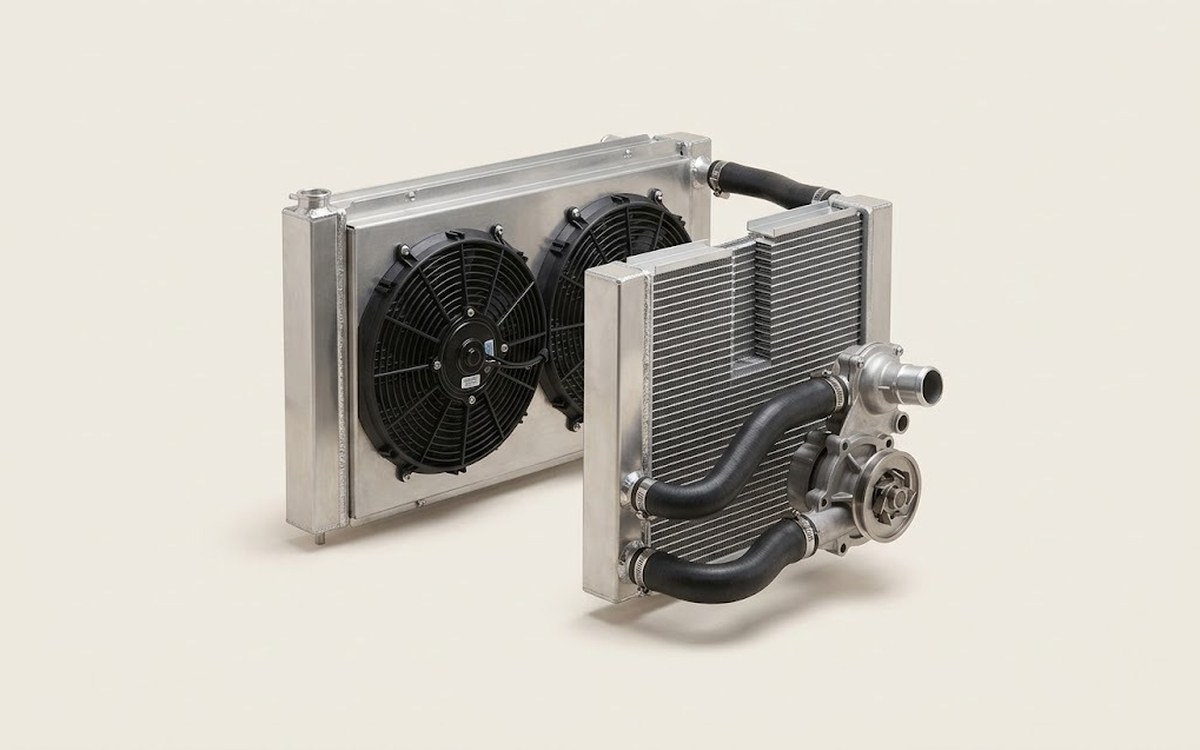 How it works · 3D
How the Engine Cooling System Works
How the part you're working on actually works — in plain English, on a 3D model.
Open in 3D →