Autopapyrus · Renault Talisman 1.5 dCi (2019)
https://autopapyrus.com/guides/renault/talisman/rear-brake-pad-replacement/
https://autopapyrus.com/guides/renault/talisman/rear-brake-pad-replacement/
Compiled automatically from service literature and owner experience. Specs are for the typical configuration — check them against your exact car before you start.
Renault Talisman 1.5 dCi (2019): Rear Brake Pad Replacement
The Talisman 1.5 dCi K9K has disc brakes at the rear. The pads need replacing every 40,000-70,000 km (25,000-43,000 mi), depending on driving style. The procedure requires a jack and jack stands, so work carefully.
Part
- 🔩 Rear brake pads – Renault 410603562R (aftermarket equivalents: Bosch BP1641, Ferodo FDB4259, TRW GDB3556). Also check the rotors – wear of more than 2 mm requires replacement
 There's a full repair manual for this car
Every system, wiring diagrams and torque specs — not just this job. Haynes AutoFix (online).
See manuals →
Step by step
14 steps- Park the car on a level surface and engage the parking brake.
- Raise the car with the jack (if you are replacing both rear wheels' pads at the same time, lift both corners). Place jack stands under the frame rails.
- Remove the rear right wheel (17 mm wrench).
- Visually inspect the caliper (the brake assembly with two pistons on the side of the rotor). It should be positioned at the front of the rotor.
- Remove the two caliper bolts (17 mm): the upper and the lower.
- Swing the caliper aside (toward the center of the car) and take out the old pads.
- Wipe the rotor and the caliper mounting surface with a rag to remove dust.
- Retract both caliper pistons using a special C-clamp or tool. The pistons should go in by 5-10 mm to make room for the thicker new pads.
- Install the new pads (usually two thin plates) in the same way the old ones were seated. Check that they are not crooked.
- Reinstall the caliper and tighten the bolts to 20-30 N·m (15-22 lb-ft). Check the exact value in the K9K service manual.
- Install the wheel and tighten the lug nuts in a crisscross pattern.
- Repeat the procedure on the other rear wheel.
- Lower the car and press the brake pedal firmly several times until it stops. The brake pedal should feel firm.
- Drive slowly around a parking lot and make several gentle stops to bed in the pads.
Common mistakes and warnings
- — Never work without jack stands – the jack can slip. — Do not reuse an old or damaged rotor – it is dangerous for braking at high speeds. — If the brake fluid in the reservoir is above the middle level, remove a little into a container before starting. When the pistons are pushed in, the fluid level rises and can overflow the reservoir. — Check the rotor thickness with a caliper. The minimum thickness for the Talisman K9K is approximately 8 mm (confirm in the technical documentation). If it is less, replace the rotor. — After the replacement, drive at moderate speeds for 50-100 km (30-60 mi) before braking hard or driving aggressively.
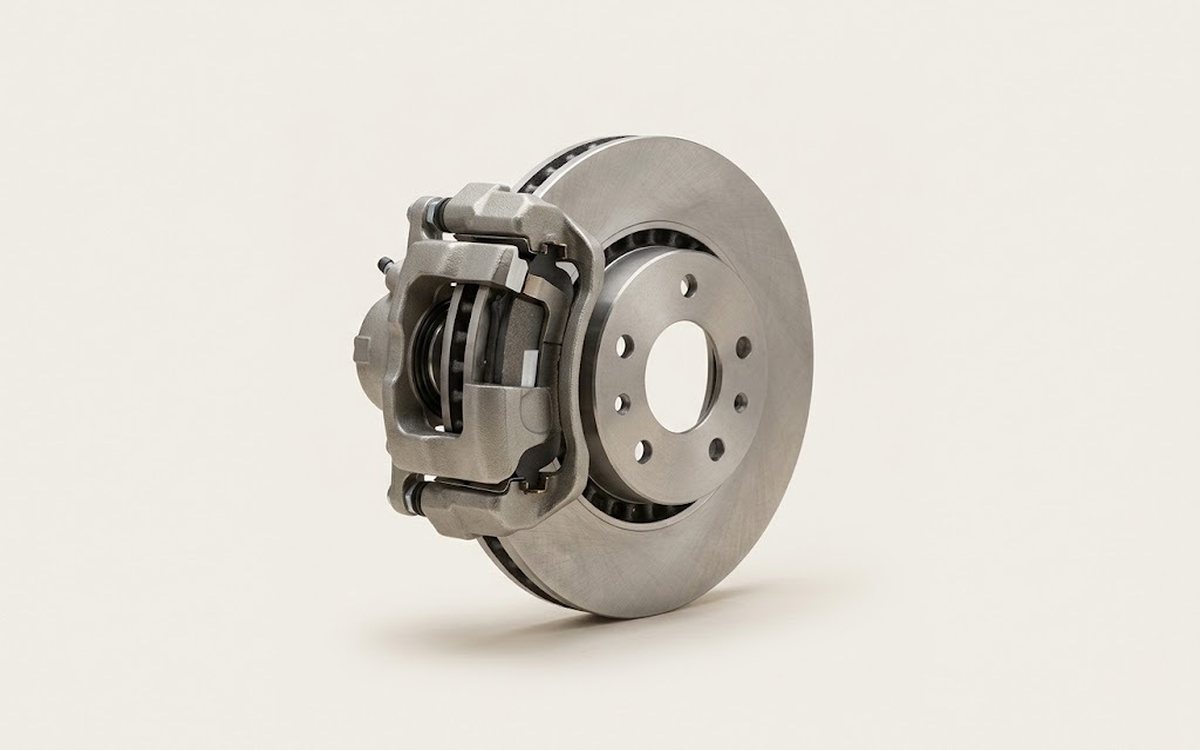 How it works · 3D
How Car Brakes Work
How the part you're working on actually works — in plain English, on a 3D model.
Open in 3D →