Autopapyrus · Volkswagen T-Cross 1.0 TSI (110 hp) (2019)
https://autopapyrus.com/guides/volkswagen/t-cross/coolant-replacement/
https://autopapyrus.com/guides/volkswagen/t-cross/coolant-replacement/
Compiled automatically from service literature and owner experience. Specs are for the typical configuration — check them against your exact car before you start.
Volkswagen T-Cross 1.0 TSI (110 hp) (2019): Coolant Replacement
Coolant on the T-Cross 1.0 TSI should be replaced every 50,000 km or every 2 years. The EA211 engine is built on the MQB platform and has no conventional drain plug on the radiator, so draining is done through the lower hose. Use G12 EVO (VW TL 774-L) or G13 (VW TL 774-J) coolant, which are compatible with each other and with older G12+/G12++.
Part
- 🔩 G12 EVO or G13 coolant (VW TL 774-L or TL 774-J), purple, 4-5 L (4.2-5.3 qt) of concentrate or 7-8 L (7.4-8.5 qt) of ready-mixed 50/50. MOTUL Auto Cool G12 EVO, KROON OIL SP 12 EVO and SHELL Premium Antifreeze G12 EVO are suitable
 There's a full repair manual for this car
Every system, wiring diagrams and torque specs — not just this job. Haynes AutoFix (online).
See manuals →
Step by step
14 steps- Wait until the engine has cooled down completely. Open the hood and locate the coolant expansion tank on the right side of the engine (a translucent plastic tank with a purple cap).
- Place a wide drain pan of at least 5 L (5.3 qt) under the engine. For better access, you can raise the front of the car with a jack and support it on jack stands.
- Carefully unscrew the expansion tank cap counterclockwise to release the pressure in the system.
- Find the lower radiator hose (a wide rubber hose, 30-35 mm in diameter, running from the bottom of the radiator to the engine). Loosen the spring clamp with pliers or a hose clamp tool and pull the hose off the radiator. Let the coolant drain completely into the pan.
- If the system needs flushing, after draining the old coolant, reconnect the hose and tighten the clamp. Pour distilled water in through the expansion tank up to the MAX mark, run the engine for 5-7 minutes, shut it off, let it cool, and drain again through the lower hose. Repeat the flush 1-2 times until the water runs clear.
- After draining and flushing, securely install the lower hose onto the radiator neck and tighten the spring clamp until it is firmly secured, without excessive force.
- Pour new coolant in through the expansion tank. Use ready-mixed 50/50 coolant and distilled water, or concentrate diluted 1:1 with distilled water. Fill slowly, pausing to let air escape.
- Fill the system to the MAX mark on the expansion tank. Leave the tank cap off.
- Start the engine and let it idle for 10-15 minutes. Periodically raise the engine speed smoothly to 2000-2500 rpm by pressing the accelerator pedal, to speed up circulation and remove air pockets.
- Watch the level in the expansion tank. As the engine warms up and the thermostat opens, the level may drop. Top up to the MAX mark. Carefully squeeze the upper and lower radiator hoses by hand (beware of hot surfaces) to push out air.
- Wait for the radiator electric fan to switch on (usually at about 90-95 degrees C). After the fan switches on, keep the engine running for another 2-3 minutes, then shut it off.
- Let the engine cool for 15-20 minutes and check the level in the expansion tank. It should be between the MIN and MAX marks. Top up if necessary. Tighten the expansion tank cap clockwise until it clicks.
- Check for leaks under the car and at the hose connections. Wipe up any drips with a clean rag.
- Take a test drive of 10-15 km, letting the engine fully warm up and then cool down. The next day, check the coolant level with the engine cold. It should be at or slightly above the MIN mark. Top up if necessary.
Common mistakes and warnings
- Never open the expansion tank cap on a hot engine. The system is under pressure, and scalding coolant may spray out and cause burns. Use only distilled water to dilute concentrate, because tap water contains salts that cause scale and corrosion. Do not mix coolants of different colors and specifications (for example, red G12 and purple G13) unless you are sure they are compatible. If coolant gets on your skin, wash it off immediately with soap and water, as ethylene glycol is toxic. Dispose of used coolant at a designated collection facility. Never pour it down a drain or onto the ground.
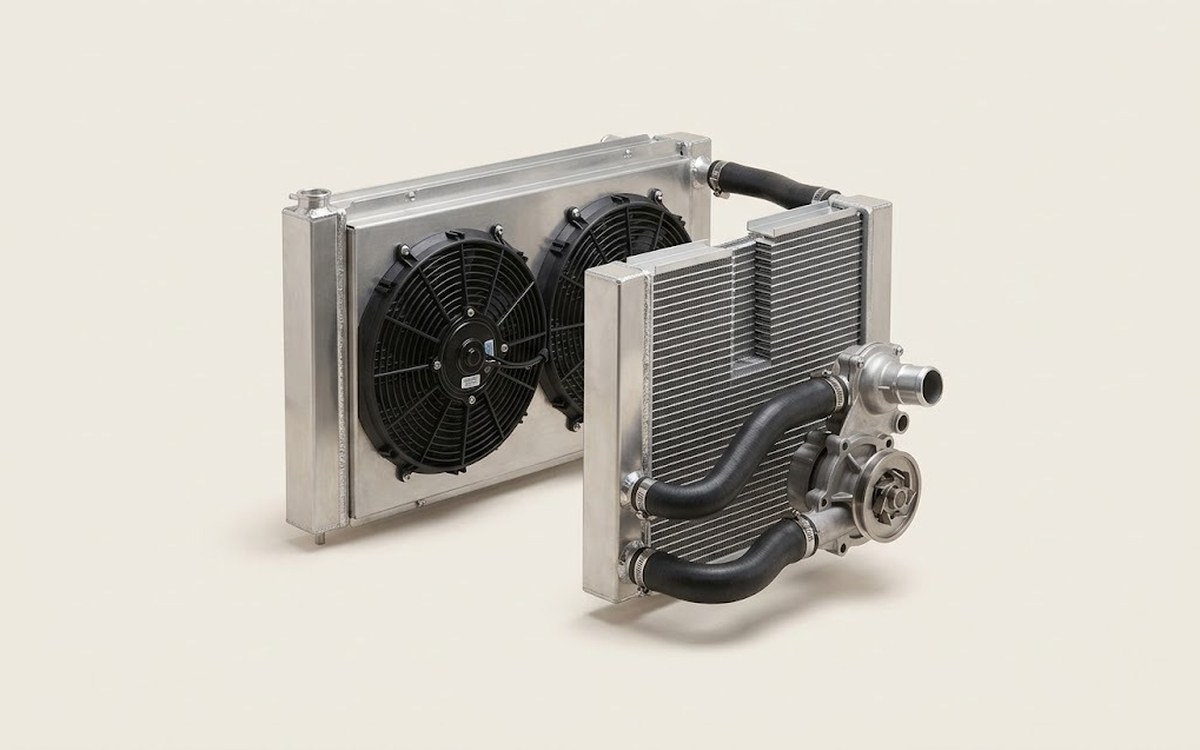 How it works · 3D
How the Engine Cooling System Works
How the part you're working on actually works — in plain English, on a 3D model.
Open in 3D →