Autopapyrus · Chevrolet Spark 1.2 (B12D1) (2014)
https://autopapyrus.com/guides/chevrolet/spark/coolant-replacement/
https://autopapyrus.com/guides/chevrolet/spark/coolant-replacement/
Compiled automatically from service literature and owner experience. Specs are for the typical configuration — check them against your exact car before you start.
Chevrolet Spark 1.2 (B12D1) (2014): Coolant Replacement
On the Chevrolet Spark M300 with the B12D1 engine, replace the coolant at the manufacturer's recommended interval, or at least every 4-5 years (or every 60,000-100,000 km). Do the job on a cold engine. The main goal is to drain all of the old coolant and, after refilling, remove any air pockets from the system. The exact bleeding procedure for this engine is not documented in publicly available service materials, so the general principle is given below. Check the details against the manufacturer's maintenance schedule.
Part
- 🔩 Dex-Cool-type coolant (orange, organic acid technology, OAT), either premixed or concentrate mixed 50/50 with distilled water. You need approximately 5-6 L (5.3-6.3 qt) (check the owner's manual for the exact system capacity). New hose clamps and a new coolant reservoir cap may also be needed
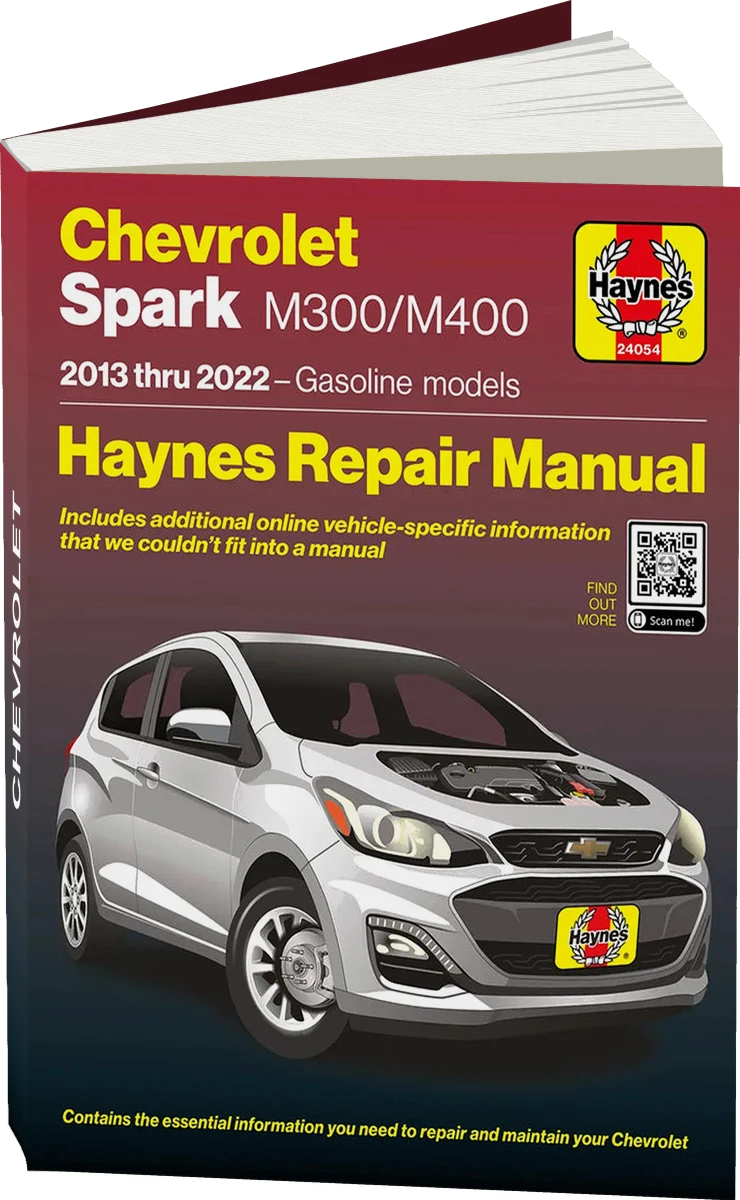 There's a full repair manual for this car
Every system, wiring diagrams and torque specs — not just this job. Haynes and 3 more.
See manuals →
Step by step
11 steps- Park the car on level ground and shut off the engine. Let it cool completely, at least 2-3 hours. Do not open the reservoir cap on a hot engine: the system is under pressure, and the coolant can scald you.
- Open the hood and locate the coolant reservoir. Slowly unscrew the cap to release the pressure.
- If a skid plate is installed, remove it. Place the drain pan under the radiator, at the bottom.
- Drain the coolant. If the lower radiator tank has a drain plug, carefully unscrew it. If there is no plug, loosen the clamp and disconnect the lower radiator hose. Leave the reservoir cap off so the coolant drains faster.
- Let the coolant drain completely. If you like, drain the remainder from the reservoir: disconnect its hose or scoop the coolant out. If the old coolant was cloudy, rusty or had sediment, flush the system with distilled water. Fill with water, warm up the engine with the heater on, let it cool, and drain. Repeat until the drained liquid is clear.
- Close the drain plug, or reinstall the hose and tighten the clamp. Inspect the hoses and clamps for cracks and leaks. Replace any worn parts.
- Set the cabin heater to maximum temperature to open the heater circuit. Slowly pour the new coolant into the reservoir until the level is between the MIN and MAX marks. Pour in a thin stream to avoid creating air pockets.
- Leave the reservoir cap off or on. Start the engine and let it idle until it warms up enough for the thermostat to open (the upper radiator hose will become hot). Watch the level in the reservoir and top it off as needed. Raise the engine speed slightly to 2,000-2,500 rpm to push the air out of the system.
- When hot air blows steadily from the heater vents and the reservoir level stops dropping, shut off the engine. Close the reservoir cap and let the engine cool.
- With the engine cold, check the coolant level and top it off to the MAX mark if necessary. Reinstall the skid plate. Over the next few days, check the level 2-3 more times, as it may drop because of residual air.
- Dispose of the old coolant at a collection facility. Do not pour it down a drain or onto the ground.
Common mistakes and warnings
- Do not mix coolants of different types or colors: mixing organic (Dex-Cool) coolant with others can cause sediment to form and clog the radiator. Coolant is toxic and poisonous to animals (it tastes sweet), so do not leave an open container out. If after the replacement the temperature gauge rises above normal, the heater stays cold on a warmed-up engine, or the level keeps dropping, stop the engine immediately: there may be an air pocket or a leak. If you lack experience, take the car to a repair shop.
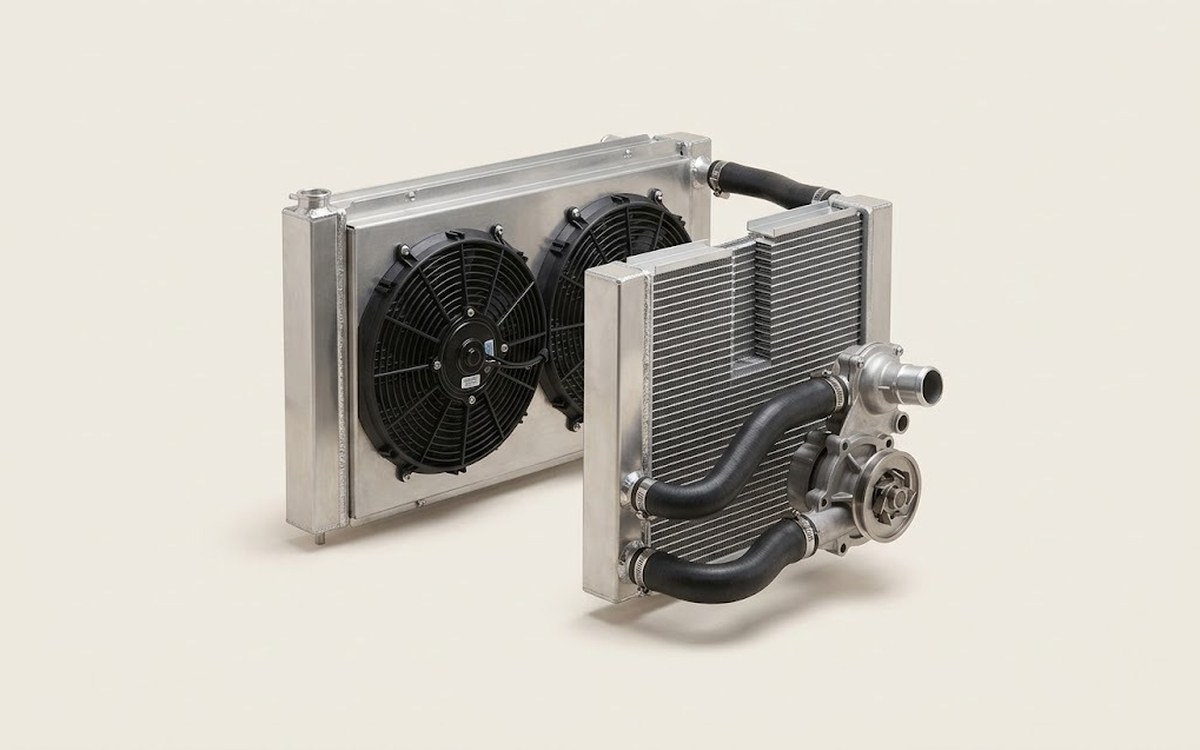 How it works · 3D
How the Engine Cooling System Works
How the part you're working on actually works — in plain English, on a 3D model.
Open in 3D →