Autopapyrus · Ford Mondeo 2.0 TDCi (2014)
https://autopapyrus.com/guides/ford/mondeo/thermostat-replacement/
https://autopapyrus.com/guides/ford/mondeo/thermostat-replacement/
Compiled automatically from service literature and owner experience. Specs are for the typical configuration — check them against your exact car before you start.
Ford Mondeo 2.0 TDCi (2014): Thermostat Replacement
The thermostat on the 2.0 TDCi diesel controls warm-up and maintains normal operating temperature. Typical signs of a faulty thermostat: the engine takes a long time to warm up, the heater blows cool air, the temperature gauge drops on the highway, or the engine overheats. The job can be done in a home garage, but it requires draining part of the coolant and bleeding air from the cooling system.
Parts
4- 🔩 Thermostat for 2.0 TDCi diesel (complete housing or insert) Alternatives: Wahler, Gates, Vernet
- 🔩 Thermostat O-ring or gasket new
- 🔩 Coolant (antifreeze) Ford WSS-M97B44-D concentrate or premixed
- 🔩 Hose clamps if needed
Tools
9- socket set and ratchet
- Torx sockets (E-type and T-type)
- flat-blade screwdriver
- hose clamp pliers
- drain pan for coolant (8 L (2.1 gal) or larger)
- funnel
- low-range torque wrench (5-25 N·m (4-18 lb-ft))
- shop rags
- gloves and safety glasses
 There's a full repair manual for this car
Every system, wiring diagrams and torque specs — not just this job. Haynes and 10 more.
See manuals →
Step by step
14 steps- Wait until the engine has cooled down completely. Park the car on a level surface, set the parking brake, and disconnect the negative battery terminal.
- Remove the engine cover. If the thermostat housing is blocked by the air intake duct or the air filter housing, remove them. Be sure to disconnect any electrical connectors and vacuum lines that get in the way.
- Locate the thermostat housing: the cooling system hoses coming from the radiator connect to it. Trace the lower radiator hose to the engine. Take photos of the hose and connector layout so you can reassemble everything correctly.
- Place the drain pan under the radiator. Carefully unscrew the expansion tank cap and drain the coolant through the lower radiator hose or the drain fitting, if there is one. It is enough to drain the level below the thermostat housing, usually 2-4 L (2.1-4.2 qt). If the coolant is old, cloudy, or contains sediment, drain all of it.
- Loosen the clamps and remove the hoses from the thermostat housing. If the hoses use quick-release connectors, press the tabs and pull the hose off carefully. Do not use force: plastic fittings are brittle, especially after several years of service.
- Remove the thermostat housing mounting bolts. Take off the housing, then remove the thermostat. Note the position of the thermostat, in particular the orientation of the air bleed valve (if fitted), and the seal.
- Clean the mating surface of any remains of the old gasket and scale. Do not let dirt get into the cooling system passages.
- Install the new thermostat with a new O-ring or gasket in the same position as the old one. The air bleed valve (if fitted) must be at the highest point.
- Install the housing and tighten the bolts evenly in a criss-cross pattern. The tightening torque for the small housing bolts is usually 8-12 N·m (6-9 lb-ft); check the exact value in the manufacturer's specifications. Do not overtighten: plastic housings crack easily.
- Reconnect the hoses and tighten the clamps. Reinstall the air intake duct, connectors, and engine cover, then reconnect the battery.
- Fill the expansion tank with coolant up to the MAX mark. Do not mix antifreezes of different types or colors.
- Bleed the system: leave the tank cap off or loosely placed on top, start the engine, and set the cabin heater to maximum with warm air. Warm the engine up until the thermostat opens, which is when the upper radiator hose becomes hot. Top up the coolant in the tank periodically. Bubbles should escape and the level should stabilize.
- Close the tank cap, let the engine cool down, and check the level again. Top up to MAX if necessary.
- Take a 10-15 minute test drive. Check that the temperature on the instrument cluster is stable, that there are no leaks around the thermostat housing and hoses, and that the heater works.
Common mistakes and warnings
- Do not open the expansion tank cap on a hot engine: the system is under pressure, and you may be burned by steam and hot coolant
- An air pocket in a diesel's cooling system causes localized overheating and can damage the cylinder head, so do not skip bleeding
- Used coolant is toxic; take it to a recycling facility
- If the engine still overheats or does not warm up after the replacement, check the water pump, the cooling fan, and the temperature sensor, or take the car to a repair shop
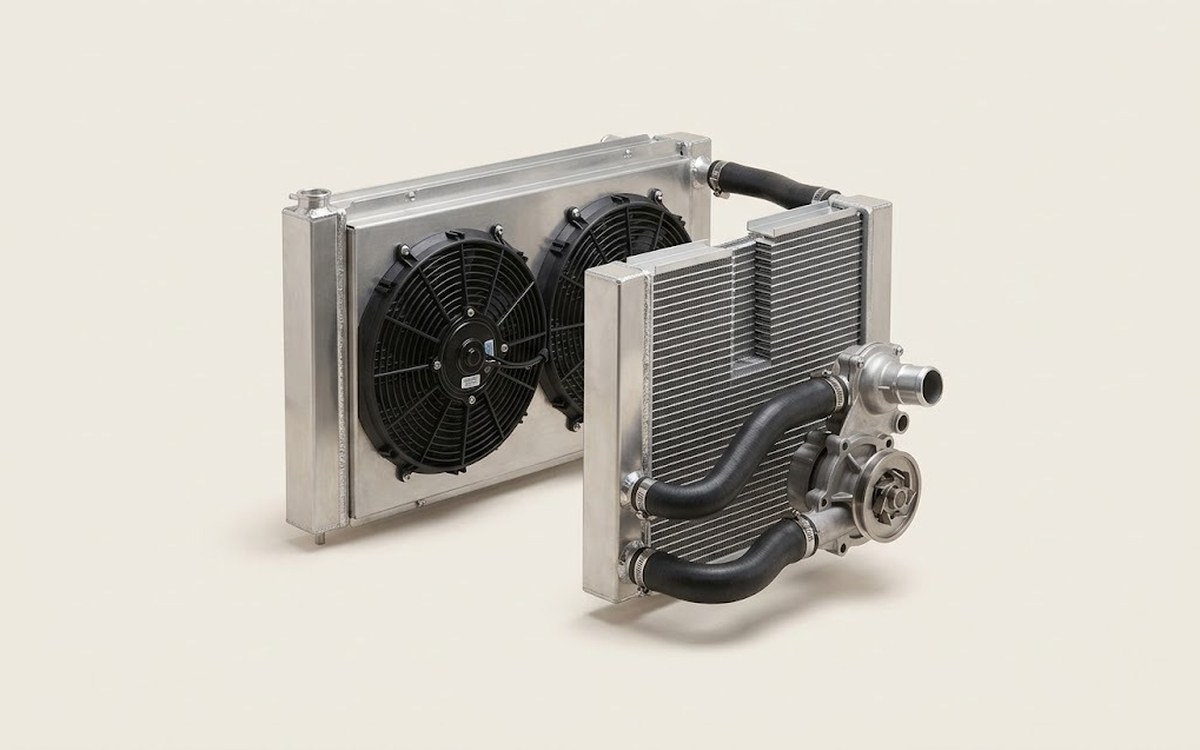 How it works · 3D
How the Engine Cooling System Works
How the part you're working on actually works — in plain English, on a 3D model.
Open in 3D →