Car care & driving
Your Safety Is in the Hands of Modern Technology
Autopapyrus
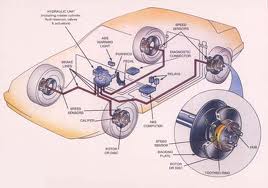
Earlier, we covered the anti-lock braking system (ABS), which helps the driver during emergency braking.
Now we'd like to continue the topic and look at other modern systems that provide a high level of active safety: electronic brakeforce distribution (EBD), emergency braking assist (Brake Assist), and electronic stability control (ESC, also known as ESP). Many modern cars are equipped with these technologies, and you can find details in your owner's manual, for example the Mitsubishi owner's manual.
ABS technology has been refined continuously, and its development led to the creation of brakeforce distribution systems. They are needed because, under hard braking, a car can lose steering control and start to skid. The reason is that each wheel has a different level of grip on the road, yet the braking force applied to each is the same. EBD is meant to solve this problem. It analyzes the readings from the ABS sensors and adjusts the braking force at each wheel according to its position on an uneven road surface. As a result, the system delivers effective emergency braking that takes into account road conditions and vehicle load.
Brake Assist is designed to shorten stopping distance as much as possible in an emergency and bring the car to a halt quickly. To do this, the system constantly monitors the force the driver applies to the brake pedal. If it detects a sudden or very prolonged press of the pedal, it treats the braking as an emergency and increases the braking force. The system also "learns" the driver's braking style and adapts to their individual habits. This eliminates the chance that a driver will fail to press the pedal hard enough in a dangerous situation. The technology is especially helpful for drivers who may not always have enough strength for emergency braking.
Another, even more advanced active safety technology is electronic stability control (ESC/ESP). It ensures effective deceleration by braking the wheels that are slipping. The system analyzes the specific skid situation and calculates which wheel needs to be braked to restore control of the car. ESC also reduces engine power. However, ABS sensors alone aren't enough for this system to work, so additional ones are installed. One registers the direction and speed of steering wheel rotation, while two others report the car's yaw (rotation) angle. Together, this data lets the system activate the right mechanisms at the right moment. Of course, this technology has its drawbacks. For example, it won't let an experienced driver take a corner in a controlled slide. Still, remember that the purpose of stability control is the active safety of the driver and passengers, and it does that job very well. What's more, aggressive driving and frequent extreme maneuvers can wear out the system's components, and you may need to consult the Honda repair manual.
When you choose a car equipped with advanced safety systems, you can feel confident for yourself and your loved ones, even when you have to drive in difficult road conditions.
Now we'd like to continue the topic and look at other modern systems that provide a high level of active safety: electronic brakeforce distribution (EBD), emergency braking assist (Brake Assist), and electronic stability control (ESC, also known as ESP). Many modern cars are equipped with these technologies, and you can find details in your owner's manual, for example the Mitsubishi owner's manual.
Confident Braking with EBD
ABS technology has been refined continuously, and its development led to the creation of brakeforce distribution systems. They are needed because, under hard braking, a car can lose steering control and start to skid. The reason is that each wheel has a different level of grip on the road, yet the braking force applied to each is the same. EBD is meant to solve this problem. It analyzes the readings from the ABS sensors and adjusts the braking force at each wheel according to its position on an uneven road surface. As a result, the system delivers effective emergency braking that takes into account road conditions and vehicle load.
Maximum Braking Force When You Need It
Brake Assist is designed to shorten stopping distance as much as possible in an emergency and bring the car to a halt quickly. To do this, the system constantly monitors the force the driver applies to the brake pedal. If it detects a sudden or very prolonged press of the pedal, it treats the braking as an emergency and increases the braking force. The system also "learns" the driver's braking style and adapts to their individual habits. This eliminates the chance that a driver will fail to press the pedal hard enough in a dangerous situation. The technology is especially helpful for drivers who may not always have enough strength for emergency braking.
Reliable Protection Against Skids
Another, even more advanced active safety technology is electronic stability control (ESC/ESP). It ensures effective deceleration by braking the wheels that are slipping. The system analyzes the specific skid situation and calculates which wheel needs to be braked to restore control of the car. ESC also reduces engine power. However, ABS sensors alone aren't enough for this system to work, so additional ones are installed. One registers the direction and speed of steering wheel rotation, while two others report the car's yaw (rotation) angle. Together, this data lets the system activate the right mechanisms at the right moment. Of course, this technology has its drawbacks. For example, it won't let an experienced driver take a corner in a controlled slide. Still, remember that the purpose of stability control is the active safety of the driver and passengers, and it does that job very well. What's more, aggressive driving and frequent extreme maneuvers can wear out the system's components, and you may need to consult the Honda repair manual.
When you choose a car equipped with advanced safety systems, you can feel confident for yourself and your loved ones, even when you have to drive in difficult road conditions.
What next