https://autopapyrus.com/catalog/changan/uni-t/guides/electronic-parking-brake-adjustment-calibration/
Changan UNI-T (1st generation): Electronic Parking Brake Adjustment (Calibration)
The Changan UNI-T has an electric parking brake (button on the center console). There is no mechanical cable adjustment. "Adjustment" here means calibration: the scan tool returns the caliper actuators to their home position and relearns the working stroke. Do it if the car doesn't hold well on a hill, the parking brake fault light is on, or after replacing the rear pads and rotors. No model-specific step-by-step documentation for this procedure is available in public sources, so what follows is the general principle for cars with an electric parking brake. Check details and values against the manufacturer's service manual.
Part
| № | Part | Alternatives |
|---|---|---|
| 01 | Rear brake pad set (for disc brakes)if wornFind on Amazon → | AlternativesBremboTRWATE |
Amazon links search by the part name; use Amazon's fit check for your car before ordering. We may earn a commission from qualifying purchases.
Tools
5Read the codes yourself
A scanner plugged into the OBD2 port under the dashboard shows which fault codes the car has stored, before you buy any parts. Cars sold in the US from 1996, and petrol cars in Europe from 2001 (diesels from 2004), have this port.
- Basic code reader, about $20–40: reads and clears engine codes Amazon →
- Bluetooth scanner with a phone app, about $30–100: live sensor data, and on many cars ABS and airbag codes too Amazon →
Check that the scanner lists your make and model year before you buy. We may earn a commission from qualifying purchases.
Step by step
10 steps- Park the car on a level surface and turn off the engine. If the battery is weak, connect a battery charger (calibration may not complete at low voltage). Place wheel chocks under the front wheels.
- Inspect the rear brakes. If the pads or rotors are worn, calibration won't help: replace them first and calibrate after reassembly.
- Connect the scan tool to the OBD diagnostic port under the steering column and check for fault codes in the parking brake module and ESP. If there are codes for the actuators, power supply or sensors, fix them first.
- In the scan tool menu, select the parking brake service function and enter service mode. The caliper actuators will retract, and a service mode indication will appear on the instrument cluster. In this mode the parking brake does not hold the car, so the wheels must be securely blocked.
- If the pads need replacing, raise the rear of the car, support it on jack stands, and remove the wheels and calipers. Do not let the caliper hang by the brake hose. Push the piston back only in the way that suits this caliper: do not compress it with a C-clamp on electric calipers, as this can damage the actuator. Tighten the caliper fasteners to the torque specified by the manufacturer.
- Reassemble and install the wheels. Tighten the wheel bolts in a crisscross pattern with a torque wrench to the manufacturer's specified torque.
- Exit service mode using the scan tool function and start the parking brake calibration (adaptation). The actuators will press the pads on their own and memorize the working position. Do not touch the parking brake button until the procedure is finished.
- Press the brake pedal several times until it feels firm so the pads seat. If the pedal is soft or sinks to the floor, do not drive the car.
- Check operation: apply and release the parking brake with the button, make sure you can hear the actuators working, and confirm the warning lights on the cluster go out. Clear the fault codes with the scan tool.
- Check that the car holds on a slope with the parking brake applied. Then do a careful test drive at low speed, listening for grinding noises and watching for pulling or vibration.
Common mistakes and warnings
- The brake system is safety-critical
- If you lack experience or a scan tool with EPB functions, leave this work to a repair shop
- Never apply voltage directly to the actuator motor and never force the piston back, or you can damage the actuator
- If the parking brake fault light stays on after calibration, do not keep pressing the button: have the system diagnosed
- If the system gives an error when entering service mode or during calibration, it needs diagnosis with shop equipment
- Only work under the car when it is supported on jack stands, never on a jack alone
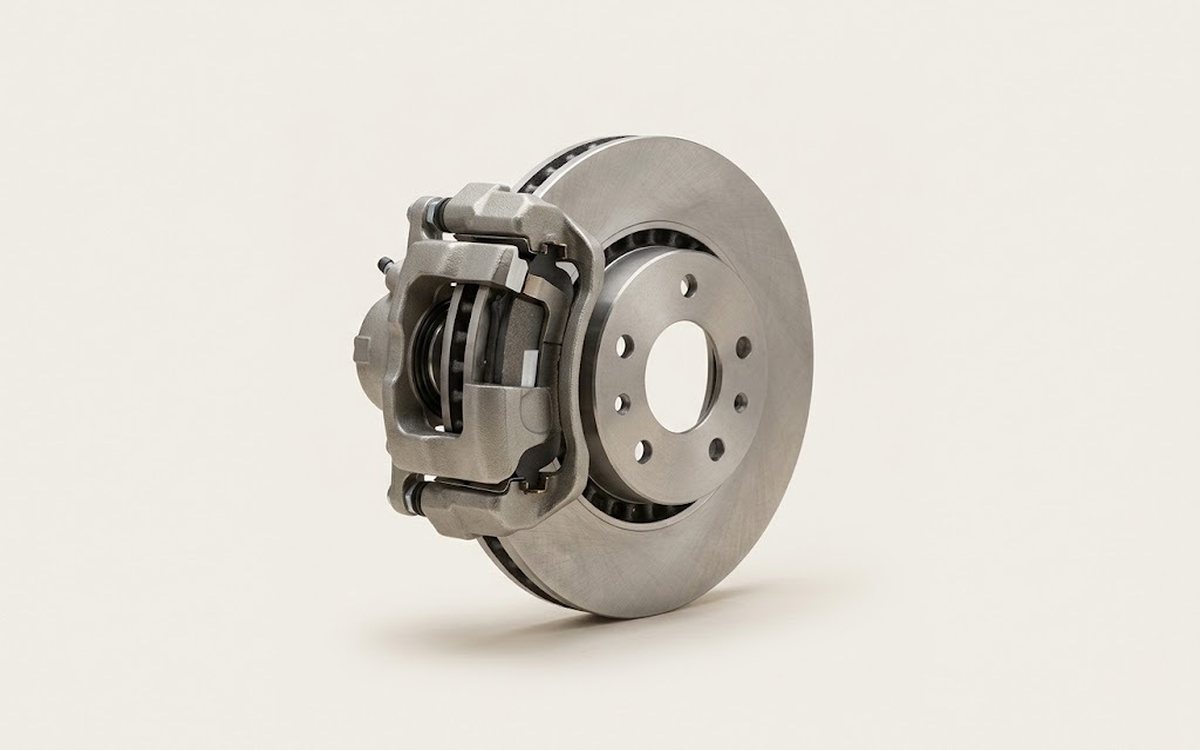 How it works · 3D
How Car Brakes Work
How the part you're working on actually works — in plain English, on a 3D model.
Open in 3D →