https://autopapyrus.com/catalog/toyota/prius/guides/engine-coolant-temperature-sensor-replacement-xw50-4-e-2016/
Toyota Prius 1.8 Hybrid 2ZR-FXE (2016): Engine Coolant Temperature Sensor Replacement
On the Prius XW50, the coolant temperature sensor is threaded into the water joint (No. 2 water joint) on the heater pipe, at the rear of the engine compartment near the firewall, under the left side of the cowl. Access is tight: you need to remove the left lower under cover, the wiper arms with the wiper motor and linkage, and the cowl parts, and you also need to drain the coolant. Before replacing the sensor, test it with an ohmmeter: at about 20 °C the resistance should be 2.32-2.59 kΩ, and at about 80 °C it should be 0.310-0.326 kΩ. If the readings are different, replace the sensor.
Key figures
- Torque for the new sensorstep 12; more than this risks stripping the threads or bending the heater pipe8.0 N·m (71 in-lb) (7.0 N·m (62 in-lb) on the torque wrench if you use a 19 mm union nut wrench together with a torque wrench)
- Wrench size for the sensorsteps 10 and 12; a regular open-end wrench or socket will not fit the sensor, as there is very little room19 mm (union nut wrench)
- Resistance of a good sensorohmmeter check before replacement (summary); if the readings do not match, replace the sensor2.32-2.59 kΩ at about 20 °C and 0.310-0.326 kΩ at about 80 °C
- Torque for the cowl panel bolts and reinforcementsteps 7, 8 and 14; this is the tightening torque during reassembly12 N·m (9 lb-ft)
- Torque for the 4 nuts of the outer cowl panelsteps 8 and 14; tightening torque during reassembly50 N·m (37 lb-ft)
Check these values against the manufacturer’s specification for your vehicle before you start.
Parts
2| № | Part |
|---|---|
| 01 | Engine coolant temperature sensor 2ZR-FXEFind on Amazon → |
| 02 | Toyota Super Long Life CoolantFind on Amazon → |
Amazon links search by the part name; use Amazon's fit check for your car before ordering. We may earn a commission from qualifying purchases.
Tools
7Read the codes yourself
A scanner plugged into the OBD2 port under the dashboard shows which fault codes the car has stored, before you buy any parts. Cars sold in the US from 1996, and petrol cars in Europe from 2001 (diesels from 2004), have this port.
- Basic code reader, about $20–40: reads and clears engine codes Amazon →
- Bluetooth scanner with a phone app, about $30–100: live sensor data, and on many cars ABS and airbag codes too Amazon →
Check that the scanner lists your make and model year before you buy. We may earn a commission from qualifying purchases.
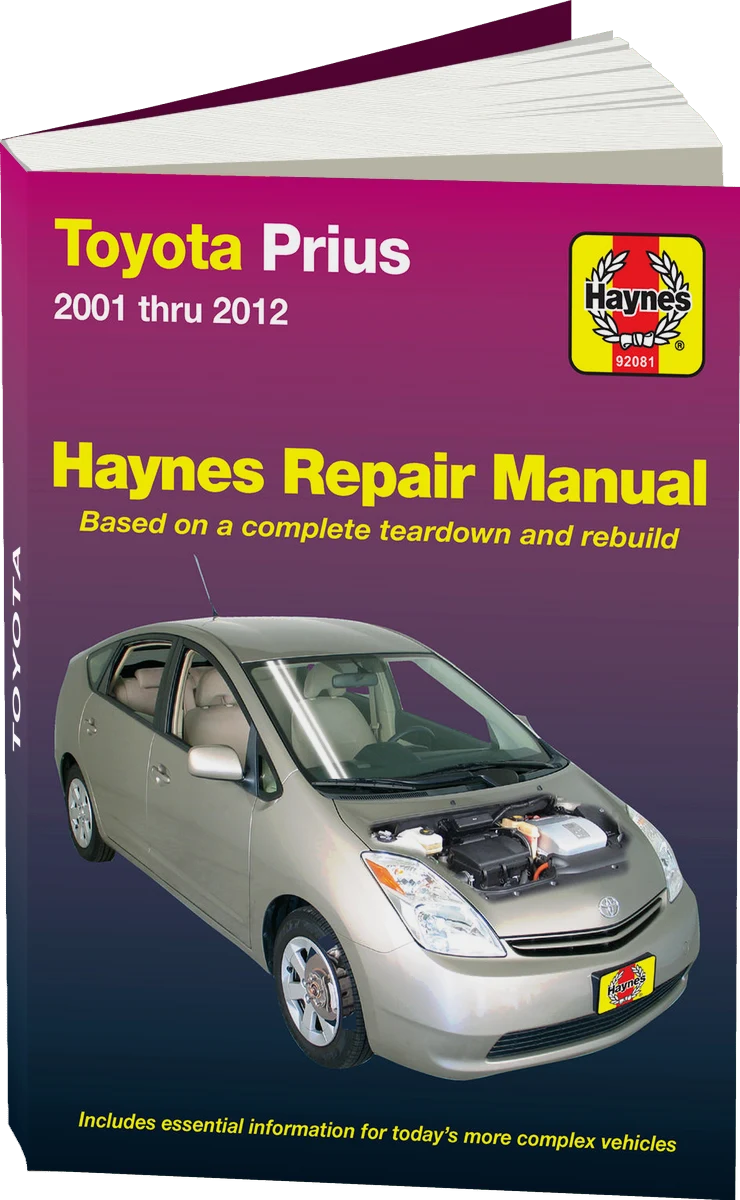 There's a full repair manual for this car
Every system, wiring diagrams and torque specs — not just this job. Haynes and 5 more.
See manuals →
Step by step
17 steps- Turn the vehicle off (READY indicator off) and let the engine cool down completely. On a hybrid, the engine can start by itself, so work only with the system off and the vehicle not charging (keep the key/fob away from the vehicle). For safety, disconnect the negative terminal of the 12-volt battery.
- Remove the left rear engine compartment under cover (rear motor under cover LH) from below: 7 clip-bolts on the standard version, 8 on the rough-road version.
- Drain the engine coolant using the standard procedure for the 2ZR-FXE. Draining is required because the sensor is installed in the coolant circuit. Drain into a clean container; coolant is toxic.
- Remove the wiper arms and the wiper motor with linkage (windshield wiper motor and link assembly).
- Remove the heater air duct splash shield seal (No. 1 heater air duct splash shield seal).
- Remove the left cowl water guard plate (water guard plate LH).
- Unbolt the left cowl body mounting reinforcement (cowl body mounting reinforcement LH, 4 bolts; installation torque 12 N·m (9 lb-ft)).
- Remove the outer cowl top panel. On installation: 7 bolts at 12 N·m (9 lb-ft) and 4 nuts at 50 N·m (37 lb-ft) (per the Toyota procedure).
- Locate the sensor: a blue plastic body with a two-pin connector on the water joint of the heater pipe. Disconnect the connector by pressing the lock tab.
- Place a rag underneath, then use the 19 mm union nut wrench to unscrew the sensor from the joint. Do not apply heavy force to the heater pipe: hold it steady and do not bend it.
- Inspect the socket and clean the seating area of coolant residue and dirt. Install the new sensor (with the seal, if one comes with it) in the same joint.
- Tighten the sensor with the 19 mm wrench to 8.0 N·m (71 in-lb). If you are using the 19 mm union nut wrench together with a torque wrench with a lever length of about 155 mm, set the torque wrench to 7.0 N·m (62 in-lb). Again, do not push on the heater pipe.
- Connect the sensor connector until it clicks.
- Reinstall everything in reverse order: the outer cowl panel (7 bolts at 12 N·m (9 lb-ft), 4 nuts at 50 N·m (37 lb-ft)), the cowl reinforcement (12 N·m (9 lb-ft)), the water guard plate, the seal, the wiper motor and linkage, and the wiper arms.
- Refill the system with coolant using the standard procedure, filling the reservoir to the normal level (capacity and type per the Toyota specification for this model).
- Switch the system on (READY), warm the engine up to operating temperature, and check for leaks at the sensor and on the hoses. After the engine cools down, check the reservoir level and top it off if needed.
- Install the left lower under cover. If a coolant temperature sensor fault was showing on the dash (for example P0115, P0117, P0118), clear the codes with a scan tool and make sure they do not return.
Common mistakes and warnings
- Work only on a cold engine: hot coolant causes burns
- The sensor threads and the heater pipe are thin, and 8 N·m is a low torque: overtightening or jerking the wrench can easily strip the threads or deform the pipe, so use a torque wrench
- A hybrid's engine can start automatically while the system is on; turn READY off and disconnect the battery while you work
- If you have no experience working with wipers, the cowl and the cooling system, it is better to have a repair shop do the replacement
Spotted a mistake? Tell us →
Our articles
 Brand stories
The History of Toyota
From weaving looms to reliable mass-produced cars.
Read →
 Garage
Fuel Quality Indicators: What Octane and Cetane Numbers Mean
What is an octane number? What about a cetane number? Which fuel should you choose for a high-compression engine?…
Read →
 Before you buy
How to Pick Up Your Car from the Dealership the Right Way
If you've decided to buy a car from a dealership, it isn't enough to simply choose a model you like, pay for it, and…
Read →