Autopapyrus · JAC JS4 (2024)
https://autopapyrus.com/guides/jac/js4/coolant-antifreeze-replacement/
https://autopapyrus.com/guides/jac/js4/coolant-antifreeze-replacement/
Compiled automatically from service literature and owner experience. Specs are for the typical configuration — check them against your exact car before you start.
JAC JS4 (2024): Coolant (Antifreeze) Replacement
On the JS4, coolant is replaced about every 2-3 years or every 40,000-60,000 km, depending on the maintenance schedule and the type of fluid installed. Only do this on a cold engine. The main challenge is removing all the air from the cooling circuit to avoid air pockets and overheating.
Parts
3| № | Part |
|---|---|
| 01 | G12/G12+ coolant (ethylene glycol based, red or pink, either premixed for -35…-40 °C or concentrate plus distilled water) |
| 02 | system capacity is approximately 6-8 L (6.3-8.5 qt) (check the manufacturer's specification for your exact engine) |
| 03 | if needed, a new drain plug sealing ring or gasket |
Tools
7- jack stands or a lift
- wrench or screwdriver for the radiator drain plug
- 8-10 L (8.5-10.5 qt) drain container
- funnel
- gloves
- wrench or socket for removing the engine undertray (if fitted)
- hose and distilled water for flushing (optional)
Step by step
14 steps- Park the vehicle on level ground and shut off the engine. Let it cool for at least 2-3 hours. Do not open the expansion tank cap on a hot engine: pressurized coolant can cause burns.
- If necessary, raise the front of the vehicle and remove the lower engine undertray.
- Open the hood. Slowly unscrew the expansion tank cap to release any residual pressure.
- Turn the ignition on without starting the engine. Set the cabin temperature control to maximum heat so the heater circuit is open and drains along with the main circuit.
- Place the container under the radiator. Open the drain plug on the lower radiator tank (or disconnect the lower radiator hose if there is no plug). Drain the coolant completely.
- The cylinder block may have a separate drain plug. If it does, open it as well, with the container underneath. If there is no plug, some coolant will remain in the engine's water jacket, so do a flush for a complete replacement.
- Check the color of the drained coolant. A rusty tint, sediment or oily streaks indicate problems: a flush is needed, and an oil film points to a possible leak in the cooling system (for example, in the oil cooler) or a cylinder head gasket problem.
- Flush the system if desired. Close the drain opening, fill with distilled water, warm up the engine with the heater on until the thermostat opens, shut it off, let it cool and drain. Repeat until the drained water runs clean.
- Close the drain openings. If the plug has a sealing ring, fit a new ring and tighten the plug moderately (as a guide, 10-20 N·m (7-15 lb-ft); check the service manual for the exact value). If you removed a hose, reconnect it and secure the clamp.
- Pour the new coolant into the expansion tank in a thin stream to avoid air pockets. Bring the level up to the MAX mark. If there is a bleed valve (on the upper hose or at the thermostat), open it and close it once coolant flows out without bubbles.
- Close the tank cap. Start the engine, set the heater to maximum and hold the engine speed at 1500-2500 rpm until the thermostat opens (the upper radiator hose becomes hot and the fan switches on). Watch the level in the tank and top up as needed.
- Rev the engine lightly a few times to push out any remaining air. Hot air should come out of the heater vents. If the heater is cold, an air pocket remains and the procedure must be repeated.
- Shut off the engine, wait until it has cooled completely and check the level. Top up to MAX, then refit the engine undertray (tighten the fasteners moderately; as a guide, 8-12 N·m (6-9 lb-ft) for small bolts).
- Dispose of the drained coolant at a collection facility (it is toxic). Over the next few days, check the level with the engine cold and watch for leaks under the vehicle.
Common mistakes and warnings
- Do not mix coolants of different types or brands unless you are sure they are compatible: sediment may form and clog the radiator
- Never open the expansion tank on a hot engine
- Coolant is poisonous and dangerous to animals, so clean up any spills immediately
- If the engine overheats after the replacement, the temperature gauge fluctuates or the heater does not warm up, shut off the engine and contact a repair shop instead of continuing to drive
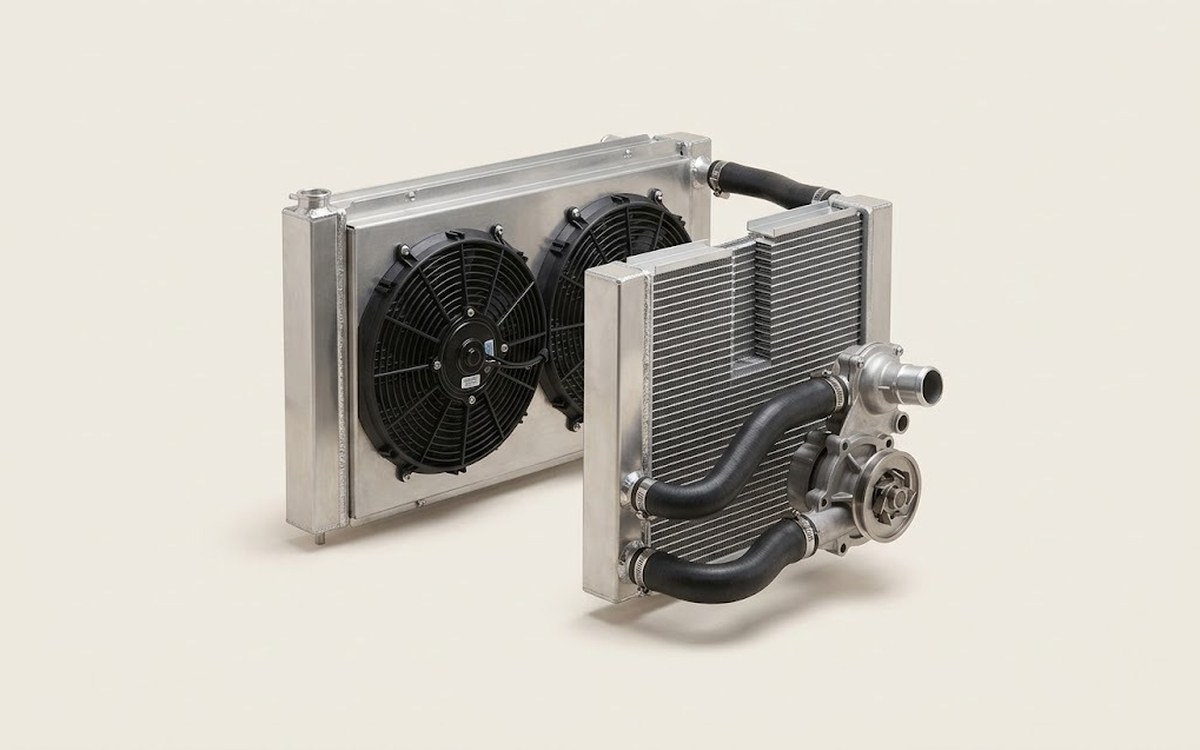 How it works · 3D
How the Engine Cooling System Works
How the part you're working on actually works — in plain English, on a 3D model.
Open in 3D →