Autopapyrus · Hyundai Santa Fe 2.4 GDI G4KJ (2020)
https://autopapyrus.com/guides/hyundai/santa-fe/coolant-replacement/
https://autopapyrus.com/guides/hyundai/santa-fe/coolant-replacement/
Compiled automatically from service literature and owner experience. Specs are for the typical configuration — check them against your exact car before you start.
Hyundai Santa Fe 2.4 GDI G4KJ (2020): Coolant Replacement
Coolant is replaced according to the maintenance schedule, usually every few years or after a set mileage. See the owner's manual for the exact interval. The coolant is drained through the lower radiator hose or the radiator drain valve. Then the system is refilled and bled of air. The total capacity of the 2.4 GDI cooling system is about 7-8 L (7.4-8.5 qt). Refill with the same type of coolant that was in the system. Do not mix different types.
Parts
2| № | Part |
|---|---|
| 01 | Long-life ethylene glycol coolant, Hyundai/Kia approved (ready-mixed 50/50 or concentrate)about 7-8 L (7.4-8.5 qt), plus extra for flushing if needed |
| 02 | Distilled waterfor diluting concentrate |
Tools
7- jack and jack stands or an inspection pit
- wrench or socket for removing the plastic underbody shield
- drain pan of 10 L (10.5 qt) or larger
- funnel
- flushing hose
- gloves
- rags
 There's a full repair manual for this car
Every system, wiring diagrams and torque specs — not just this job. Haynes and 6 more.
See manuals →
Step by step
13 steps- Park the vehicle on level ground and let the engine cool completely. It must be cold, or you risk getting burned. Turn off the engine and set the parking brake.
- Open the hood and find the coolant reservoir. Check the color and clarity of the coolant. A rusty tint, an oily film or sediment is a reason to flush the system and look for the cause.
- Raise the front of the vehicle with a jack and jack stands, or drive it over an inspection pit. Remove the lower plastic engine undershield if it blocks access to the radiator.
- Place a drain pan under the radiator. With the engine cold, open the reservoir cap or radiator cap so the system doesn't hold a vacuum.
- Open the drain valve at the bottom of the radiator. It is usually plastic and turns by hand, with no tools. If there is no drain valve, carefully remove the lower radiator hose by loosening the clamp. Drain all the coolant.
- If the cylinder block has a drain plug, open it too to drain the remaining coolant. Check whether this engine has a plug, and where it is, during your inspection. If there is no plug, the remaining coolant will stay in the block's water jacket. This is normal, and it will dilute the fresh coolant.
- If the coolant is dirty, flush the system. Fill it with distilled water, warm up the engine until the thermostat opens with the heater on maximum, then turn off the engine, let it cool and drain. Repeat until clean water comes out of the system.
- Close the drain valve, or reinstall the hose and tighten the clamp. Make sure nothing leaks. If the block has a drain plug, tighten it to the manufacturer's specification, about 25-35 N·m (18-26 lb-ft) for a plug of this type.
- Slowly pour fresh coolant in through the reservoir filler neck so air pockets don't form. Bring the level to the MAX mark. If you need to dilute a concentrate, use only distilled water, mixed 50/50.
- With the reservoir cap still off, start the engine. Set the heater to maximum heat and hold the engine at 2000-2500 rpm. Watch the level in the reservoir and top it up as it drops. Let the engine run until the thermostat opens and the cooling fan has come on at least once. Only then close the reservoir cap.
- Turn off the engine and let it cool. Check the level with the engine cold and top up if needed to between the MIN and MAX marks. Then remove the cap with the engine cold to check that the air is gone. If needed, repeat the warm-up and top-up.
- Check the hoses, drain valve and clamps for leaks. Install the underbody shield. After 1-2 days of driving, check the level again with the engine cold.
- Take the drained coolant to a recycling facility. It is toxic, so do not pour it on the ground or down a drain.
Common mistakes and warnings
- Never open the cap on a hot engine
- The system is under pressure and you could be seriously burned
- Do not mix different types of antifreeze, and do not use ordinary water instead of distilled water
- An air pocket in the system causes overheating
- If the temperature gauge climbs after the replacement, or the heater blows cold air, stop, turn off the engine and bleed the system again
- Check the exact capacity, coolant type and replacement interval in the vehicle's owner's manual
- If you have no experience, it is better to go to a repair shop
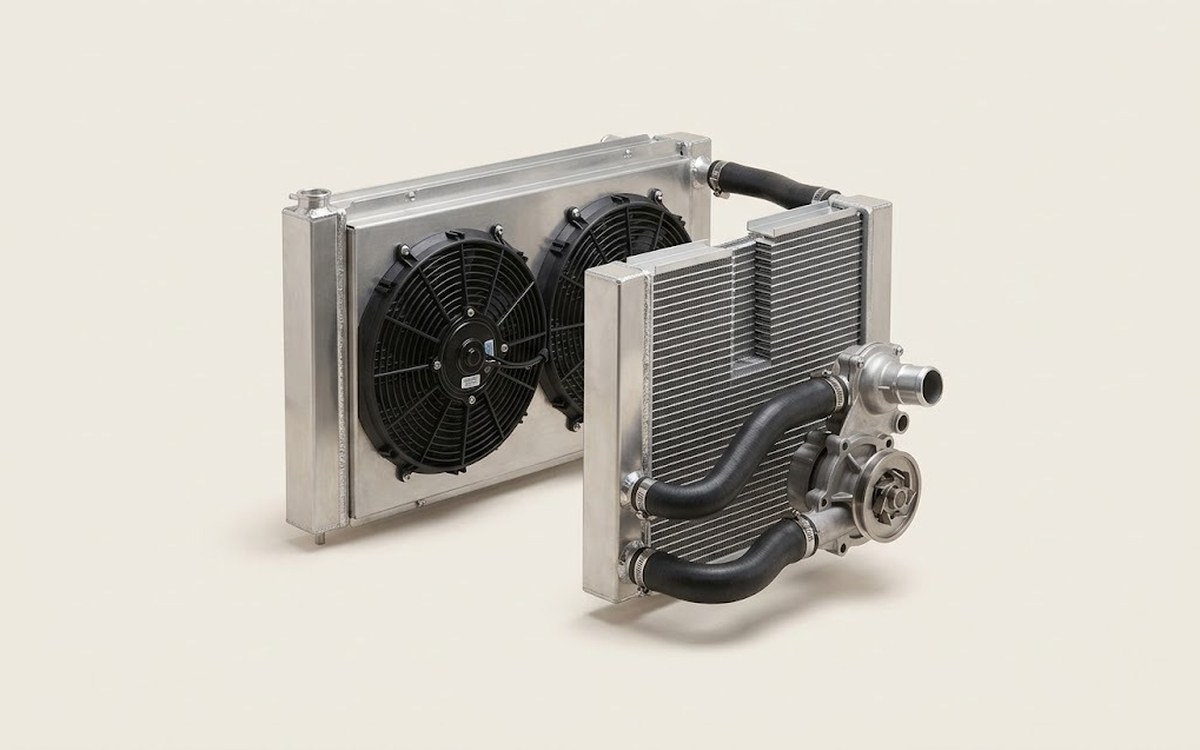 How it works · 3D
How the Engine Cooling System Works
How the part you're working on actually works — in plain English, on a 3D model.
Open in 3D →