Autopapyrus · Nissan Vanette 2.2 Diesel LD20 (1999)
https://autopapyrus.com/guides/nissan/vanette/coolant-replacement/
https://autopapyrus.com/guides/nissan/vanette/coolant-replacement/
Compiled automatically from service literature and owner experience. Specs are for the typical configuration — check them against your exact car before you start.
Nissan Vanette 2.2 Diesel LD20 (1999): Coolant Replacement
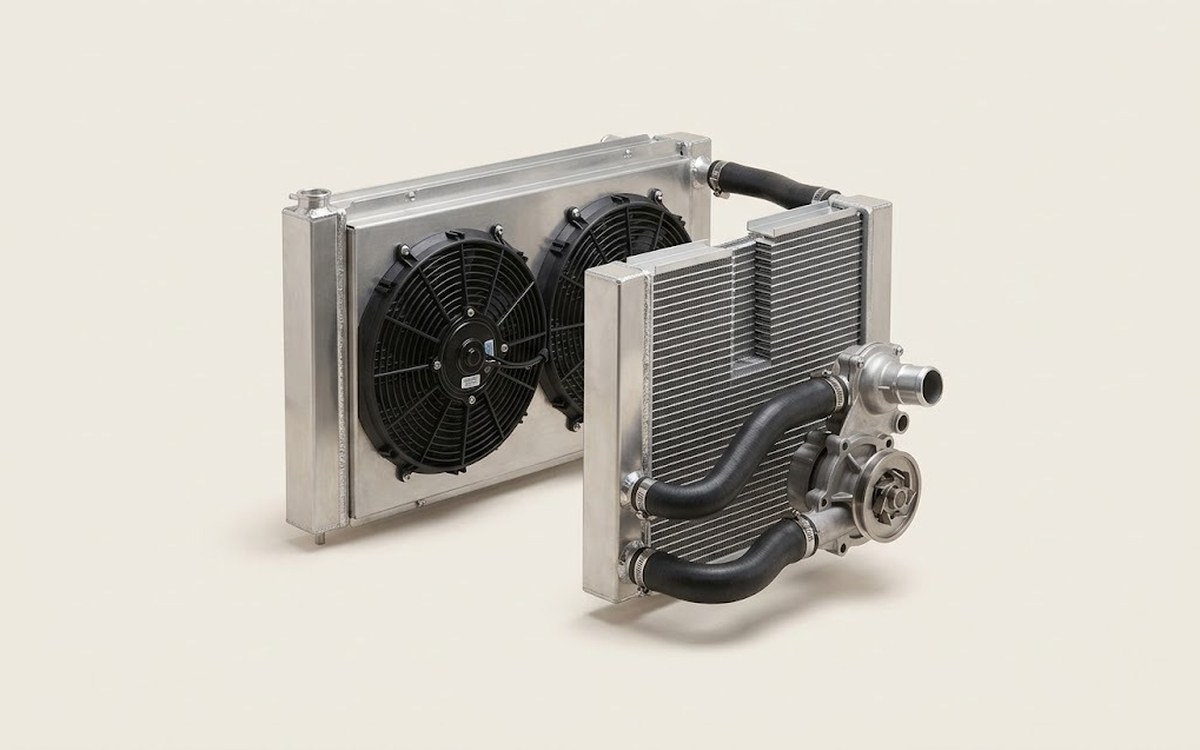
The LD20 is liquid-cooled, with a radiator, a thermostat and an expansion tank. Replace the coolant about every 2-3 years or every 40,000-60,000 km. Do the job on a cold engine, because a hot engine's cooling system is under pressure. The system capacity is roughly 7-9 L (7.4-9.5 qt). The exact figure depends on whether the vehicle has a heater. Buy extra and go by the amount that actually drains out.
Parts
4| № | Part | Genuine part no. |
|---|---|---|
| 01 | Ethylene glycol-based antifreeze (premixed or concentrate)same type already in the system; do not mix different types | |
| 02 | Distilled waterfor diluting concentrate | |
| 03 | Radiator capif needed | 21430-9C002 |
| 04 | Drain plug sealing ringsif needed |
Part numbers are from the manufacturer's original catalogue. Check them against your VIN before ordering.
Tools
7- 10 L (10.6 qt) drain pan
- funnel
- flat-blade screwdriver (for hose clamps)
- wrench or socket for the drain plugs
- gloves
- rags
- distilled water for flushing
Step by step
12 steps- Park the vehicle on level ground, shut off the engine and let it cool down completely (at least 1-2 hours). Do not open the radiator cap on a hot engine: you could be burned by steam and hot coolant.
- Open the hood and remove the radiator cap (or filler neck cap). Turn the ignition on and set the heater control to maximum heat. This opens the heater valve so the heater core drains as well. Then turn the ignition off.
- Place the drain pan under the radiator and open the radiator's lower drain plug. If there is no plug, loosen the clamp and remove the lower hose. Let the coolant drain completely.
- Drain the coolant from the cylinder block through the block drain plug, if your engine has one. The plug is at the bottom of the block, usually on the exhaust manifold side, and can be awkward to reach. Do not remove the plug if it is badly seized: stripped threads in a cast iron block cost more to fix.
- Drain the expansion tank: disconnect the hose or remove the tank, pour out what is left and rinse out any sediment.
- If the drained coolant is rusty or cloudy, close the plugs and fill the system with distilled water. Start the engine, warm it up until the thermostat opens with the heater on maximum, shut it off, let it cool and drain it. Repeat until clean water comes out of the system.
- Tighten the drain plugs (with new sealing rings if the old ones are damaged), or put the hose and clamp back in place. The plug torque is low, about 5-10 N·m (4-7 lb-ft). Tighten carefully and without force, especially the plastic radiator plug.
- If you flushed with water, drain it out as completely as you can. Leftover water will dilute the antifreeze, so it is better to fill with a ready-mixed solution right away (with a margin for freeze protection).
- Slowly pour the new coolant into the radiator up to the neck. Also add some coolant to the expansion tank up to the MAX mark. Pour in a thin stream so the air can escape from the system.
- Leave the radiator cap off, start the engine at idle and turn the heater on to maximum. As the engine warms up, the air will work its way out and the level in the neck will drop. Keep topping up until the level stops dropping. Squeeze the upper radiator hose by hand (wearing a glove) to push out air pockets.
- When the thermostat opens (the upper hose becomes hot and the fan comes on), put the radiator cap back on and let the engine run another 5-10 minutes. Then shut it off.
- Once the engine has cooled completely, check the level in the tank and top up to the mark if needed. Inspect the plugs, hoses and clamps for leaks. Check the level again over the next few days.
Common mistakes and warnings
- Antifreeze is poisonous, and animals are attracted to its sweet smell
- Do not leave an open container out, and do not pour used coolant on the ground
- Take it to a collection point
- Do not mix antifreezes of different types or colors
- An air pocket in the system makes the diesel overheat, and overheating can damage the cylinder head
- If the temperature gauge moves toward the red zone, shut off the engine immediately
 How it works · 3D
How the Engine Cooling System Works
How the part you're working on actually works — in plain English, on a 3D model.
Open in 3D →