Autopapyrus · Skoda Superb 2.0 TDI DFGA (2018)
https://autopapyrus.com/guides/skoda/superb/coolant-replacement/
https://autopapyrus.com/guides/skoda/superb/coolant-replacement/
Compiled automatically from service literature and owner experience. Specs are for the typical configuration — check them against your exact car before you start.
Skoda Superb 2.0 TDI DFGA (2018): Coolant Replacement
Coolant replacement on the 2.0 TDI (DFGA), with a total cooling system capacity of roughly 7-8 L (7.4-8.5 qt). The system requires G13 coolant (TL 774-J). Do not mix it with other coolant classes (G11, or red and green brands with a different base). Replace it every 4-5 years or per the maintenance schedule, or sooner if the coolant has darkened or contains sediment.
Parts
3| № | Part |
|---|---|
| 01 | Coolant (antifreeze) VW TL 774-J (G13), purple, concentrate or premixed -35…-40 °Cabout 8 L (8.5 qt) |
| 02 | Cooling system hose clampsif needed |
| 03 | Expansion tank cap sealif needed |
Tools
8- Lift or inspection pit
- wrench or bit for removing the engine undertray (Torx/slotted screws)
- flat-blade screwdriver
- hose clamp pliers
- drain pan with 8-10 L (8.5-10.5 qt) capacity
- funnel
- gloves
- clean water or distilled water for flushing
 There's a full repair manual for this car
Every system, wiring diagrams and torque specs — not just this job. Haynes AutoFix (online) and 2 more.
See manuals →
Step by step
13 steps- Park the car on level ground and let the engine cool completely (below 40 °C). Never open the expansion tank on a hot engine: the system is under pressure and you can get burned.
- Open the hood and carefully unscrew the expansion tank cap in two stages to release any residual pressure.
- Raise the car and remove the engine undertray.
- Place the drain pan under the lower radiator hose. Loosen the clamp and pull the lower hose off the radiator outlet (some versions have a drain plug on the radiator. If yours does, use it). Drain all the coolant. This takes several minutes.
- If needed, drain the remaining coolant from the block. This engine's block has no standard drain plug, so draining through the radiator is enough to replace more than 90% of the coolant. If the coolant is heavily contaminated, flush the system with clean water or distilled water: fill it, warm up the engine with the heater on, drain, and repeat until the drained liquid runs clean.
- Reinstall the hose and secure the clamp until it clicks. Make sure the hose is not misaligned and does not leak. If the radiator had a drain plug, tighten it to the manufacturer's specification (usually a small torque of about 2-5 N·m (1.5-3.7 lb-ft). Do not overtighten the plastic).
- Reinstall the undertray. Tighten the fasteners moderately, about 5-10 N·m (3.7-7.4 lb-ft) for the undertray screws.
- Prepare the coolant. If you have concentrate, dilute it with distilled water to the required freezing point (usually 1:1 for -35 °C. The exact ratio is printed on the container).
- Fill the coolant through the expansion tank to a level between the MIN and MAX marks (closer to MAX). Pour slowly to avoid air pockets.
- Close the tank cap. Turn the ignition on, set the heater to maximum temperature with the fan at medium speed, and set the cabin temperature to maximum with the A/C off.
- Start the engine and hold it at about 2000-2500 rpm until it warms up and the thermostat opens (the upper hose becomes hot and the radiator fan switches on). Watch the level in the tank and top up if needed.
- Let the engine run for a few more minutes, periodically feeling the lower and upper hoses by hand (they should heat up rather than stay cold). If the heater does not warm up or you hear gurgling in it, air is still in the system. Keep the engine running and keep bleeding it by squeezing the upper radiator hose lightly by hand.
- Stop the engine, let it cool, and check the level again, topping up to the mark if needed. After 1-2 days of driving, check the level once more on a cold engine.
Common mistakes and warnings
- Do not mix coolants of different classes: when G13 is mixed with incompatible types, sediment forms that clogs the heater core and reduces cooling
- Coolant is toxic and poisonous to animals (it tastes sweet)
- Drain it into a sealed container and take it to a recycling facility
- Do not pour it on the ground
- If the level keeps dropping after the replacement, the heater does not warm up, or you notice a coolant smell in the cabin, do not put off diagnosis (there may be an air pocket, a leak, or a problem with the radiator or heater core)
- Check the exact capacity and torque values against the manufacturer's specifications
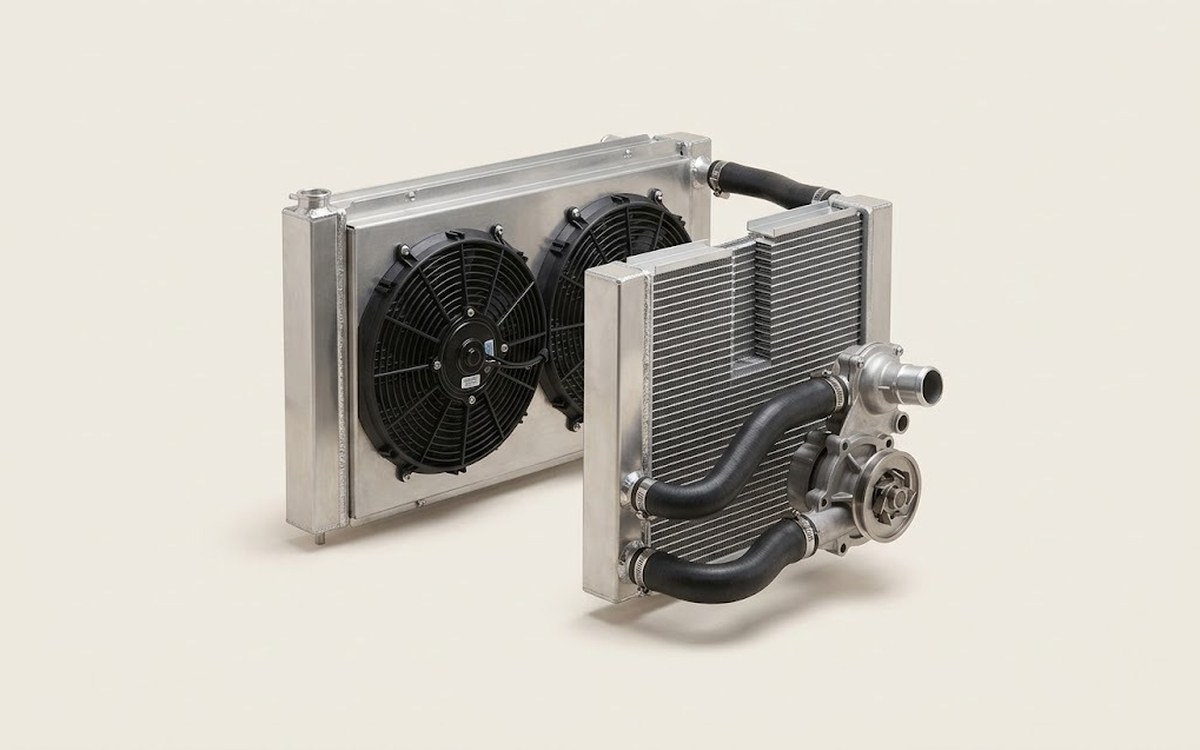 How it works · 3D
How the Engine Cooling System Works
How the part you're working on actually works — in plain English, on a 3D model.
Open in 3D →