Autopapyrus · Subaru Impreza (1st generation GC/GF)
https://autopapyrus.com/guides/subaru/impreza/replacing-the-power-steering-and-a-c-compressor-drive-belts/
https://autopapyrus.com/guides/subaru/impreza/replacing-the-power-steering-and-a-c-compressor-drive-belts/
Compiled automatically from service literature and owner experience. Specs are for the typical configuration — check them against your exact car before you start.
Subaru Impreza (1st generation GC/GF): Replacing the Power Steering and A/C Compressor Drive Belts
The Impreza GC with the EJ16E has no single serpentine belt. The alternator with the power steering pump and the A/C compressor are driven by separate belts from the crankshaft. Belt tension is adjusted manually, and there is no automatic tensioner. Replacing both belts at once makes sense: you take the same assembly apart only once, and the belts have a similar service life.
Part
- 🔩 Power steering/alternator belt and A/C compressor belt (two separate items, each a different size; Subaru OE or aftermarket Gates, Bando, Mitsuboshi). Part numbers differ between the EJ16 and other engine versions, so buy by the size of the old belt (length and number of ribs, printed on the inside)
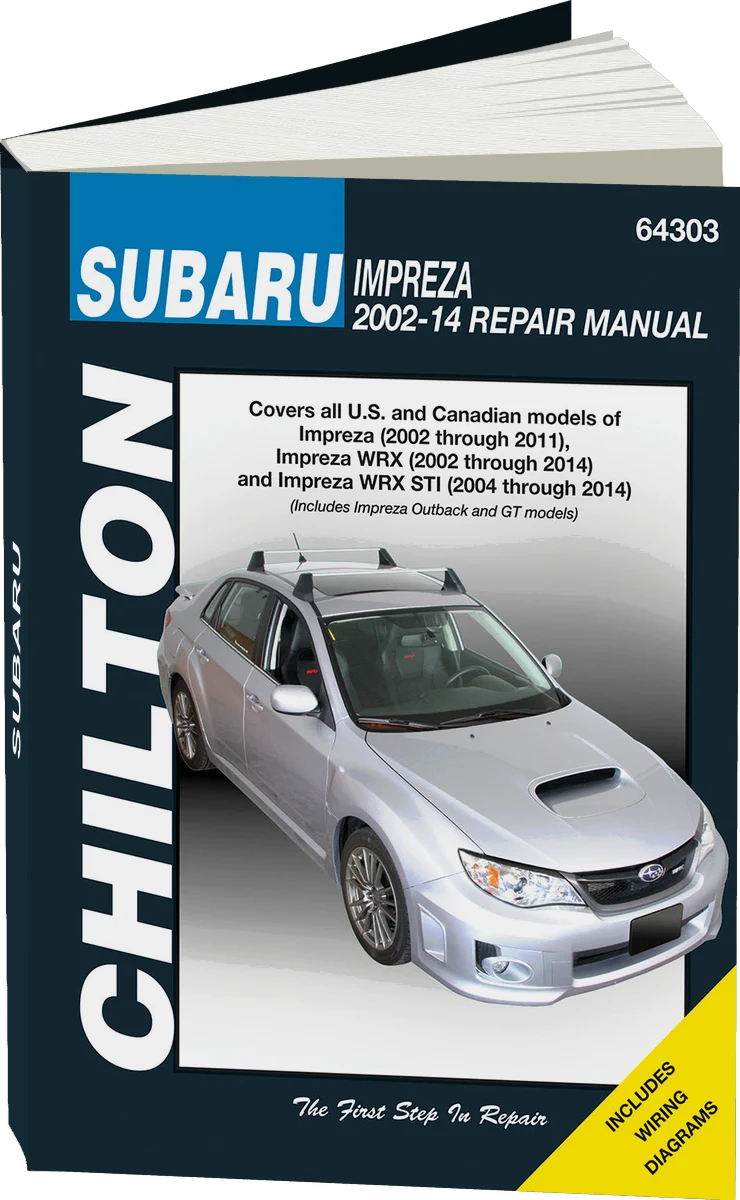 There's a full repair manual for this car
Every system, wiring diagrams and torque specs — not just this job. Chilton and 9 more.
See manuals →
Step by step
11 steps- Shut off the engine and let it cool down. For safety, disconnect the negative battery terminal. If the air intake duct or resonator is in the way, remove it.
- Inspect the pulleys and remember the layout. Take a photo or draw the path of each belt. Determine which belt is on the outside and which is closer to the engine. If the compressor belt runs over the power steering belt, it has to come off first.
- Loosen the compressor belt. On the tensioner pulley or on the compressor bracket there is an adjusting bolt and a lock bolt. Loosen the lock bolt, back out the adjusting bolt to release the tension, and take the belt off the pulleys.
- Loosen the power steering/alternator belt. Loosen the pivot bolt that the alternator or power steering pump swings on (depending on trim). Loosen the lock bolt on the adjusting bracket, move the assembly toward the engine, and take off the belt. Do not remove the bolts completely, loosening them is enough.
- Inspect the old belts and the pulleys. Cracks, oil stains, glazed sidewalls or fraying mean the belt needs to be replaced. Wipe out the pulley grooves. Turn the alternator, power steering pump and compressor shafts by hand: the bearing must not grind or have play, or the new belt will fail quickly.
- Install the new belts in reverse order: the inner one first (power steering/alternator), then the outer one (compressor). Make sure each belt sits fully in its grooves on all pulleys, including the crankshaft.
- Tension the power steering/alternator belt. Pull the assembly away from the engine with the adjusting bolt or a pry bar, without bracing the bar against the alternator or pump housing. Place the pry bar only on solid parts of the bracket. Tighten the lock bolt. Press on the middle of the longest span of the belt: it should deflect about 8-12 mm under a force of about 10 kg (check the exact value in the manufacturer's specification).
- Tension the compressor belt using the same adjustment and check the deflection the same way. Tighten the lock and adjusting bolts to the torque given in the specification. A torque wrench is usually enough. Exact torque values for this model are not given in publicly available service materials.
- Turn the crankshaft two or three revolutions by the pulley bolt (in neutral, without starting the engine). Check the deflection of both belts and the tightness of all bolts once more.
- Reconnect the battery, start the engine and turn on the A/C, then turn the steering wheel to full lock. The belts must not squeal or slip off.
- Check the tension again after 100-200 km: new belts stretch slightly and need to be tightened.
Common mistakes and warnings
- Do not overtighten the belts: too much tension ruins the bearings of the alternator, power steering pump and compressor. Too little tension causes squealing, slipping and a drained battery. Do not use a pry bar as a lever on the alternator or power steering pump housing, because the aluminum housing is easily damaged. Keep your hands away from the pulleys when starting the engine.