Autopapyrus · Toyota Auris 1.4 D-4D (1ND-TV) (2011)
https://autopapyrus.com/guides/toyota/auris/coolant-replacement/
https://autopapyrus.com/guides/toyota/auris/coolant-replacement/
Compiled automatically from service literature and owner experience. Specs are for the typical configuration — check them against your exact car before you start.
Toyota Auris 1.4 D-4D (1ND-TV) (2011): Coolant Replacement
On the 1.4 D-4D diesel, coolant is changed about every 4 years or 80,000 km per the service book, and less often after that. The job is simple, but it is important to bleed the air out of the system thoroughly and not to mix incompatible coolant types. The system capacity is about 6 L (6.3 qt). Check the exact intervals and capacity in your car's service book.
Parts
3| № | Part | Genuine part no. | Alternatives |
|---|---|---|---|
| 01 | Toyota Super Long Life Coolant (SLLC), pink, ethylene glycol basedabout 6 L (6.3 qt); 7-8 L (7.4-8.5 qt) recommended for flushing and topping up; premixed or concentrate with distilled water | Total, Havoline XLC, Aisin | |
| 02 | Distilled waterfor diluting concentrate | ||
| 03 | Drain plug sealing ringsif worn | 90430-12031 |
Part numbers are from the manufacturer's original catalogue. Check them against your VIN before ordering.
Tools
7- Drain pan of 8-10 L (8.5-10.5 qt) capacity
- flat screwdriver or wrench for the radiator drain plug
- funnel
- hose clamp pliers
- gloves
- distilled water for flushing
- wrenches or Torx bits for removing the engine undercover (if fitted)
 There's a full repair manual for this car
Every system, wiring diagrams and torque specs — not just this job. Haynes AutoFix (online) and 1 more.
See manuals →
Step by step
12 steps- Park the car on level ground and wait until the engine has cooled down completely. Never open the expansion tank cap on a hot engine: pressurized coolant causes burns.
- Open the hood and remove the expansion tank cap. Turn the ignition on without starting the engine and set the heater control to maximum heat so the heater core valve opens and the coolant drains from it as well.
- If necessary, remove the engine undercover. Place the drain pan under the bottom of the radiator.
- Open the drain cock (plug) on the lower tank of the radiator and drain the coolant. To speed up draining, you can loosen the clamp and pull off the lower radiator hose. If the radiator does not drain completely, the flushing and refilling will remove the remainder.
- Inspect the hoses, clamps, expansion tank and heater core. On first-generation Auris models with the 1.4 D-4D, leaks at the heater core and expansion tank are known to occur, so during the replacement check for signs of seepage and stains around the mounts.
- If the coolant was rusty or dirty, flush the system: close the drain, fill with distilled water, warm the engine up until the thermostat opens with the heater on maximum heat, let it cool, and drain. Repeat until clean water comes out of the drain. Water left in the system lowers the coolant concentration, so take it into account when mixing.
- Close the drain cock and reconnect the hose if you removed it. The plug is plastic: tighten it by hand with moderate force, without a lever, or you will strip the threads. Tighten the clamps moderately; do not overtighten them.
- Slowly pour new coolant into the expansion tank up to the MAX level. Periodically squeeze the upper radiator hose by hand to help the air escape.
- Leave the tank cap off or only loosely placed, start the engine, set the heater to maximum heat, and hold the engine speed at 1500-2000 rpm. Watch the level and top up as needed. Continue until the thermostat opens: the upper hose becomes hot, the fan switches on, and hot air comes out of the heater.
- Shut off the engine, wait for it to cool, check the level again, and bring it up to the mark. Close the tank cap. Reinstall the engine undercover.
- Take a test drive of 10-20 km (6-12 miles) and, after the engine has cooled completely, check the level once more. Watch for leaks and for the temperature reading on the instrument panel. If the overheating warning light comes on or the heater blows cold air, there is an air pocket in the system: repeat the warm-up and top up.
- Take the used coolant to a recycling facility and do not pour it on the ground: ethylene glycol is toxic.
Common mistakes and warnings
- Do not mix coolants of different types and colors: different formulations have different additives, and the mixture can form sludge
- If you topped up with an unknown coolant, it is better to flush the system
- An air pocket can lead to engine overheating and cylinder head gasket damage, so pay special attention to bleeding the air
- Do not open the system on a hot engine
- If you have no experience, go to a repair shop
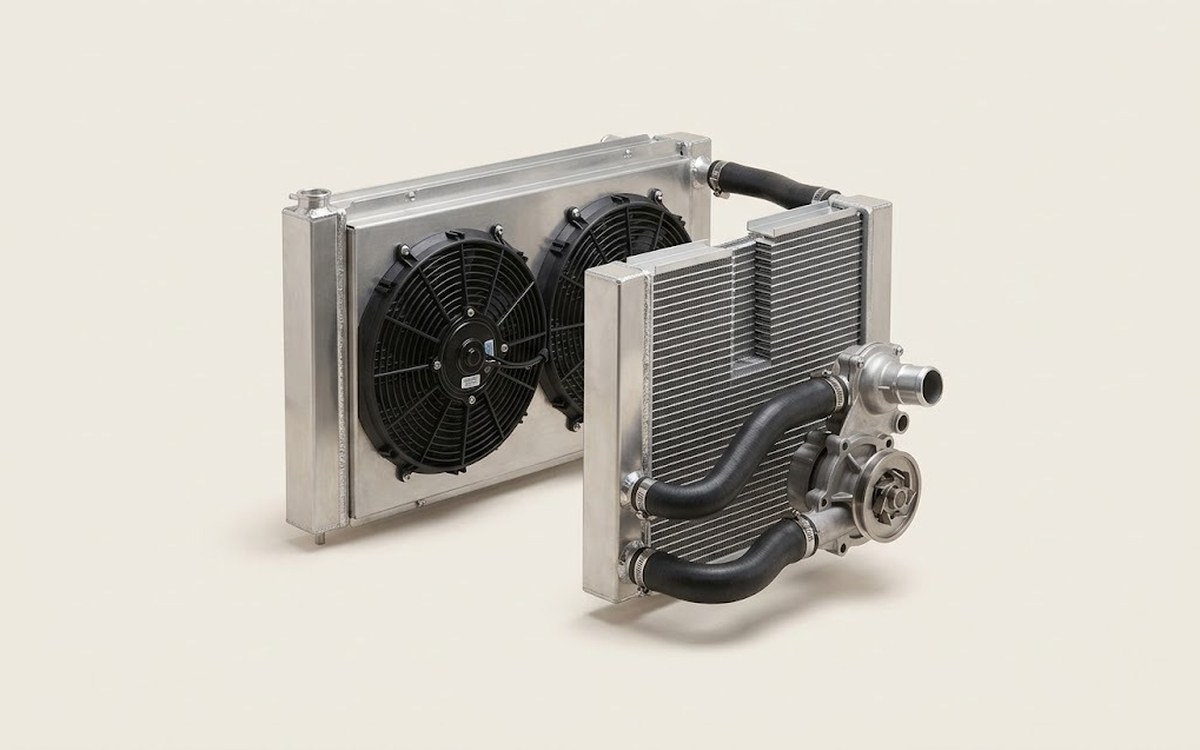 How it works · 3D
How the Engine Cooling System Works
How the part you're working on actually works — in plain English, on a 3D model.
Open in 3D →