News
BYD Tai 9: The Steering Wheel That Folds Into the Dash in 10 Seconds
The six-seat BYD hybrid with a steering wheel that folds into the dashboard has gone on sale in China. What is known about the 329,900 yuan trim, how it works and what the reports leave out.
Nov 20, 2026 · 4 min read · Autopapyrus
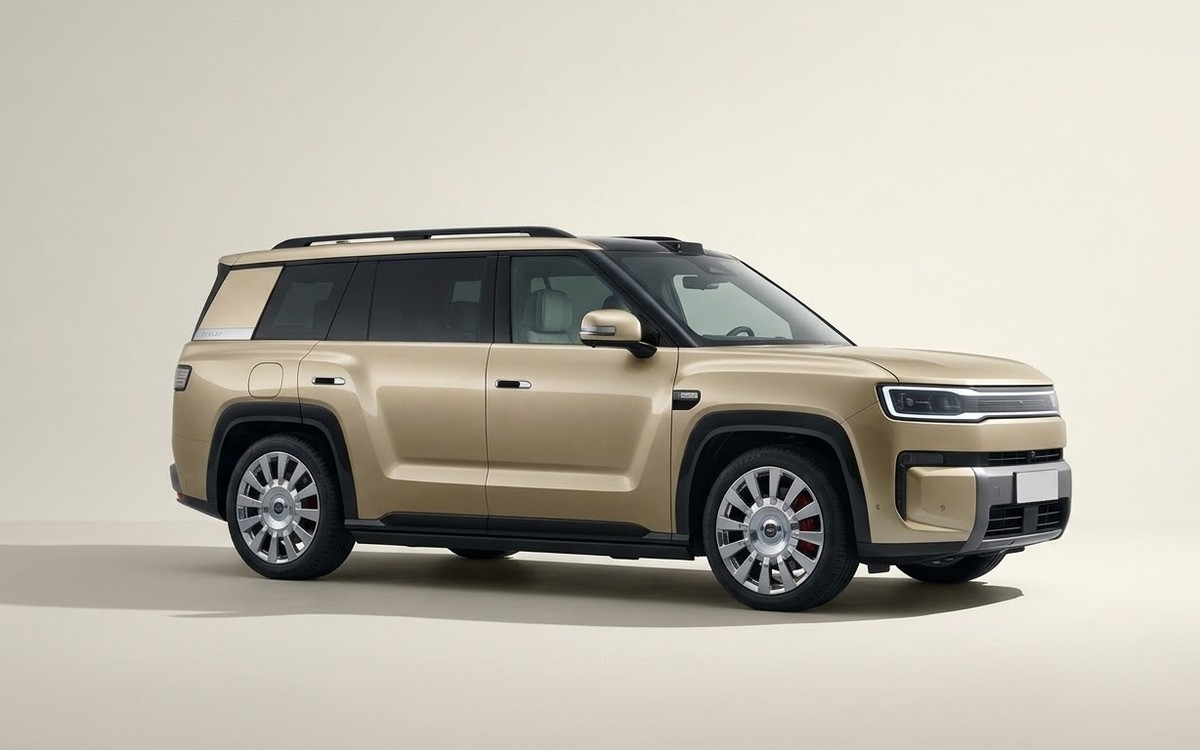
Sales of the BYD Fang Cheng Bao Tai 9 began in China on 19 November 2026. It is a large six-seat plug-in hybrid SUV whose top trim has a steering wheel that folds into the dashboard in about ten seconds. This is not a motor-show concept but a production car with a price and a launch date. Here is how it works, what the reports leave out, and what it costs converted to rubles.
In short
- The folding wheel is available only on the top trim, priced at 329,900 yuan. The other two trims have a regular wheel.
- It folds in about 10 seconds and, according to Electrek, only while the car is parked. The maker says the aim is to give the driver room to rest. It is not about self-driving.
- It is possible because the wheel has no mechanical link to the front wheels (steer-by-wire). A new Chinese standard in force since 1 July 2026 drops the mechanical-link requirement if redundancy and fail-safe rules are met.
- Powertrain: a 1.5-litre turbo plus two electric motors, 400 kW (536 hp per Electrek), 0 to 100 km/h in 4.8 seconds.
- Claimed combined range 1,630 km on a full tank and a full battery. Electric only: up to 400 km on the Chinese CLTC cycle or 310 km on WLTC.
- It is not sold in Russia and BYD has not announced exports.
How the folding wheel works
A folding wheel is not new as a concept. What is new is that it ships in a production car with a price tag. The wheel sits on a hidden hinge, rotates 180 degrees and tucks into a compartment in the dashboard. Only the airbag module stays on the panel, and a tray slides out where the wheel was. The driver's seat reclines up to 165 degrees. The mechanism is rated for 80,000 cycles. According to Fang Cheng Bao's general manager, the motor is of the type BYD develops for humanoid robots (as reported by Electrek).
All of this works because the car steers by wire: there is no rigid mechanical link between the wheel and the road wheels. China's new standard allows this layout if redundancy and fail-safe requirements are met. Before that, a special approval was needed; the first car to get one was the Nio ET9 in December 2024.
Prices and trims
| Trim | Price in China, yuan | Converted at the Bank of Russia rate, rubles | Folding wheel |
|---|---|---|---|
| Entry | 279,900 | about 3.44 million | no |
| Middle | 299,900 | about 3.68 million | no |
| Top | 329,900 | about 4.05 million | yes |
Rubles are converted at 12.2759 per yuan, the Bank of Russia rate in force from 21 November 2026. It is a conversion of the Chinese price, not a price in Russia: shipping, duties and the recycling fee are not included. CnEVPost also lists 273,900 yuan for the entry trim with a trade-in.
Other specifications
- Length 5,270 mm, width 1,999 mm, height 1,880 mm, wheelbase 3,130 mm.
- 2+2+2 seating, six seats.
- 66.48 kWh battery, fast charging, all-wheel drive.
- Rear-wheel steering, 3.5 m turning radius.
- 6.4 l per 100 km with a depleted battery (CnEVPost).
What is still unknown
- How the folding wheel will hold up over the years: the car has only just gone on sale, so there is no reliability data.
- Sales outside China: BYD has not said anything.
- The range figures are the maker's claims; the 1,630 km assumes a full tank and a full battery.
Our view
Most drivers will not miss a folding wheel, and the lower trims do without it. But it is a production example of what steer-by-wire promised on paper: without a mechanical link the shape and position of the wheel can change. If the design proves reliable, other makers will copy it. If not, it stays an expensive gimmick. It is too early to say.
Sources
- CnEVPost: BYD Fang Cheng Bao launches Tai 9
- Electrek: BYD's folding steering wheel isn't a concept
- TechNode: BYD launches six-seat Ti9 SUV from RMB 279,900
Photos: BYD / Fang Cheng Bao press materials as published by CnEVPost and Electrek.
What next