News
China vs Europe: 5 Records and 5 Catches
Autopapyrus
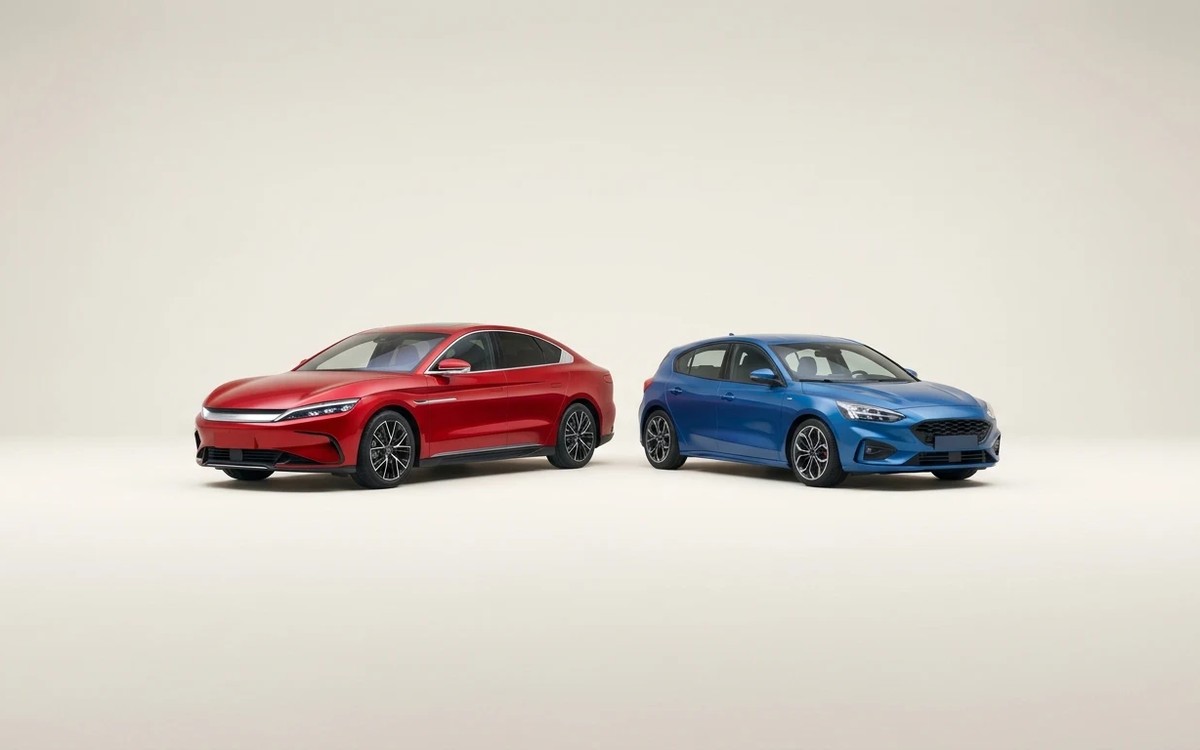
Chinese carmakers keep doing things that did not exist before, or almost did not: swapping a battery in a couple of minutes, charging a car almost as fast as filling a tank, beating Nürburgring records. But every record has fine print. We went through the five most visible examples: how each one works, how Europe answered, whether you can buy it, and where the catch is.
In short
| Place | What they did | The catch |
|---|---|---|
| #5 NIO | Battery swapped in minutes instead of charging | Only its own batteries, only at its own stations, almost all in China |
| #4 BYD | Charging from 10 to 97% in 9 minutes | Only at its own stations and on new models; the figures are the company's own |
| #3 Yangwang U8 | Turns on the spot and has an emergency water mode | Not for river trips; it needs a check after a swim |
| #2 Nürburgring | Xiaomi and Yangwang took the record from Europeans, Porsche took it back | The record cars are special versions |
| #1 ARIDGE | A car with a flying vehicle in its trunk | Customers cannot fly it yet, it needs certification |
#5. NIO: swap the battery instead of charging it
You drive into the station bay, a robot comes from below, unbolts the empty battery and fits a full one from the station's stock. At fifth-generation stations the swap itself takes about two minutes and the whole visit up to three. One station stores 28 batteries, and your old one charges meanwhile for the next driver.
It works at scale. According to industry media citing NIO, by August 2026 the company had made more than 120 million swaps, with more than four thousand stations.
What happened in Europe. The same idea was tried earlier by Better Place: stations in Israel and Denmark, with Renault building the cars (the Fluence Z.E.). The company went bankrupt in May 2013, losing about $812 million of investors' money. There were too few buyers.
The catch. You can swap only batteries of the same brand and only where stations exist, and almost all of them are in China.
#4. BYD: charging almost like refuelling
In March 2026 BYD showed its new FLASH charging: 10 to 70% in 5 minutes, 10 to 97% in 9 minutes. In May the company said that at minus 30 degrees it charges from 20 to 97% in 12 minutes, only three minutes longer than in the warm. By the end of 2026 BYD promises 20,000 such stations in China.
How it works. Charging power is voltage times current. If you raise only the current, cables and battery overheat. So back in 2025 BYD raised the system voltage to 1,000 volts, while many electric cars today run around 400.
Europe's answer. According to BMW, the new iX3 accepts up to 400 kilowatts and charges from 10 to 80% in about 21 minutes. The Porsche Taycan accepts up to 320 kilowatts. That is fast, but BYD claims speeds more than twice as high.
The catch. Those figures apply only at BYD's own stations and only to new models with the new battery. At an ordinary charger the speed is ordinary. And all the figures are still the company's own.
#3. Yangwang U8: turning on the spot and water
Yangwang is BYD's premium brand. The U8 SUV has four electric motors, one per wheel, and a petrol engine that works as a generator. The computer can spin the wheels on one side forward and on the other backward, and the car turns around its own axis like a tank.
The headline trick is water. As described in media reports, when the water is too deep an emergency mode switches on: the petrol engine shuts off, the suspension rises, the windows close. The car stays afloat for up to half an hour and can creep along at about three kilometres per hour.
To be fair: floating production cars existed before, and Germans built them. The Amphicar 770 was made in 1961–1968, 3,878 units in total. But for the Amphicar swimming was the main function, while for the U8 it is a rescue mode for floods.
Can you buy it in Russia? Officially the U8 is not sold there; private sellers bring it in through parallel imports, and their prices differ by about one and a half times.
The catch. The maker warns it is not for river trips. After such a swim the car must be taken in for a check.
#2. The Nürburgring war
The Nürburgring Nordschleife is more than 20 kilometres long, and for decades European brands have used it to prove who is faster.
- 1 April 2025: the Xiaomi SU7 Ultra sedan lapped it in 7:04.957 (per the Nürburgring website), beating the previous record holder, Croatia's Rimac Nevera (7:05.298), by 0.3 seconds.
- August 2025: the Yangwang U9 Xtreme went under seven minutes: 6:59.157 (per Top Gear). The run is limited to 30 cars. At a test track in Germany the U9 reached 472.41 km/h, an electric-car speed record (BYD's official statement of 26 August 2025).
- 7 May 2026: the Porsche Taycan Turbo GT with the Weissach package and a Manthey kit lapped it in 6:55.553. The time was certified by a notary. The record went back to Europe.
The catch for all of them. The record cars are special versions. Xiaomi has a track package, the U9 Xtreme will be limited to 30 cars, and Porsche's Manthey kit is not even on sale yet. One more detail: after the loud launch, SU7 Ultra sales in China fell from 3,101 in March 2025 to 45 in December.
#1. ARIDGE: a flying vehicle in the trunk
ARIDGE, part of the Xpeng group, calls its creation the world's first modular flying car. It is a six-wheeled car with a two-seat electric multirotor vehicle where the trunk would be. The car carries it, stores it and recharges it on the road.
On 12 September 2025 the vehicle made its first crewed flight outside China, in the United Arab Emirates. Production in Guangzhou has started, and the price is around two million yuan.
Europe's answer. German air-taxi makers did not survive: Volocopter filed for insolvency on 26 December 2024, and Lilium shut down on 21 February 2025.
The catch. Customers cannot fly yet. It needs an airworthiness certificate, and customer deliveries promised for 2026 have, by the latest reports, slipped to 2027.
Why China, of all places
The answer is market size. In 2025 China sold 16.49 million electric cars and plug-in hybrids (CAAM data). That is nearly half of all cars sold there, and more than half inside the country. With a market like that you can afford costly experiments: thousands of battery-swap stations, thousand-volt charging, an SUV for floods. If an idea fails, volume carries it. European brands find this harder: every mistake costs more, as it did for Better Place and the German air taxis. Meanwhile China's exports of such cars doubled in 2025, to 2.62 million.
Bottom line
The Chinese really did build things we had not seen in production cars: a battery swap in minutes, charging almost like refuelling, an SUV that floats and a flying module. But nearly every record has fine print: a special version, a station network that exists only in China, or a certificate that does not exist yet. And as the Nürburgring showed, Europe is not giving up.
Photos: Amphicar 770, Sicnag (CC BY 2.0); Renault Fluence Better Place, Ranbar (CC BY-SA 3.0); Volocopter 2X, Spielvogel (CC BY-SA 4.0), Wikimedia Commons. Footage in the video: official channels of Xiaomi, BYD, NIO, ARIDGE, Yangwang, Porsche and Manthey.
What next