News
How Our System Builds a Car Repair Guide in About a Minute
Pick your car, describe the job in your own words and get a step-by-step guide. Using a Haval Jolion dual-clutch gearbox oil change as the example, we show how it works and why the...
Nov 10, 2026 · 3 min read · Autopapyrus
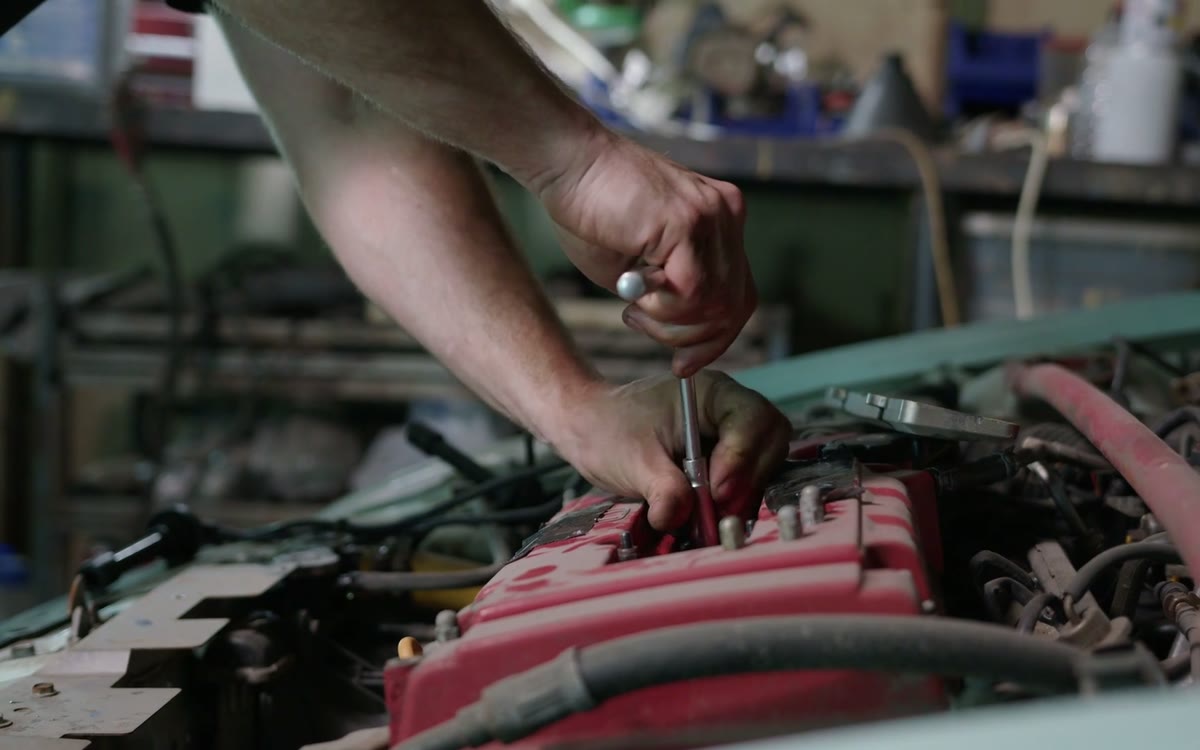
We asked our system to build a guide: an oil change for the dual-clutch gearbox of a 2023 Haval Jolion 1.5 Turbo. We ran the test on our Russian site on 9 November 2026. About a minute later we had 12 steps, 9 tools, 3 parts and a tightening torque for the drain plug. Here is what happens in that minute and where the system draws the line.
In short
- You choose the make, model, generation, year and engine, then describe the job in your own words.
- If the guide already exists, it opens at once. If not, the system searches the web and builds a new one.
- When there is no exact value, it gives a range and says where to check it.
- A finished guide stays on the site for the next owner of the same car.
Suggestions depend on the engine
Job suggestions follow the fuel type. A petrol Jolion gets oil, spark plugs and the alternator belt. Diesels get glow plugs. An electric car has no oil or spark plugs, so it gets battery coolant and a high-voltage battery check instead.
When it asks again, and when it refuses
If a job depends on the axle or variant, the system shows cards to choose from. For Jolion brake pads it asked: front or rear.
It will not build a guide for a job that makes no sense. We asked for a fuel filter replacement on a Tesla Model 3 and got an "off-topic request" reply, because an electric car has no such filter.
The database comes first
Before building anything, the system looks for an existing guide for that car. When we repeated the Jolion request, the guide opened immediately. It also recognises similar requests worded differently.
How a guide is built
If there is no guide yet, four stages appear on screen: checking the database, searching the web, analysing sources and writing the instructions. Before answering, the system must search the web and read several pages.
Why the system does not make up numbers
This is its main rule. If there is no exact value, it gives a range and says where to confirm it. In our guide the drain plug torque reads: per the manufacturer's specification, typically 20–40 Nm for plugs of this type. If there is no data at all, the system says so.
It does not invent part numbers either. You get the exact name and specification of the part. Part numbers come only from a catalogue and are not in every guide.
What is inside a finished guide
- Difficulty, time and number of steps.
- Parts and tools lists.
- Step-by-step work with torques, volumes and sizes highlighted.
- Common mistakes. In our example, universal gear oil is wrong for this gearbox.
What to keep in mind
The system says plainly when the exact procedure for a model is not in open sources, and asks you to check the volume, oil grade and torques against the manufacturer's specification. Do that before you start.
Browse the finished guides here: guides by make and job.
What next