News
Is Moscow Parking More Expensive Than Europe? A Fair Comparison
From 17 December parking in Moscow can cost up to 950 roubles an hour. We compared two hours in the centre of Moscow, London, Amsterdam, Paris, Berlin and other cities at the Central...
Nov 03, 2026 · 6 min read · Autopapyrus
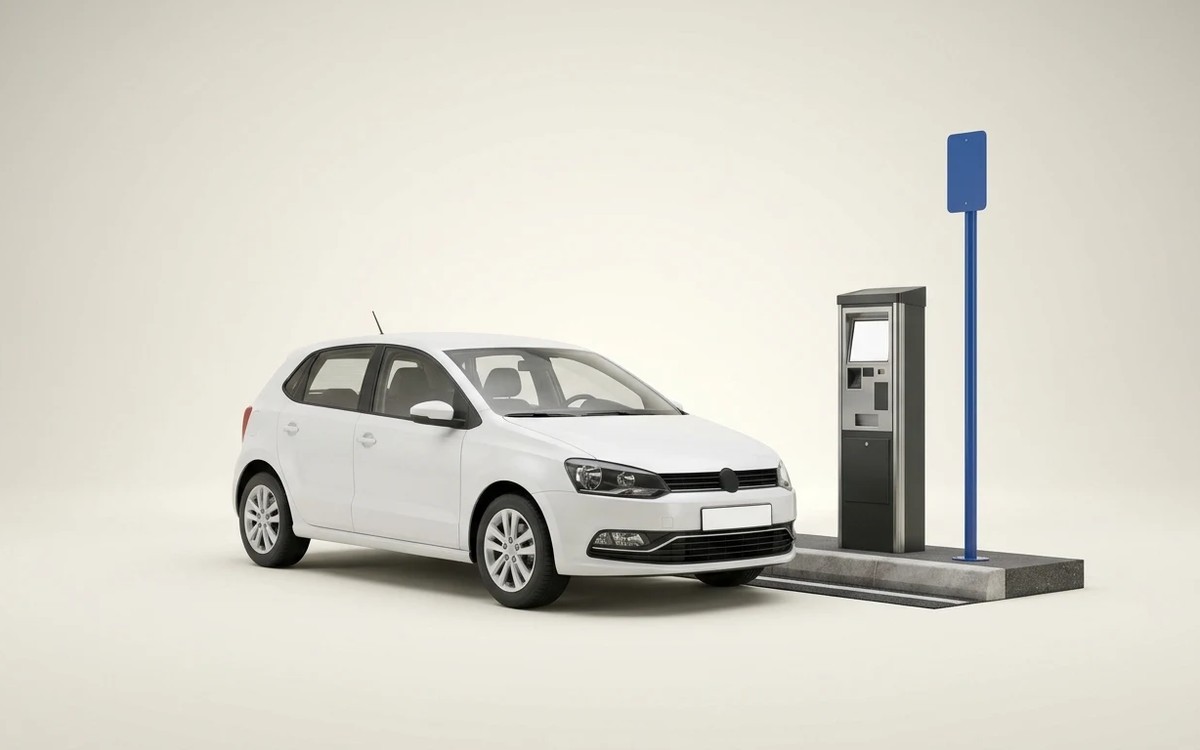
From 17 December, parking on some Moscow streets can cost up to 950 roubles an hour. Two hours in central Warsaw cost about 200 roubles. Does that make Moscow more expensive than Europe? We counted it fairly: the same conditions, the Central Bank exchange rate, prices from city tables. We also looked at where parking is more convenient.
In short
- Moscow is neither the record holder nor the bargain: depending on the street, two hours cost between Berlin and Amsterdam levels.
- London and Amsterdam are the most expensive in our table, Rome and Warsaw the cheapest.
- In Europe an hour in a garage is almost always cheaper than an hour on the street: cities push cars underground.
- Moscow wins with one payment system for the whole city, cameras and a cheap resident permit. Europe wins with clear prices on a sign.
What changes in Moscow on 17 December
The Moscow transport department announced that dynamic pricing will cover 236 more street sections; it works on 63 now. The hourly price depends on the forecast load of the street: more demand means a higher price, and when the street empties the price falls.
- The ceiling of the dynamic tariff rises from 800 to 950 roubles per hour. The department says 800 roubles no longer guarantee a free space.
- Where the load is below 50 percent, parking gets cheaper on some streets, in places down to 100 roubles an hour. At night the price stays at 200 roubles.
- Regular tariffs also grow: the raised one from 380 to 400 roubles per hour, the increased one from 600 to 650. The minimum daily price rises from 40 to 50 roubles.
- The resident permit zone grows by nine more sections. The permit means no payment from 8 pm to 8 am, and for 3,000 roubles a year you can park around the clock.
The department rates the results of earlier changes like this: ambulances and rescue services arrive in 8 minutes instead of 20, parking violations fell by 64 percent, average traffic speed rose by 12 percent. These are the department's own figures.
Two hours in the centre: Moscow and Europe in roubles
The conditions are the same: two hours on the street, in the most central paid zone, on a weekday, at the full tariff. European prices come from city and operator tables (parkingineurope.com, checked in autumn 2026). Euros are converted at the Central Bank rate for 2 November 2026: 89.66 roubles per euro.
| City | Euro for 2 hours | Roubles for 2 hours |
|---|---|---|
| London | ≈ 25.4 | ≈ 2,277 |
| Moscow, 950 RUB/hour | ≈ 21.2 | 1,900 |
| Amsterdam | 16.10 | 1,444 |
| Moscow, 650 RUB/hour | ≈ 14.5 | 1,300 |
| Copenhagen | ≈ 12 | 1,076 |
| Paris | 12 | 1,076 |
| Moscow, 400 RUB/hour | ≈ 8.9 | 800 |
| Berlin | 8 | 717 |
| Helsinki (2 × 4 €) | 8 | 717 |
| Barcelona | 7.50 | 672 |
| Vienna | 6.80 | 610 |
| Munich | 5 | 448 |
| Prague | ≈ 3.3 | 296 |
| Rome | 2.40 | 215 |
| Warsaw | ≈ 2.2 | 197 |
Moscow appears three times because the price depends on the street: 400, 650 and 950 roubles per hour apply to different streets, not to the whole centre. The comparison does not adjust for residents' incomes.
The conclusion: Moscow sits in the middle of the table. On cheaper streets it is level with Berlin and Helsinki; on the busiest ones it is above Amsterdam but below London.
A garage for the whole day
Ten hours in a central car park: Amsterdam is the most expensive at 55 euros, almost 5,000 roubles. Vienna and Paris are about 39 euros, around 3,500 roubles. Berlin is 20 euros, about 1,800 roubles. Warsaw is about 13.5 euros, a little over 1,200 roubles. We leave Moscow garages out of the table because every operator sets its own tariffs.
Almost everywhere an hour in a garage is cheaper than an hour on the street. In Amsterdam the kerb costs about 8 euros an hour and a garage 5.5. In Paris it is 6 euros against about 4. We think this is how cities push cars from the streets underground.
How the cities differ
- Moscow. You can pay in an app, by text message to a short number, at a meter by bank card, or by a code on an information board. Cameras read number plates themselves, and the fine for not paying is 5,000 roubles.
- Helsinki. Apps, a text message with the plate and the zone to a short number, and card machines. A resident permit costs from 45 to 64.50 euros a month.
- Oslo. You pay only for the hours you stayed, and in the central zone you cannot stay more than two hours. Electric cars pay half: 47 kroner an hour against 93.
- Paris. In 2024 residents voted that cars heavier than 1.6 tonnes pay 18 euros an hour in the centre, three times more than light ones. Turnout was about 6 percent. Residents and people who work in Paris are not affected.
- Amsterdam. In 2019 the city announced it would remove about 1,500 parking spaces a year. In the very centre a resident permit will rise to about 860 euros a year from 2027.
We think Europe turns parking into a tool: expensive for visitors, cheap for residents, and fewer spaces. Moscow does something similar through dynamic pricing.
Where it is more convenient: our opinion
What Moscow does well.
- Payment. In Europe every city and operator has its own apps, and a tourist has to install several. Moscow has one system for the whole city, and you can extend or end parking without going back to the car.
- Enforcement. Cameras read plates and the fine arrives by itself. The department reports violations down by 64 percent.
- Park and ride. You leave the car and take the metro: last year they were used 2.2 million times. You must leave the car between 5:30 am and 2:00 am and make at least two metro or city train trips.
What is more convenient in Europe.
- Price transparency. In Moscow you have to check the dynamic price every time, while in Europe the tariff stays on the sign for weeks.
- The resident permit. In Moscow the round-the-clock permit costs 3,000 roubles a year, in Helsinki 45 to 64.50 euros a month. Muscovites are luckier here.
What we would add in Moscow
- A price for the future: the driver sees not only the price now but in an hour, and can decide to wait or come later.
- Exact charging: pay strictly for the minutes you stayed, as in Oslo, where you pay only for the hours you stayed.
- A real-time map of free spaces, so you do not circle the centre but drive where there is room.
- More park and ride next to the metro and a clear route in one app: leave the car, get to the centre, come back.
The bottom line
How we checked
Moscow: publications by Kommersant (30 October 2026), RIA Novosti, Vesti and www1.ru citing the Moscow transport department. Europe: parkingineurope.com tables (November 2026, tariffs from city websites), the official pages of Oslo and Helsinki. Paris and Amsterdam policy: data from 2019 and 2024, check for newer figures. Base tariffs for central Moscow differ between sources, so check the transport department site before you travel.
Video: Pexels stock footage. Graphics and voice-over: Autopapyrus.
What next