Autopapyrus · Dongfeng AX7 2.0 SFG20 (2018)
https://autopapyrus.com/guides/dongfeng/ax7/aisin-6-speed-automatic-transmission-fluid-change/
https://autopapyrus.com/guides/dongfeng/ax7/aisin-6-speed-automatic-transmission-fluid-change/
Compiled automatically from service literature and owner experience. Specs are for the typical configuration — check them against your exact car before you start.
Dongfeng AX7 2.0 SFG20 (2018): Aisin 6-Speed Automatic Transmission Fluid Change
Periodic fluid changes are important for the service life of the valve body and clutches in the Aisin 6AT. A partial drain-and-fill typically replaces 40-60% of the fluid, so for a more complete refresh the procedure is repeated 2-3 times. The exact procedure and capacities for this model are not documented in publicly available service materials, so what follows is the general principle for Aisin transmissions with a check plug and temperature-based fluid level.
Parts
4| № | Part | Alternatives |
|---|---|---|
| 01 | ATF for 6-speed Aisin automatic transmission | Aisin, Idemitsu, Toyota |
| 02 | Transmission pan gasketif replacing the pan | |
| 03 | Transmission filterif replacing the pan | |
| 04 | Drain/fill plug sealing washers |
Tools
8- Lift or inspection pit
- wrenches and sockets for the drain and check plugs (size depends on the pan design)
- torque wrench
- drain container of 10 L (10.6 qt) or larger
- syringe or pump for filling ATF through a hose
- thermometer or OBD scanner that shows transmission temperature
- new plug sealing rings
- shop rags
Step by step
10 steps- Warm up the transmission by driving for 10-15 minutes, then park the vehicle on level ground or on a lift. Checking the level requires a transmission fluid temperature of about 35-45 °C (confirm with a scanner). For draining, warm fluid is best.
- Remove the underbody skid plate if one is fitted. Position the drain container.
- Remove the transmission pan drain plug and drain the fluid completely. Check its color and smell: dark fluid with a burnt smell, or metal shavings on the magnet, are a reason to have the transmission diagnosed, not just to change the fluid.
- If you are replacing the filter and gasket, remove the pan, clean the magnets of debris, replace the filter and fit a new gasket. Tighten the pan bolts in a crisscross pattern with low torque (about 6-10 N·m (4-7 lb-ft); use the exact value from the manufacturer's specification).
- Install the drain plug with a new washer. Tightening torque is in the range of 35-45 N·m (26-33 lb-ft) (use the exact value from the manufacturer's specification). Do not overtighten, since the threads are in aluminum.
- Note how many liters you drained and add the same amount of fresh ATF through the fill opening (on many Aisin units this is in the transmission case or at the location of the dipstick-style plug). The factory total system capacity is about 7-9 L (7.4-9.5 qt); a partial change usually drains 4-5 L (4.2-5.3 qt).
- Start the engine. With the vehicle parked and the brake pedal pressed, move the selector through all positions, pausing 3-5 seconds in each, so the fluid fills the valve body.
- Bring the transmission to the operating temperature range for the level check (35-45 °C on the scanner), with the engine idling and the selector in N or P. Open the check plug: at the correct level, a thin stream of fluid runs out, then only drips. If the level is low, add fluid; if it is overfilled, let the excess drain out.
- Close the check plug with a new washer. Tightening torque is per the manufacturer's specification (about 20-30 N·m (15-22 lb-ft)).
- Check for leaks, reinstall the skid plate, and take a test drive. Check that shifts are smooth and that there are no jerks.
Common mistakes and warnings
- Do not use universal ATF that is not confirmed to meet the Aisin 6AT specification: incorrect viscosity and friction properties cause harsh shifts and accelerated wear
- A pressurized machine flush on a high-mileage transmission with no service history can dislodge deposits and cause valve body problems, so a series of partial fluid changes is safer
- If you have no experience with temperature-based level checking, it is better to leave the job to a repair shop: a mistake with the level (underfill or overfill) damages the transmission
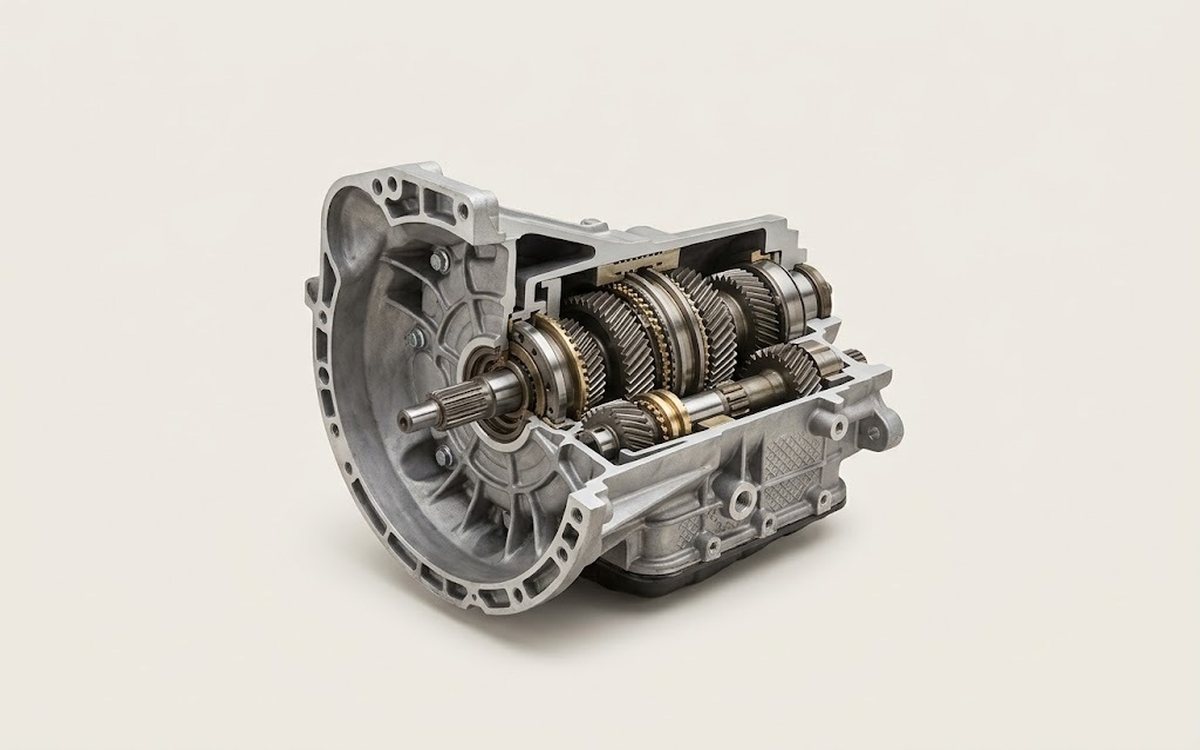 How it works · 3D
How a Manual Transmission Works
How the part you're working on actually works — in plain English, on a 3D model.
Open in 3D →