Autopapyrus · GAZ Valdai Next ISF2.8S5F148M (2021)
https://autopapyrus.com/guides/gaz/valdai-next/water-pump-removal-and-installation/
https://autopapyrus.com/guides/gaz/valdai-next/water-pump-removal-and-installation/
Compiled automatically from service literature and owner experience. Specs are for the typical configuration — check them against your exact car before you start.
GAZ Valdai Next ISF2.8S5F148M (2021): Water Pump Removal and Installation
On the Cummins ISF 2.8, the water pump is located at the front of the block and is driven by the serpentine accessory belt. To reach it, you need to drain the coolant, remove the belt and, if necessary, the fan with its shroud. The exact procedure for this variant is not documented in publicly available service materials, so the general procedure for this engine is given below. Check torque values against the manufacturer's specifications.
Parts
4| № | Part | Alternatives |
|---|---|---|
| 01 | Cummins ISF 2.8 water pump, complete with gasket or O-ring | Luzar |
| 02 | Coolant (antifreeze)same type as already in the system | |
| 03 | Serpentine accessory drive beltif needed | |
| 04 | Cooling system hosesif needed |
Tools
7- Socket set and ratchet
- torque wrench
- wrench or socket for the belt tensioner
- container for draining coolant (at least 10 L (2.6 gal))
- funnel hose
- gasket scraper
- gloves
Step by step
14 steps- Park the vehicle on level ground, set the parking brake, and chock the wheels. Let the engine cool down completely. Open the hood and disconnect the negative battery terminal.
- Remove the lower engine compartment guard (skid plate) if one is fitted. Place the container under the radiator.
- Slowly open the expansion tank cap to release the pressure. Open the radiator drain valve or disconnect the lower hose and drain the coolant. If the block has a drain plug, drain the coolant from it as well. Antifreeze is toxic, so do not leave it on the ground.
- Remove any air ducts and hoses that block access to the front of the engine. If the fan with its viscous clutch or the fan shroud covers the pump, remove them. Note the position and installation order of the fasteners.
- Release the tensioner and take the serpentine belt off the pulleys. Inspect the belt: cracks, delamination and oil traces are reasons to replace it. Check the idler pulleys and the tensioner for play and noise.
- If the pump pulley is removable, unscrew its bolts and take the pulley off. If the pulley is pressed onto the pump, it comes off together with the pump.
- Disconnect the hoses attached to the pump housing and remove the mounting bolts. Note which bolt was in which position, as the lengths may differ. Carefully remove the pump, rocking it gently, and drain any remaining coolant.
- Clean the mating surface on the block of any remains of the old gasket, carbon deposits and corrosion. Do not let debris get into the water jacket. Wipe the surface dry.
- Compare the new pump with the old one: the impeller, mounting holes, pulley and hose connections must match. Fit a new gasket or O-ring, the same type as on the old pump. Use sealant only if the design calls for it.
- Install the pump, thread all the bolts in by hand, and tighten them in a crisscross pattern in 2-3 passes. For M8 bolts, the torque is usually 20-27 N·m (15-20 lb-ft). Confirm the exact value in the manufacturer's specifications and do not overtighten.
- Install the pulley if it was removed (tighten the bolts to specification), then the fan, shroud and air ducts. Fit the belt according to the routing diagram and release the tensioner. Make sure the belt is seated in all the pulley grooves.
- Reconnect the hoses, using new clamps if needed, close the drain valve and refit the drain plug. Reconnect the negative battery terminal.
- Fill with coolant up to the MAX mark on the expansion tank. Start the engine, let it idle, and warm it up until the thermostat opens. Watch the level and top up as needed. Air must be bled from the system: if necessary, lightly squeeze the upper radiator hose and smoothly raise the engine speed.
- Check the pump and hoses for leaks with the engine cold and warmed up. After the engine cools down, check the coolant level again. Make sure there is no bearing noise or pulley wobble.
Common mistakes and warnings
- Do not open the expansion tank cap on a hot engine: you could be burned by steam and hot coolant
- An air pocket in the cooling system can cause the engine to overheat, so bleed the air thoroughly and watch the temperature during the first drives
- If the pump is mounted next to components you cannot access, or if you have no experience working on diesel engines, take the vehicle to a repair shop
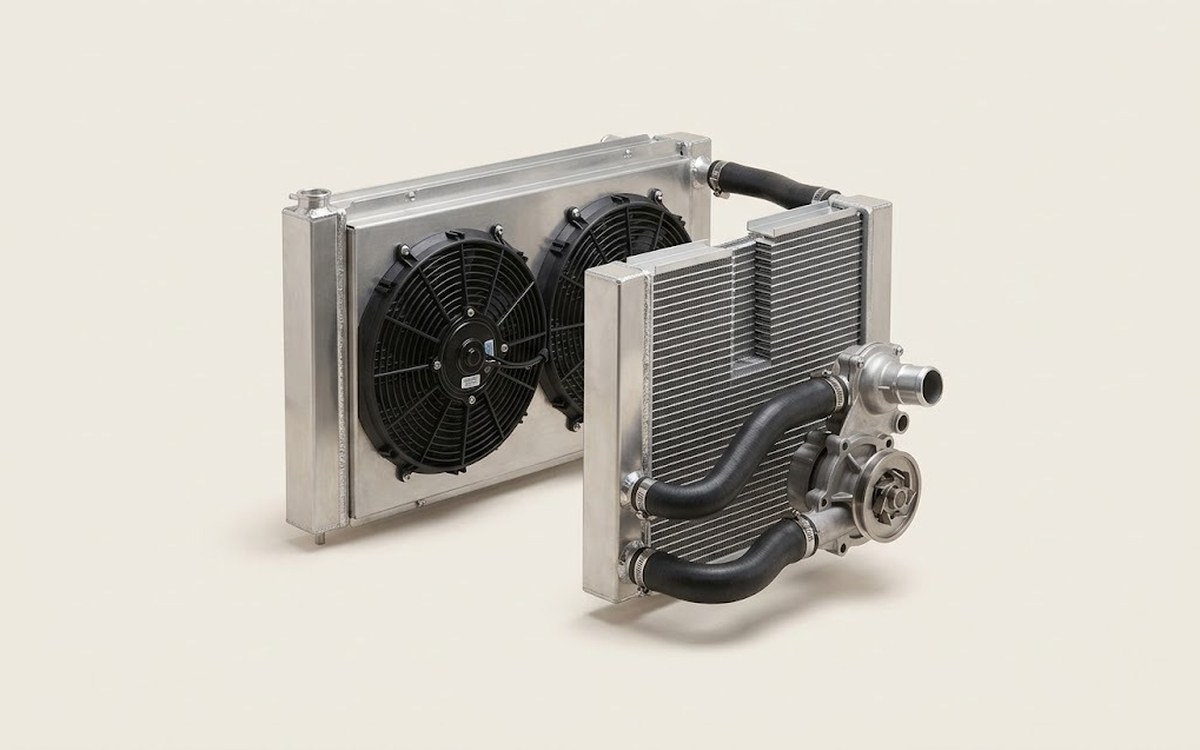 How it works · 3D
How the Engine Cooling System Works
How the part you're working on actually works — in plain English, on a 3D model.
Open in 3D →