Autopapyrus · Mercedes-Benz Actros 12.0 V6 OM501 (2011)
https://autopapyrus.com/guides/mercedes-benz/actros/coolant-replacement/
https://autopapyrus.com/guides/mercedes-benz/actros/coolant-replacement/
Compiled automatically from service literature and owner experience. Specs are for the typical configuration — check them against your exact car before you start.
Mercedes-Benz Actros 12.0 V6 OM501 (2011): Coolant Replacement
The V6 OM501 cooling system circulates a mixture of antifreeze and water that protects against corrosion, cylinder liner cavitation and freezing. Replace the coolant according to the maintenance schedule or by condition: when it loses its color, develops sediment, or shows an oil film. Do the job on a cold engine and be sure to bleed air from the system.
Parts
2- 🔩 Coolant (antifreeze) for heavy-duty diesel engines approved to the Mercedes-Benz specification for commercial vehicle coolants (MB 325.x; for anti-corrosion additive, MB 326.x). Quantity: 35-45 L (9.3-11.9 gal) of ready-mixed coolant, depending on radiator and cab version. Concentrate is typically sold in 20 L (5.3 gal) containers
- 🔩 check with your supplier. If needed: new drain plug sealing rings and an expansion tank cap
Step by step
12 steps- Park the truck on level ground, set the parking brake, and place wheel chocks. Shut off the engine and let it cool down completely, because a hot system is under pressure. Tilt the cab (following the manufacturer's instructions) only as far as the standard safety lock.
- Remove the lower guard or radiator shroud if it is in the way. Place a container of at least 50 L (13 gal) under the radiator and engine.
- Slowly open the expansion tank cap, first to the first click to release residual pressure, then fully.
- Turn the cab heater to maximum heat (ignition on, engine not started) to open the heater valve and drain the coolant from the heater circuit.
- Open the drain valve or plug at the bottom of the radiator and drain the bulk of the coolant. If there are drain plugs on the cylinder block (on the sides of the V6 block), remove them too. Their location depends on the equipment version, so check on the vehicle.
- When the coolant has drained, close the plugs using sealing rings in good condition. Do not guess the torque: fine-thread plugs should be tightened moderately, to the manufacturer's specification, so you don't strip the threads in the aluminum radiator or the block.
- If the drained coolant is rusty, cloudy or has sediment, fill with clean water (preferably distilled), warm the engine up with the heater open, let it cool and drain. Repeat until the drained liquid is clear. Flush only when necessary.
- Prepare the mixture. Typically use 50% antifreeze and 50% distilled water (protection down to about -37°C (-35°F)); for very cold climates up to 55-60% is acceptable. Never exceed 60% antifreeze: heat transfer gets worse. Do not mix different types of antifreeze.
- Pour the mixture in slowly through the expansion tank to avoid air pockets. Bring the level to the MAX mark on a cold engine.
- Start the engine with the heater open and the tank cap closed. Let it idle, periodically raising the revs slightly. Watch the level: it will drop as air is purged, so top up as needed. If your truck has bleed fittings on the hoses, open them slightly until coolant flows out without bubbles.
- Warm the engine up until the thermostat opens (the upper radiator hose becomes hot), make sure the fan engages and the cab heater warms evenly. Shut off the engine, let it cool and check the level again.
- Inspect the plugs, hoses and clamps for leaks. Check the level again after the first 50-100 km (30-60 miles) of driving. Take the used coolant to a recycling facility; do not pour it down a drain or onto the ground.
Common mistakes and warnings
- Never open the expansion tank cap on a hot engine: hot coolant released under pressure causes severe burns. Antifreeze is toxic, so keep it away from children and animals. An air pocket in the system leads to overheating and damage to the cylinder head gasket or liners, so do not skip the warm-up and level check. The exact capacities, replacement interval and drain plug torques for your configuration are given in the manufacturer's service manual. If you have no experience working with a truck cab and cooling system, have a repair shop do the replacement.
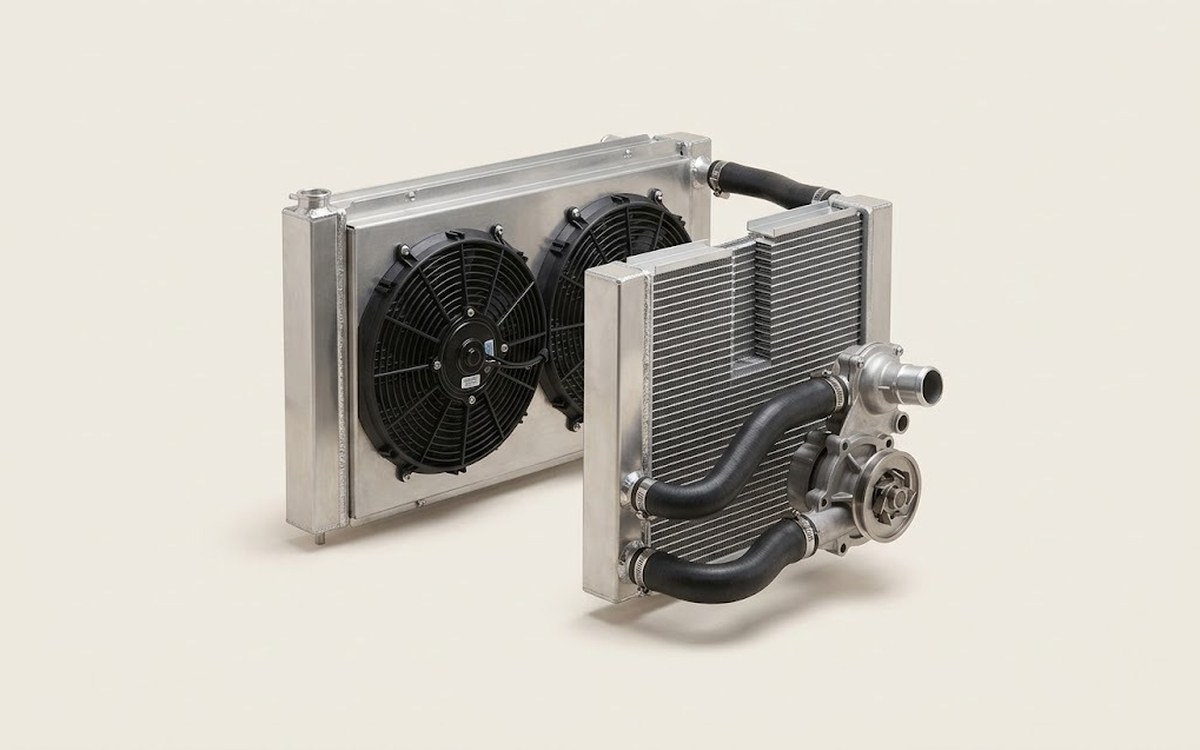 How it works · 3D
How the Engine Cooling System Works
How the part you're working on actually works — in plain English, on a 3D model.
Open in 3D →