Autopapyrus · Volkswagen Transporter 2.0 TDI CXHB (2019)
https://autopapyrus.com/guides/volkswagen/transporter/coolant-replacement/
https://autopapyrus.com/guides/volkswagen/transporter/coolant-replacement/
Compiled automatically from service literature and owner experience. Specs are for the typical configuration — check them against your exact car before you start.
Volkswagen Transporter 2.0 TDI CXHB (2019): Coolant Replacement
Coolant replacement on the 2.0 TDI (CXHB) diesel is done on a fully cooled-down engine. The coolant is drained through the lower radiator hose or the radiator drain plug, then new coolant is filled in and air is bled from the system. The exact procedure and bleeding sequence for this model are not documented in publicly available service materials, so below are the general principle and practical tips for VW vehicles with this engine family.
Parts
3| № | Part |
|---|---|
| 01 | Coolant (antifreeze) VW TL 774-J (G13) or TL 774-G (G12 evo), purple-pink, concentrate or ready-mixed −35 °Cabout 8-10 L (8.5-10.6 qt) of ready-mixed coolant |
| 02 | Distilled waterfor diluting the concentrate |
| 03 | Sealing ringsas required, if the radiator cap or hoses were leaking |
Tools
9- Lift or inspection pit
- wrenches or sockets for the engine undertray fasteners (per the factory hardware)
- flat-head screwdriver
- 10-12 L (10.5-12.7 qt) drain pan
- funnel
- hose or syringe for draining
- clean rags
- gloves
- safety glasses
 There's a full repair manual for this car
Every system, wiring diagrams and torque specs — not just this job. Haynes and 21 more.
See manuals →
Step by step
14 steps- Park the vehicle on level ground, shut off the engine and let it cool down completely (at least 2-3 hours). Open the hood and disconnect the negative battery terminal.
- Remove the lower engine undertray (plastic or metal, using the factory fasteners) to get access to the radiator and the lower hose.
- Open the expansion tank cap only on a cold engine: first loosen it slightly to release any residual pressure, then remove it completely.
- Place the drain pan under the radiator. Disconnect the lower radiator hose (slide back the spring clamp and carefully pull off the hose) or unscrew the drain plug if one is fitted. Let the coolant drain completely. Be careful not to damage the plastic radiator fittings, which can be brittle on older vehicles.
- If you need to remove the remaining coolant from the system, also drain the expansion tank (with a hose or syringe). Flush the system only if the coolant is contaminated: fill with distilled water, warm up the engine and drain, repeating until the water runs clear.
- Reconnect the hose (the clamp must sit in its original position) or tighten the plug. Tighten the plug by hand with light force, without jerking, because the threads are in plastic. For the exact torque, follow the manufacturer's specification.
- Prepare the mixture: dilute VW G13 concentrate with distilled water at roughly 1:1 for protection down to about −35 °C (check the exact ratio on the container). Do not mix coolants of different types and colors (for example, red G12 or green G11 with purple G13).
- Pour the new coolant into the expansion tank in a thin stream to a level between the MIN and MAX marks (closer to MAX). Do not rush, to avoid creating air pockets.
- Close the tank cap, switch on the ignition, set the heater to maximum temperature and maximum heating (heater valve open, fan at medium speed). Start the engine.
- Let the engine idle, periodically raising the speed to 2000-2500 rpm, until the thermostat opens (the upper radiator hose becomes hot and the fan switches on). Watch the level in the tank and top up if necessary.
- Squeeze the upper and lower radiator hoses several times (carefully, wearing gloves) to push out air. If there are bleed fittings, open the valve and close it once coolant flows without bubbles.
- Shut off the engine, let it cool down completely and check the level against the marks; top up if necessary. Take a 10-15 minute test drive, then check the level again on a cold engine.
- Install the engine undertray and tighten the fasteners (for M6-M8 bolts, roughly 8-25 N·m (6-18 lb-ft); the exact value depends on the fastener type, so follow the manufacturer's specification). Reconnect the battery.
- Take the drained coolant to a designated disposal facility. Antifreeze is toxic and dangerous to animals.
Common mistakes and warnings
- Do not open the expansion tank cap on a hot engine
- The system is under pressure, and you could be burned by steam and hot coolant
- An air pocket in the system causes overheating and can damage the cylinder head gasket, so after the replacement, be sure to monitor the temperature and coolant level
- If the overheating warning light comes on or the heater does not blow warm air, stop and contact a repair shop
- Draining and refilling coolant is a routine procedure, but if you have trouble bleeding the system (for lack of experience), it is better to leave it to a professional
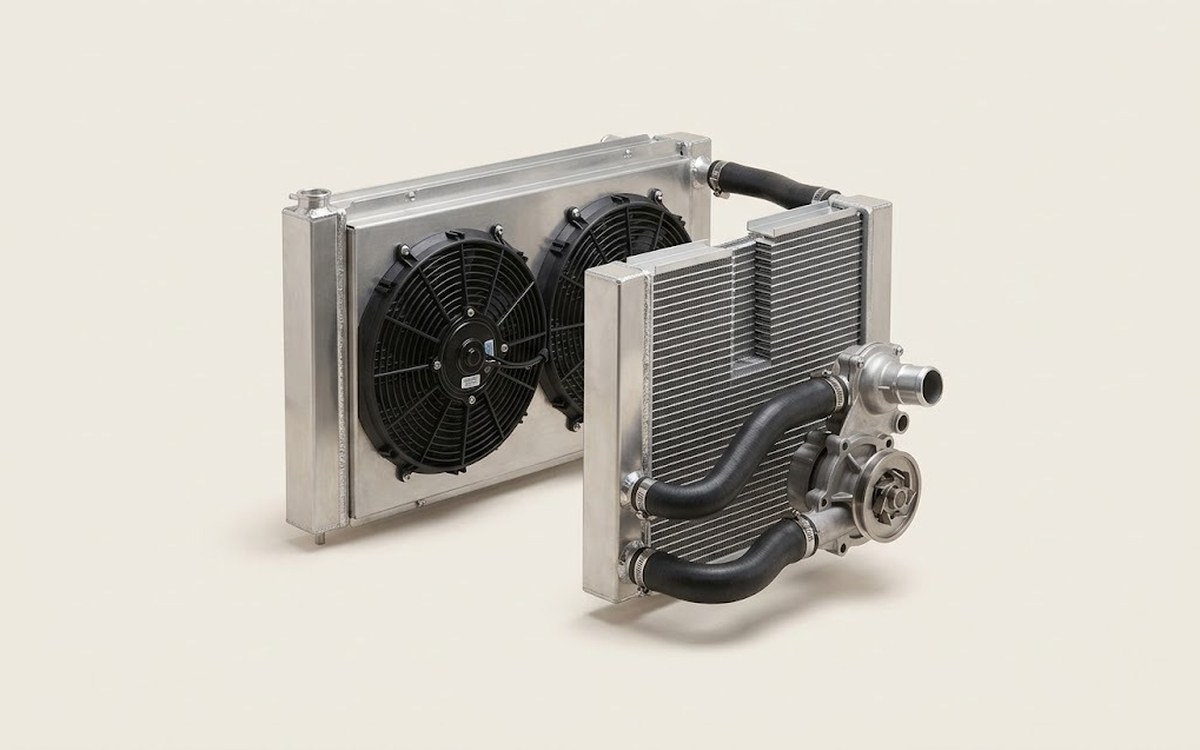 How it works · 3D
How the Engine Cooling System Works
How the part you're working on actually works — in plain English, on a 3D model.
Open in 3D →