Autopapyrus · Ford Focus II 1.8 Duratec HE (2004)
https://autopapyrus.com/guides/ford/focus/thermostat-check-and-replacement/
https://autopapyrus.com/guides/ford/focus/thermostat-check-and-replacement/
Compiled automatically from service literature and owner experience. Specs are for the typical configuration — check them against your exact car before you start.
Ford Focus II 1.8 Duratec HE (2004): Thermostat Check and Replacement
On the 1.8 Duratec HE, the thermostat sits in a housing where the upper radiator hose connects. A faulty thermostat shows up as slow warm-up and weak cabin heat (stuck open) or overheating (stuck closed). The job requires draining part of the coolant. Exact access and housing mounting depend on the version, so use the hoses on your engine as a guide.
Parts
2| № | Part | Genuine part no. | Alternatives |
|---|---|---|---|
| 01 | Thermostat for 1.8 Duratec HE engine, opens at about 88 °C, with O-ring or gasket | 1476110 | Wahler, Gates, Dayco, Behr |
| 02 | Ford Super Plus Premium coolant (G12/G12+), premixed or concentrate mixed 50/50 with distilled water |
Part numbers are from the manufacturer's original catalogue. Check them against your VIN before ordering.
Tools
7- Socket set and ratchet
- screwdriver
- hose clamp pliers
- coolant drain pan (at least 7 L (7.4 qt))
- funnel
- rags
- thermometer and a container of water for testing
 There's a full repair manual for this car
Every system, wiring diagrams and torque specs — not just this job. Haynes and 25 more.
See manuals →
Step by step
12 steps- On-car diagnosis. Warm up the engine. The upper radiator hose should stay cold or only slightly warm until the temperature gauge reaches the normal operating range (about 88-90 °C). Then it heats up quickly. If the hose is hot right after startup, the thermostat is stuck open. If the engine overheats while the radiator and hoses stay cold, the thermostat is stuck closed.
- Park the car on level ground and let the engine cool down completely. A hot system is under pressure, and opening it risks burns. Disconnect the negative battery terminal.
- If necessary, remove the plastic engine undercover. Place the drain pan under the radiator.
- Unscrew the coolant reservoir cap. Drain the coolant through the radiator drain fitting or by disconnecting the lower hose. Draining 2-3 L (2.1-3.2 qt) is enough to bring the level below the thermostat housing. If the coolant is old or cloudy, drain all of it and flush the system.
- Locate the thermostat housing by the hose that connects to it. Remove the temperature sensor connector from it, if fitted. Loosen the clamp and remove the hose.
- Unscrew the fasteners of the thermostat housing or cover. Remove the cover and take out the thermostat. Note the thermostat's orientation, in particular the position of the air bleed valve or hole at the top.
- Test the removed thermostat. Place it in a container of water and heat it gradually, monitoring the temperature with a thermometer. The valve should begin to open at about 88 °C and be clearly open at 100-105 °C. After cooling, it should close completely. If the valve is partly open when cold, does not open, or sticks, replace the thermostat.
- Clean the seat of old sealant and scale. Do not let dirt get into the passages. Install the new thermostat with a new O-ring or gasket in the same orientation as the old one. The air bleed valve must be at the top.
- Reassemble the housing. Tighten the fasteners evenly, without skewing the cover. The torque for such small bolts is usually 8-12 N·m (6-9 lb-ft); take the exact value from the manufacturer's service manual. Do not overtighten, to avoid stripping the threads in the aluminum. Fit the hose and tighten the clamp. Reconnect the sensor connector.
- Close the drain opening and refit the engine undercover. Fill coolant into the reservoir up to the MAX mark.
- Warm up the engine with the reservoir cap open. Hold the engine at 2000-2500 rpm until the radiator fan switches on. Periodically squeeze the upper radiator hose to push out air pockets. Top up the coolant as needed. Then close the cap.
- Check the connections for leaks. After the engine cools down, check the level again. Make sure the heater works and the temperature gauge stays in the middle of the scale.
Common mistakes and warnings
- Do not open the cooling system on a hot engine
- Do not drive without a thermostat: the engine will take a long time to warm up, and wear and fuel consumption will increase
- An air pocket after replacement can cause local overheating, so bleed the air out thoroughly
- Coolant is toxic; drain it into a closed container and dispose of it separately
- Do not mix coolants of different types unless you are sure they are compatible
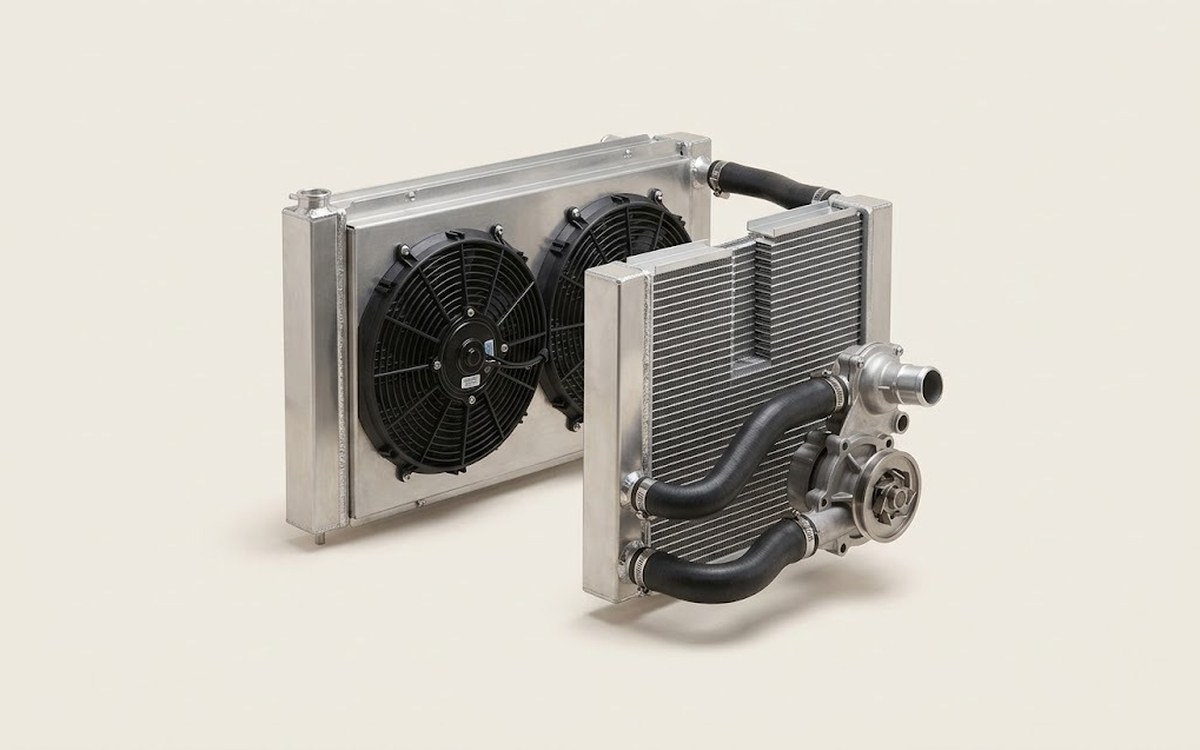 How it works · 3D
How the Engine Cooling System Works
How the part you're working on actually works — in plain English, on a 3D model.
Open in 3D →