Autopapyrus · Haval M6 1.5 Turbo 143 hp (2025)
https://autopapyrus.com/guides/haval/m6/diagnosing-engine-misfires-rough-running/
https://autopapyrus.com/guides/haval/m6/diagnosing-engine-misfires-rough-running/
Compiled automatically from service literature and owner experience. Specs are for the typical configuration — check them against your exact car before you start.
Haval M6 1.5 Turbo 143 hp (2025): Diagnosing Engine Misfires (Rough Running)
A rough-running 1.5 Turbo is most often caused by the spark plugs, an ignition coil, a fuel injector, an air leak or low compression. The order of work is: find the problem cylinder from the fault codes, then check the plugs and swap the coil to confirm.
Parts
3| № | Part | Alternatives |
|---|---|---|
| 01 | Spark plugs for 1.5 Turbo engineone per cylinder | NGK, Denso, Bosch |
| 02 | Ignition coil (individual, one per cylinder)if faulty | |
| 03 | Fuel injectorif faulty |
Tools
7- OBD scanner that reads misfires by cylinder
- spark plug socket with a magnet or rubber insert (size to match the plug)
- socket and ratchet
- torque wrench
- feeler gauge
- compression tester
- ceramic grease or dielectric grease
Step by step
13 steps- Read the OBD fault codes. Codes P0301-P0304 show which cylinder is misfiring. Codes P0300 (random misfires), P0171 (system too lean) and P0087 (fuel rail pressure too low) point to the fuel system or an air leak. Write down the codes and clear them. If the car is under warranty, contact the dealer first.
- Determine when the engine runs rough. Idle, load and acceleration under boost point to different causes. Misfires only under load and boost are usually related to the spark plugs or a coil. Misfires at idle are more often caused by an air leak, an injector or carbon buildup.
- Shut off the engine and let it cool down. Remove the decorative engine cover. Inspect the vacuum and intake hoses for cracks, clamps that have come off, or hissing while the engine is running.
- Disconnect the connector and remove the coil from the problem cylinder. Inspect the coil for cracks, signs of arcing and oil in the spark plug well. Oil in the well means a leaking valve cover gasket or spark plug well seal.
- Blow out the spark plug well with compressed air, then remove the plug. Assess its condition. Dry black soot means a rich mixture or a weak spark. An oily deposit means a problem with the valve stem seals or piston rings. A whitish deposit or a melted electrode means a lean mixture or overheating. A cracked insulator or heavily worn electrode means the plug must be replaced.
- Check the gap with a feeler gauge. Take the value for your engine from the owner's manual; on turbocharged engines it is usually about 0.6-0.8 mm. Do not bend the electrode on plugs with an iridium or platinum tip.
- Swap the problem cylinder's coil with the one from a neighboring cylinder. Clear the codes, warm up the engine and put it under load. If the misfire moved to the other cylinder, the coil is at fault and must be replaced. If the misfire stayed on the same cylinder, move on to the spark plugs, injector and compression.
- To test the plug, install a known-good one in the problem cylinder. If the misfire is gone, replace the whole set of plugs, not just one. On turbocharged engines, replace the plugs as a set per the maintenance schedule, roughly every 30,000-60,000 km (check the service book for the exact interval).
- When installing a plug, thread it in by hand until it stops, then tighten it with a torque wrench. The torque for M12 plugs is usually 20-30 N·m (15-22 lb-ft). Verify the exact value against the manufacturer's specification. Do not overtighten, or you can damage the threads in the aluminum cylinder head. Apply a thin layer of dielectric grease inside the coil boot, install the coil and plug in the connector.
- If the plugs and coils are good, check the cylinder compression with a compression tester on a warm engine. A variation between cylinders of more than 10-15% indicates a mechanical problem: valves, piston rings or the head gasket. In that case, further diagnosis should be done at a repair shop.
- Check the injectors. Listen to them working with a stethoscope or a long screwdriver held against the injector body; the clicks should be even. A test bench is needed to check spray pattern and flow rate. Cleaning the injectors on the car does not always help.
- Check the fuel quality and the condition of the fuel filter. If the rough running started after a fill-up, replace the fuel and the spark plugs. Also check the crankcase ventilation system and the evaporative emission (EVAP) purge valve. A stuck valve causes an uneven idle.
- After the repair, clear the codes, take a test drive under load and make sure there are no fault codes. If the codes return, the problem has not been fixed.
Common mistakes and warnings
- Driving with misfires on a turbocharged engine is dangerous: unburned fuel enters the exhaust, overheats and destroys the catalytic converter, and also washes the oil film off the cylinder walls
- If the Check Engine light on the instrument panel is flashing, stop driving and do not push the engine
- Work only on a cold engine
- If the car is under warranty, have the diagnosis and repair done by an authorized dealer, otherwise you may lose the warranty
- For mechanical causes (low compression, cylinder head problems), take the car to a repair shop
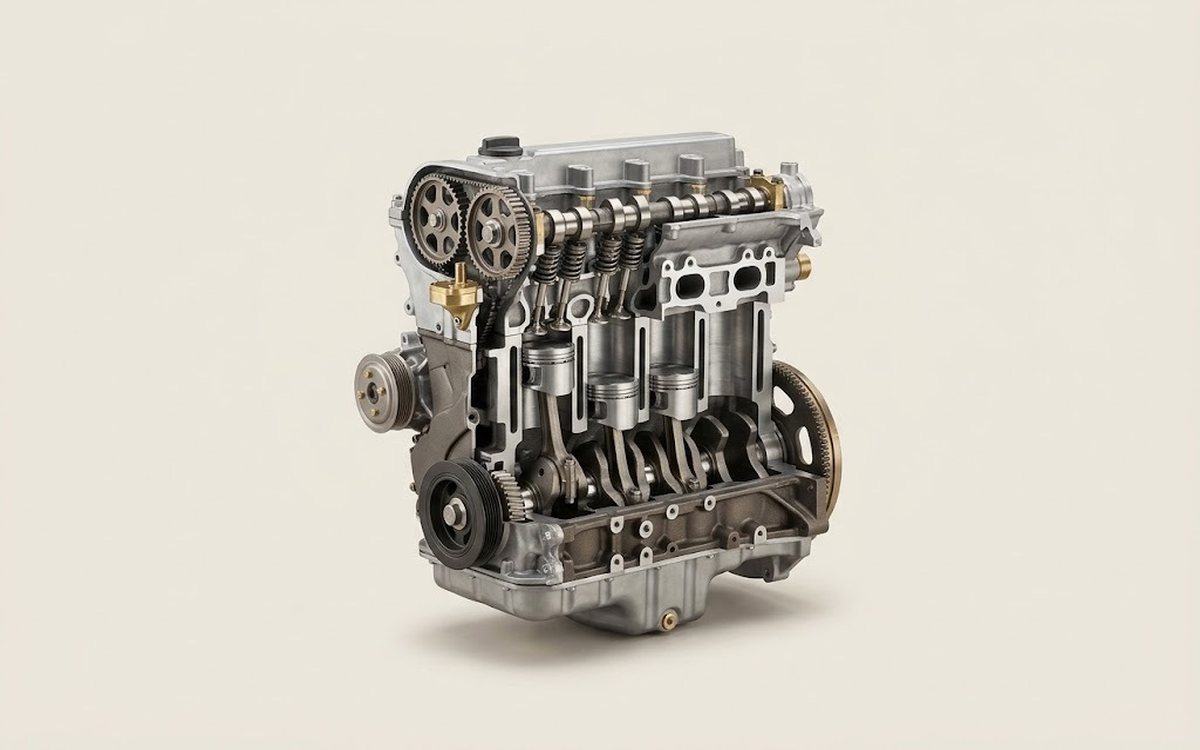 How it works · 3D
How a Car Engine Works
How the part you're working on actually works — in plain English, on a 3D model.
Open in 3D →