Autopapyrus · Subaru Forester 2.0 FB20 (2013)
https://autopapyrus.com/guides/subaru/forester/engine-oil-and-oil-filter-change-sj-2013/
https://autopapyrus.com/guides/subaru/forester/engine-oil-and-oil-filter-change-sj-2013/
Compiled automatically from service literature and owner experience. Specs are for the typical configuration — check them against your exact car before you start.
Subaru Forester 2.0 FB20 (2013): Engine Oil and Oil Filter Change
The FB20 is a horizontally opposed (boxer) aluminum engine, so the oil filter is mounted on the side and the drain plug is on the oil pan. Change the oil every 10,000-15,000 km or once a year. For city driving, short trips and cold weather, it's better to change it every 7,500-10,000 km. Drain the oil with the engine warm, and replace the filter at every oil change.
Part
- 🔩 0W-20 or 5W-30 synthetic oil (API SN/SM, ILSAC GF-4/GF-5), about 4.2-4.4 L (4.4-4.6 qt) including the filter, so it's best to buy a 5 L (5.3 qt) jug. Subaru oil filter for FB engines (spin-on, metal canister) and a new aluminum or copper drain plug crush washer
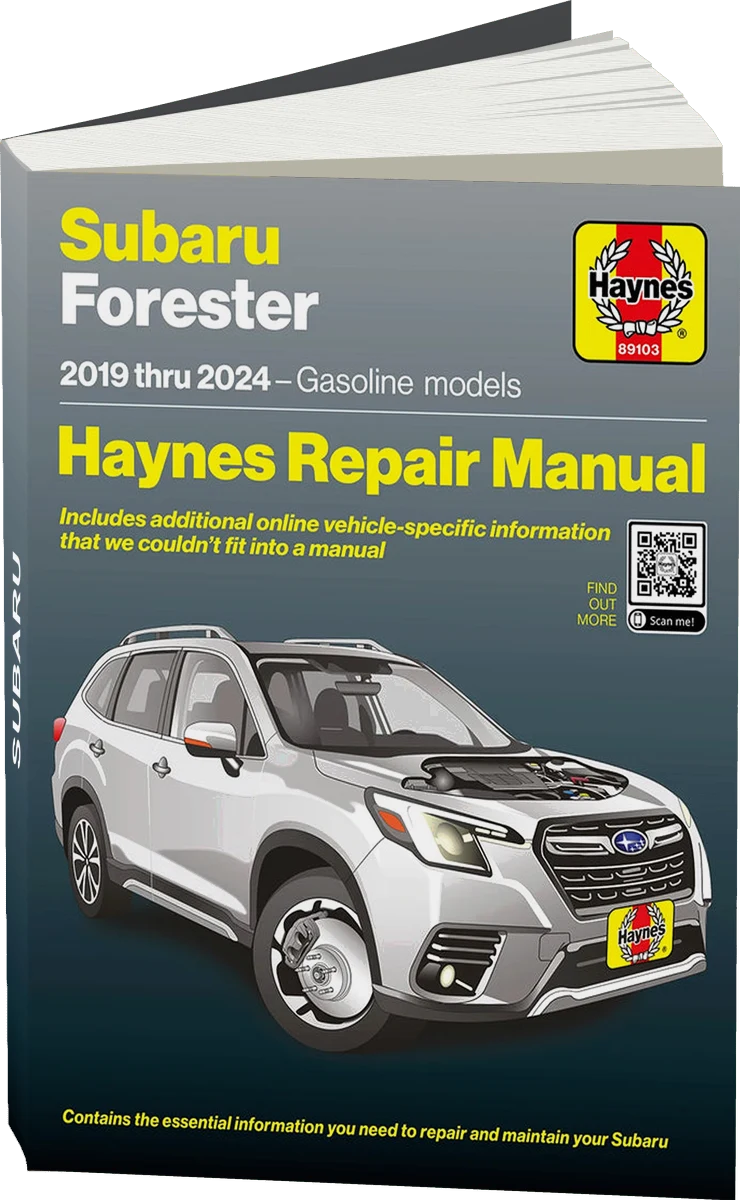 There's a full repair manual for this car
Every system, wiring diagrams and torque specs — not just this job. Haynes and 9 more.
See manuals →
Step by step
13 steps- Warm up the engine for 5-10 minutes so the oil thins out, then shut it off. Park the car on level ground, ideally over a pit or on a lift. If you raise the car on jacks, use solid jack stands, and never work under the car supported by a jack alone.
- Open the hood and remove the oil filler cap. This speeds up draining and keeps the oil from glugging.
- If there is a plastic underbody cover, remove it or open the access hatch. Locate the drain plug on the lower part of the oil pan.
- Place the drain pan under the plug and remove the plug with a 17 mm wrench. The oil is hot, so protect your hands. Let it drain for 10-15 minutes.
- Clean the plug and its seat of dirt and metal particles. Replace the crush washer with a new one. Thread the plug in and tighten it with a torque wrench to about 35-45 N·m (26-33 lb-ft) (check the exact value in the service manual), without excessive force, because the oil pan is aluminum.
- Locate the oil filter on the side of the cylinder block. Position the drain pan, because the remaining oil will run out of the canister, and unscrew the filter counterclockwise with a filter wrench or cup-style socket.
- Wipe the mounting surface on the block and make sure the old gasket hasn't stuck to the block. Lubricate the rubber gasket of the new filter with fresh oil. If possible, fill the filter about halfway with oil to shorten the time of oil starvation at startup.
- Spin the filter on by hand until the gasket touches the mounting surface, then tighten it about 3/4 of a turn more, or to the value printed on the filter. Do not overtighten it with a wrench.
- Pour in about 3.8-4.0 L (4.0-4.2 qt) of oil through a funnel, wait a couple of minutes and check the level with the dipstick. Add oil in small amounts up to the mark between MIN and MAX, but not above the maximum.
- Install the oil filler cap and run the engine for 1-2 minutes. The oil pressure warning light should go out within a second or two. Check for leaks around the filter and the drain plug.
- Shut off the engine, wait 5-10 minutes for the oil to drain back into the pan, and recheck the level with the dipstick. Top up to the correct level if needed.
- Reinstall the underbody cover. Take the used oil to a recycling collection point or repair shop. Do not pour it down a drain or onto the ground.
- If the instrument cluster has an oil change reminder, reset it as described in the owner's manual (depending on trim, this is done with buttons on the cluster or through the menu).
Common mistakes and warnings
- Do not overfill the oil. Excess oil causes foaming, increased consumption and pushes out seals. Do not use cheap mineral oils or oils without API/ILSAC approval, because the FB20 is sensitive to oil quality (narrow passages, timing chain drive). After the change, monitor the oil level: moderate consumption of about 0.3-0.5 L per 1,000 km (0.3-0.5 qt per 1,000 km) is considered acceptable for boxer engines, but higher consumption requires diagnosis.