Autopapyrus · Volkswagen Tiguan 1.4 TSI (2021)
https://autopapyrus.com/guides/volkswagen/tiguan/clutch-fluid-replacement/
https://autopapyrus.com/guides/volkswagen/tiguan/clutch-fluid-replacement/
Compiled automatically from service literature and owner experience. Specs are for the typical configuration — check them against your exact car before you start.
Volkswagen Tiguan 1.4 TSI (2021): Clutch Fluid Replacement
On the Tiguan II with a manual transmission, the clutch and brake systems share the same fluid from a single reservoir. The job includes bleeding all four brake circuits and the clutch slave cylinder. The replacement interval is every 2 years or 30,000 km. The procedure requires bleeding each bleeder screw in sequence until fresh fluid comes out.
Part
- 🔩 DOT 4 Class 6 brake fluid (VW G 052 532 A2 or equivalents such as Castrol React DOT 4, ATE SL.6 DOT 4). Quantity: 1.5-2 L (1.6-2.1 qt)
 There's a full repair manual for this car
Every system, wiring diagrams and torque specs — not just this job. Haynes AutoFix (online) and 1 more.
See manuals →
Step by step
9 steps- Park the vehicle on level ground, shut off the engine, and let the brakes cool down.
- Open the hood and locate the brake fluid reservoir on the left side of the engine bay. Remove the cap and use tweezers to pull out the yellow filter insert (you will feel resistance from the guides).
- Use the syringe with tubing to draw the old fluid out of the reservoir (about 230 ml). Rinse the yellow insert with clean brake fluid and let it dry.
- Fill the reservoir with fresh DOT 4 up to the MAX mark. Keep the level above the minimum during the entire bleeding procedure. If it drops between MIN and MAX, air may get into the system.
- Bleed the brake circuits in this order: rear right wheel → rear left → front right → front left. At each wheel: locate the bleeder screw on the caliper (rear brake) or caliper (front brake), clean off any dirt, attach the clear hose, and place the other end in the container.
- Loosen the bleeder screw with an 11 mm wrench by 1-1.5 turns. An assistant smoothly presses the brake pedal 5-10 times and holds it down. Tighten the bleeder screw, then release the pedal. Repeat until clean, light-colored fluid comes out (approximately 300 ml for each rear wheel and 250-300 ml for each front wheel). Top up the reservoir after every 10 pedal strokes.
- Bleed the clutch slave cylinder. Remove the air filter housing (1 screw + 2 rubber grommets) for access. Locate the clutch slave cylinder on the transmission and turn the plastic bleeder fitting counterclockwise 180° to open the passage. Have an assistant pump the clutch pedal while you draw fluid out with the syringe, or let it drain by gravity through the hose (about 150 ml). Return the fitting to its original position (clockwise 180°).
- Check the reservoir level and top up to MAX. Reinstall the yellow insert in the reservoir and close the cap without excessive force.
- Start the engine and press the brake and clutch pedals several times. The pedal feel should be firm, with no sinking. Check the bleeder screws and connections for leaks.
Common mistakes and warnings
- Brake fluid is aggressive to paint. If it gets on the body, rinse it off with water immediately. Do not let water or dirt get into the reservoir, as this will cause corrosion of the brake cylinders and brake failure. If the clutch or brake pedal remains soft after bleeding, repeat the procedure or take the vehicle to a repair shop to diagnose leaks and check the system for tightness.
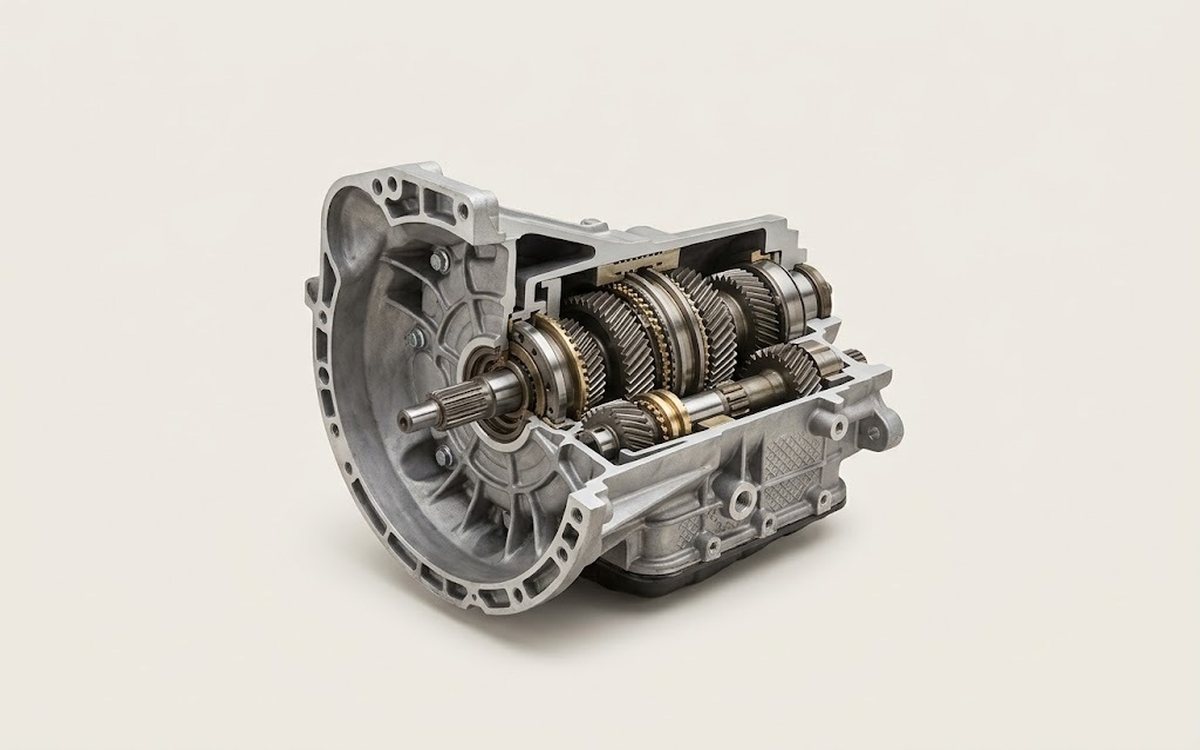 How it works · 3D
How a Manual Transmission Works
How the part you're working on actually works — in plain English, on a 3D model.
Open in 3D →