Autopapyrus · Volkswagen Tiguan (2nd generation)
https://autopapyrus.com/guides/volkswagen/tiguan/brake-fluid-replacement/
https://autopapyrus.com/guides/volkswagen/tiguan/brake-fluid-replacement/
Compiled automatically from service literature and owner experience. Specs are for the typical configuration — check them against your exact car before you start.
Volkswagen Tiguan (2nd generation): Brake Fluid Replacement
Brake fluid replacement on the Tiguan II with ABS and ESP is done every 2-3 years. The procedure requires fully bleeding all four wheels in a specific sequence. Class 6 fluid is mandatory: regular DOT 4 reduces the response speed of the ABS pump.
Part
- 🔩 VAG brake fluid B000750M3 (DOT 4 Class 6), 1.5 L (1.6 qt)
 There's a full repair manual for this car
Every system, wiring diagrams and torque specs — not just this job. Haynes AutoFix (online) and 1 more.
See manuals →
Step by step
9 steps- Raise the vehicle on a lift, or lift each wheel in turn on a jack. Remove the wheels.
- Open the brake fluid reservoir cap in the engine compartment. Use the syringe with tube to draw out the old fluid to a level just above the filter (about 230-250 mL (7.8-8.5 fl oz)). You can remove the yellow round filter with tweezers for convenience, clean it with penetrating oil, and let it dry.
- Fill the reservoir with fresh DOT 4 Class 6 fluid up to the upper (MAX) mark.
- Clean the bleeder screw with a brush. Apply penetrating oil to the threads if the screw has not been loosened for a long time.
- Bleed the brakes in this sequence: right rear wheel → left rear wheel → right front wheel → left front wheel. At each wheel: fit the clear hose onto the bleeder screw (11 mm bolt), put the other end of the hose into the container, and loosen the bleeder screw half a turn. An assistant smoothly presses the brake pedal 10 times (every 10 presses push out about 100 mL (3.4 fl oz) of fluid). Drain until clean, light-colored fluid with no air bubbles comes out: about 300 mL (10.1 fl oz) at the rear wheels and 200-250 mL (6.8-8.5 fl oz) at the front wheels. Tighten the bleeder screw to 10 N·m (7 lb-ft).
- Constantly monitor the fluid level in the reservoir. Do not let it drop below the filter, or air will enter the system. Top up with fresh fluid after each wheel.
- After bleeding all four wheels, press the brake pedal several times with the ignition off to remove any remaining air. Check the fluid level in the reservoir and install the cap.
- Install the wheels and tighten the wheel bolts to 140 N·m (103 lb-ft). Lower the vehicle.
- Start the engine and press the brake pedal. The pedal should feel firm. Check that there are no leaks at the bleeder screws.
Common mistakes and warnings
- Brake fluid is hygroscopic and toxic. Avoid contact with paint and skin. Do not let air enter the system during bleeding. If the pedal feels soft or sinks to the floor after the replacement, repeat the bleeding or take the car to a repair shop to have the ABS system diagnosed.
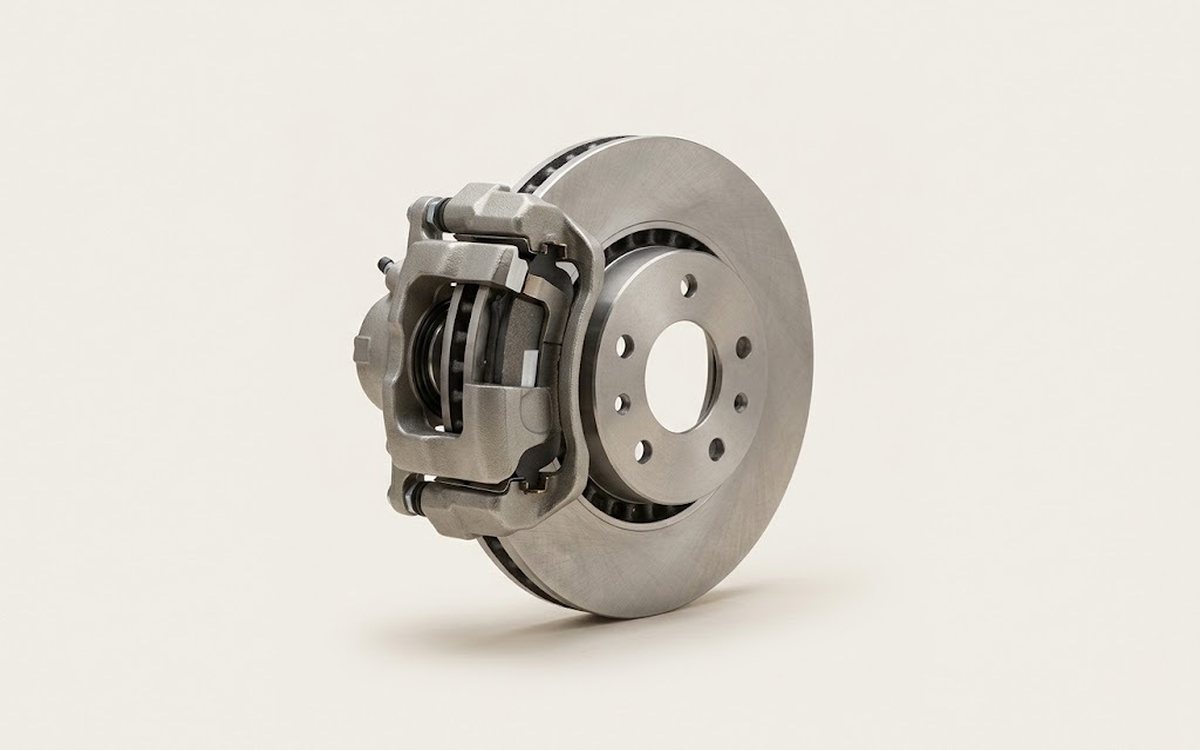 How it works · 3D
How Car Brakes Work
How the part you're working on actually works — in plain English, on a 3D model.
Open in 3D →