Autopapyrus · Volkswagen Tiguan II 1.4 TSI 125 (2021)
https://autopapyrus.com/guides/volkswagen/tiguan/clutch-master-cylinder-replacement/
https://autopapyrus.com/guides/volkswagen/tiguan/clutch-master-cylinder-replacement/
Compiled automatically from service literature and owner experience. Specs are for the typical configuration — check them against your exact car before you start.
Volkswagen Tiguan II 1.4 TSI 125 (2021): Clutch Master Cylinder Replacement
The clutch master cylinder is located in the cabin, near the pedal assembly, and is connected by a line to the slave cylinder in the transmission. Signs of failure: fluid leaking in the driver's footwell, a clutch pedal that sinks to the floor or "won't hold," or a clutch that doesn't fully disengage. This guide applies to manual transmission versions only: DSG versions have no clutch pedal and no clutch hydraulics. Detailed factory procedures for this trim are not available in public sources, so the steps below are a general procedure. Torque values are approximate, so check the exact figures against the manufacturer's service manual.
Parts
3| № | Part |
|---|---|
| 01 | Clutch master cylinder for Tiguan II with manual transmission (aftermarket equivalents: FTE, Valeo, ATE) |
| 02 | brake fluid meeting the manufacturer's specification (type is printed on the reservoir cap) |
| 03 | if needed, a new seal ring and line connector retaining clip |
Tools
9- Socket set and ratchet
- screwdrivers
- pliers
- pick or thin hook for line retaining clips
- plugs to seal the lines
- drain pan and rags
- syringe or clutch bleeding tool
- flashlight
- gloves and safety glasses
 There's a full repair manual for this car
Every system, wiring diagrams and torque specs — not just this job. Haynes AutoFix (online) and 1 more.
See manuals →
Step by step
15 steps- Make sure the master cylinder is really the cause: inspect the area under the pedals, the line connection, and the slave cylinder on the transmission. If the slave cylinder is leaking or not holding pressure, replacing the master cylinder won't help.
- Disconnect the negative battery terminal. Park the car on a level surface and apply the parking brake.
- Remove the lower trim panel under the steering column and the driver's footwell trim. To reach the cylinder, you may need to move aside or remove the air duct and the pedal assembly. On some cars, the steering column has to be loosened for this.
- Remove some of the fluid from the reservoir so it doesn't spill out when you disconnect the lines. Lay rags under the pedal assembly.
- Disconnect the supply hose running from the reservoir to the master cylinder and immediately plug the openings.
- Release the retaining clip and disconnect the line going to the slave cylinder. Inspect the seal ring and replace it if it is worn.
- Disconnect the cylinder rod from the clutch pedal, noting its position beforehand.
- Unbolt the cylinder from the pedal bracket and remove it. The fasteners on this assembly are usually small, so tighten them only to the approximate values in the service manual, without overtightening.
- Compare the new cylinder with the old one: piston diameter, mounting points, and rod shape. The dimensions must match.
- Install the new cylinder. It must seat evenly, without tilting: the rod must not push the piston at an angle. Secure it, connect the rod to the pedal, and tighten the fasteners to the specified torque.
- Connect the line (the retaining clip must click and the seal ring must sit in place) and the hose from the reservoir.
- Fill the reservoir with fresh brake fluid of the correct type. If the system contained dirty fluid, clean the reservoir with alcohol.
- Bleed the clutch circuit: either through the slave cylinder on the transmission or by pressure bleeding through the reservoir, as specified for your trim. Press the pedal several times until the air is gone and the pedal feels firm. Watch the fluid level in the reservoir.
- Check the system for leaks. Check pedal travel and full clutch disengagement with the engine running: the gears should engage without grinding.
- Reinstall the trim, panel, and air duct, and reconnect the battery. Take the car for a test drive.
Common mistakes and warnings
- The clutch is a safety-related component
- If you have no experience with hydraulics and working inside the cabin, leave the job to a repair shop
- Brake fluid damages paint and plastic, so wipe it off immediately
- Do not press the clutch pedal while the cylinder is removed or disconnected: the piston may come out of the housing
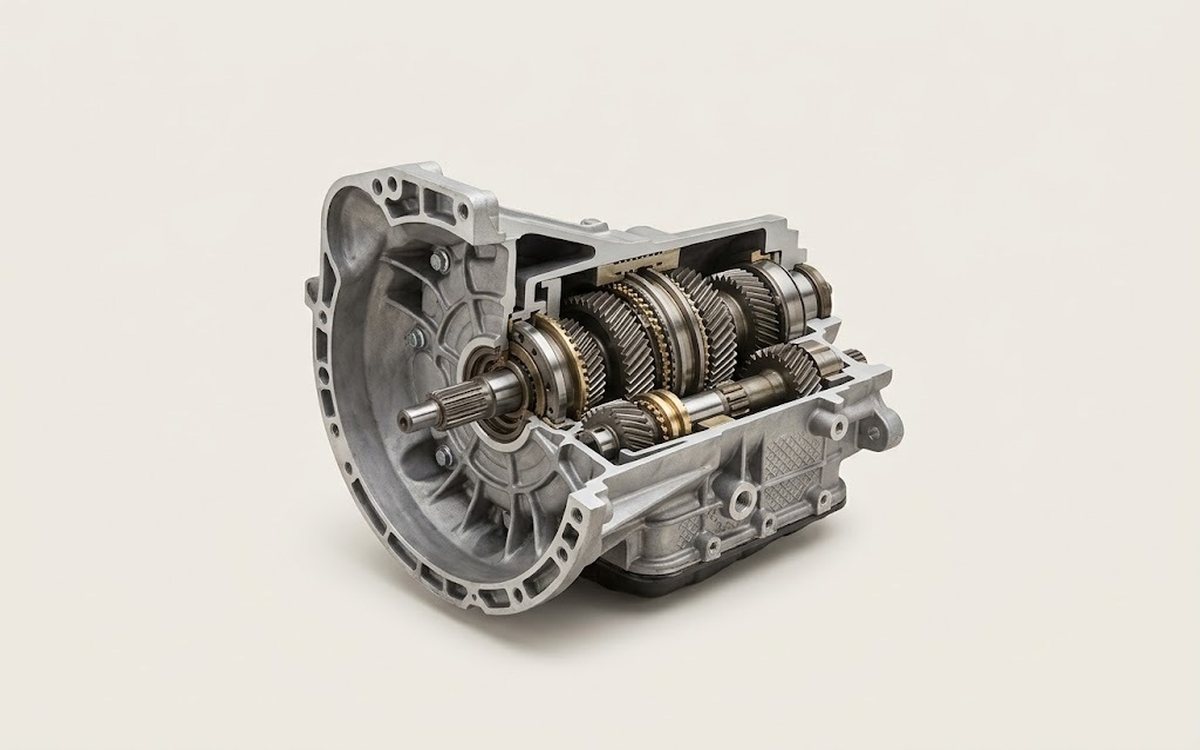 How it works · 3D
How a Manual Transmission Works
How the part you're working on actually works — in plain English, on a 3D model.
Open in 3D →