Autopapyrus · Hyundai Solaris (Accent) 1.6 G4FC (2013)
https://autopapyrus.com/guides/hyundai/solaris/brake-fluid-replacement/
https://autopapyrus.com/guides/hyundai/solaris/brake-fluid-replacement/
Compiled automatically from service literature and owner experience. Specs are for the typical configuration — check them against your exact car before you start.
Hyundai Solaris (Accent) 1.6 G4FC (2013): Brake Fluid Replacement
On the first-generation Solaris (2010-2017), the brake fluid should be replaced every 2 years or 40,000 km. The procedure is standard: bleed the system, pushing the old fluid out through the wheel cylinders (front calipers, rear drums or discs).
Part
- 🔩 Hyundai/Kia spec DOT 4 brake fluid (equivalents: MOBIL DOT 4, Bosch DOT 4, Castrol GT LMA). System capacity is about 0.7-0.9 L (0.74-0.95 qt)
Step by step
10 steps- Park the car on level ground and set the parking brake. Open the hood.
- Locate the brake fluid reservoir on the right side of the engine bay (black translucent plastic). Pop off the cap and remove the old fluid with a syringe, or pour it into a container through the filler neck.
- Fill the reservoir with new DOT 4 fluid up to the MAX line.
- Turn the ignition on (WITHOUT starting the engine) and pump the brake pedal 10-15 times to the floor. The pedal will become softer, then return to normal. Top off the fluid in the reservoir.
- If you have a bleeder hose: slip it onto the bleeder screw of the first caliper/cylinder (start with the one farthest from the master cylinder, usually the rear right wheel). Put the other end of the hose into a clear container.
- Open the bleeder screw 0.5 turn with the 10 mm wrench. Slowly press the brake pedal down (about 5 cm (2 in)) so the fluid flows into the container. Release the pedal and close the bleeder screw. Repeat 5-7 times, until only clear fluid flows, with no bubbles and no dark color.
- Move on to the next cylinder (rear left, then front right, then front left). Repeat the procedure on each one.
- Close all bleeder screws and wipe them with a rag. Top off the fluid in the reservoir to MAX.
- With the car stationary, press the brake pedal. It should feel firm, without any sudden changes. Check for leaks around the calipers/cylinders and the master cylinder (on top of the reservoir).
- Do a test drive in a safe place (such as a parking lot) and check how the brake pedal responds.
Common mistakes and warnings
- Do not mix DOT 3 and DOT 4 in the same system, because DOT 3 will lower the boiling point. Brake fluid is hygroscopic (it absorbs moisture from the air), so close the reservoir between top-offs and do not leave it open. If the pedal stays soft (sinks) after bleeding, there may be an air pocket in the line or a leaking cylinder. In that case, take the car to a repair shop to check for leaks and to have the system re-bled under pressure.
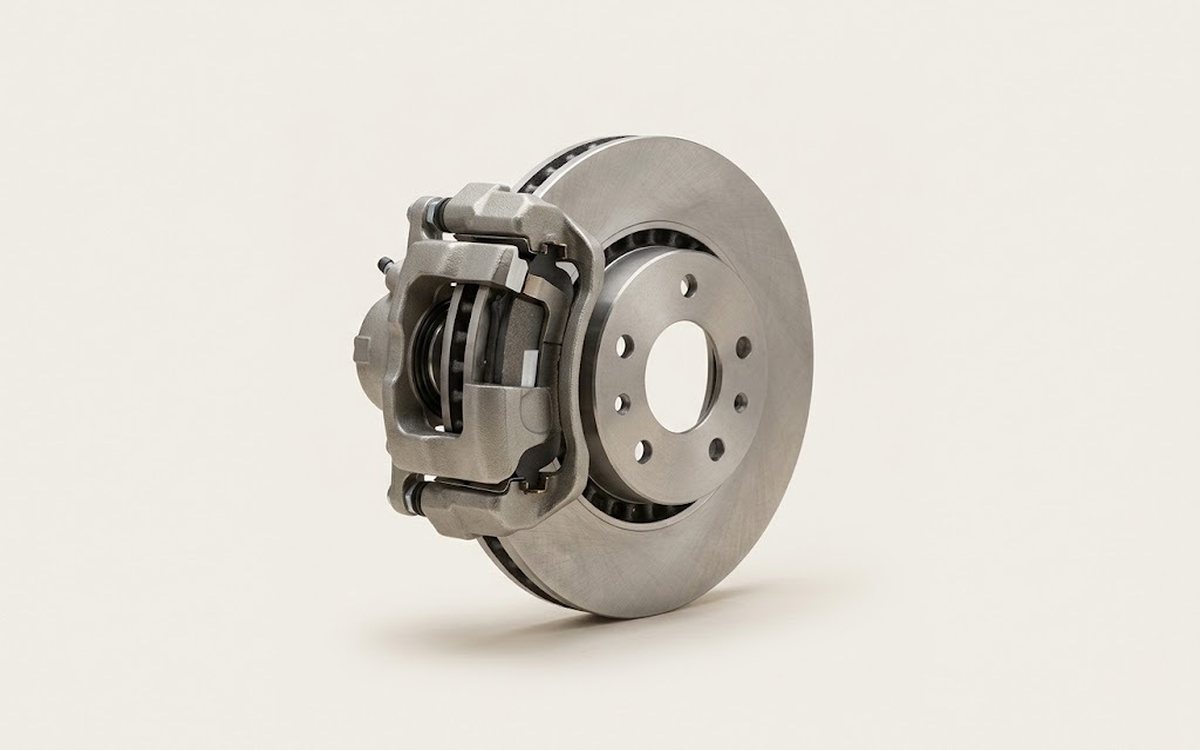 How it works · 3D
How Car Brakes Work
How the part you're working on actually works — in plain English, on a 3D model.
Open in 3D →