Autopapyrus · Lada Granta 1.6 8V 87 hp (2015)
https://autopapyrus.com/guides/lada/granta/brake-fluid-replacement/
https://autopapyrus.com/guides/lada/granta/brake-fluid-replacement/
Compiled automatically from service literature and owner experience. Specs are for the typical configuration — check them against your exact car before you start.
Lada Granta 1.6 8V 87 hp (2015): Brake Fluid Replacement
On a first-generation Granta (2015), DOT 4 brake fluid should be changed every 2 years or 40,000 km, whichever comes first. The fluid is hygroscopic: it absorbs moisture, its boiling point drops, and the pedal becomes soft. The job consists of removing the old fluid from the master cylinder reservoir and bleeding all four wheels.
Part
- 🔩 DOT 4 brake fluid (conventional, not synthetic). System capacity 0.6-0.65 L (0.63-0.69 qt). Recommended brands: Mobil, Shell, Castrol
Step by step
11 steps- Park the car on a level surface and switch off the ignition. Open the hood.
- Locate the brake master cylinder reservoir, a black plastic tank on the left, above the steering, under the body. Unscrew the cap counterclockwise and remove the float level sensor.
- Use a syringe or bulb to pump all the old fluid out of the master cylinder reservoir into a container. The bottom of the reservoir may be dirty, so wipe it clean with a lint-free cloth.
- Pour new DOT 4 fluid into the reservoir up to the MAX level (usually 2 cm from the edge). Set the cap on without tightening it.
- Find the rear left wheel and raise the car with a jack. Get access to the brake caliper (the Granta has disc brakes at the rear). The caliper should have a bleeder nipple, a hex fitting, usually on the caliper body.
- Fit a 5-6 mm diameter hose onto the nipple and put the other end into a container with some fluid in it. Open the nipple with an 8 mm wrench by 0.5 turn.
- Have a helper press the brake pedal (or use a suction/pressure bleeder): press the pedal slowly, then release it. Fluid will flow into the hose when the pedal is released. Repeat 5-8 times per wheel, until clean fluid with no air bubbles comes out of the hose. Tighten the nipple.
- Repeat for the other three wheels: rear right → front right → front left. The order matters: start with the wheel farthest from the master cylinder.
- After bleeding each wheel, check the fluid level in the master cylinder reservoir and top it up to MAX.
- Final check: the pedal should feel firm, with no sponginess. Press the pedal 10 times with the car stationary. There should be no free play on the second press.
- Close the master cylinder cap and reinstall the float level sensor.
Common mistakes and warnings
- — Do not use fluid more than 5 years old (the manufacturing date is on the package). It has already absorbed moisture. — If possible, do not mix DOT 4 fluids from different manufacturers. Use one brand for the whole service life. — The fluid is corrosive. If it gets on the body or paint, it causes clouding. Wipe it off immediately. — If the pedal stays soft after bleeding, either there is still air in the system or there is a leak. Repeat the bleeding or check the hoses for cracks. — Bleeding is simpler on a Granta without ABS than on models with ABS (where the module must be deactivated). ABS is rare on a 2015 model, but if yours has it, check the instructions under the hood.
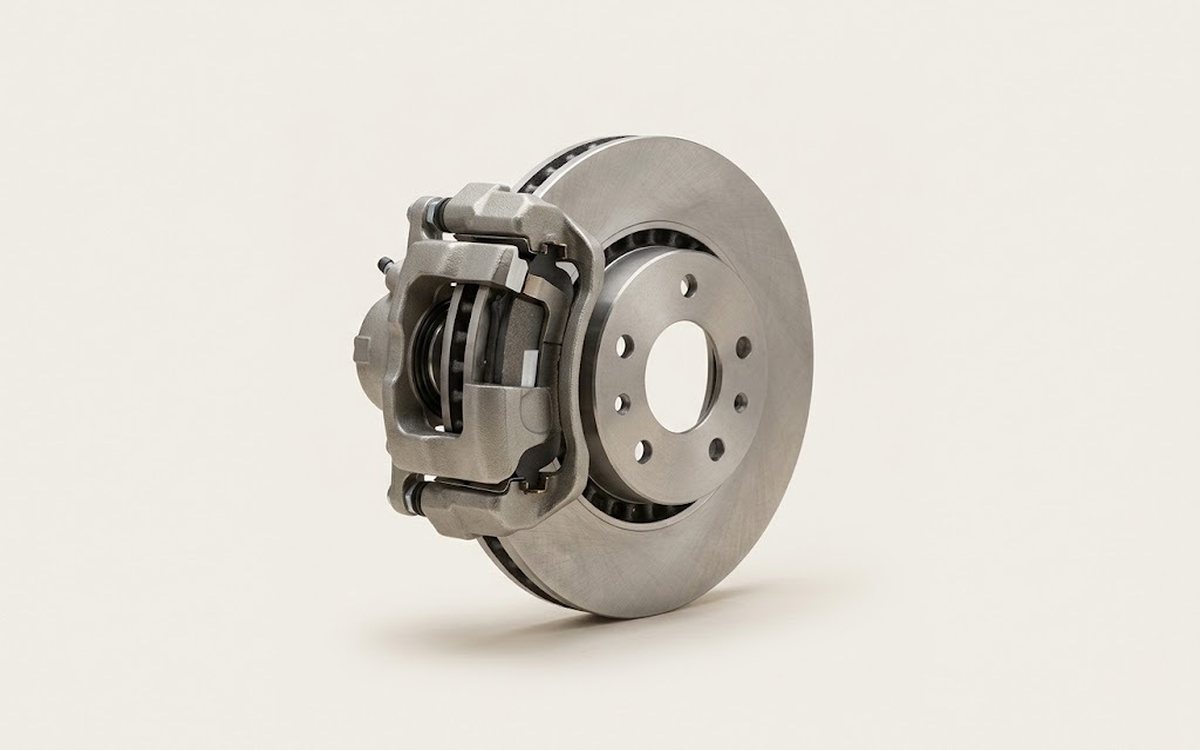 How it works · 3D
How Car Brakes Work
How the part you're working on actually works — in plain English, on a 3D model.
Open in 3D →